



Canadian Firms Pioneer Digital Twin Tech—But Domestic Adoption Lags
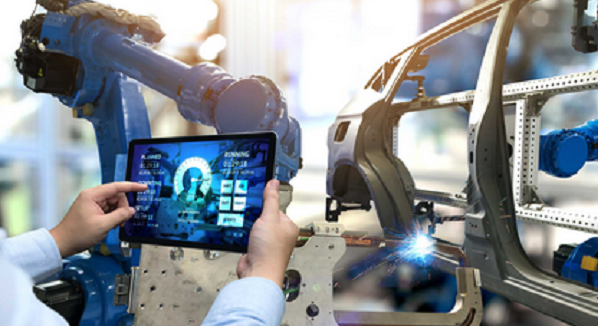
Digital twin technology is making it easier for workers in industries such as energy or construction to monitor sites remotely via virtual 3-D models, saving time and money, and keeping staff safe in the event of an emergency.
But while Canadian technology is being adopted by companies around the world to take advantage of this competitive edge, adoption rates at home are lagging.
Often, remote projects are some of the largest and most complex; think mines, oil refineries or power plants. Hundreds of workers and moving parts come together in these massive operations, posing a challenge to those tasked with keeping it all running smoothly.
Previously, constant monitoring meant regular, thorough site visits, during which notes of progress or incidents would be made – first, using pen and paper, and later, using a tablet to take photos, said James Smith, director at Turner & Townsend, a global professional-services firm.
“A picture, it’s worth a thousand words. A 3-D model is maybe worth three times as much,” he said.


Using sensors and data analytics, digital twins provide a real-time model of a physical asset while it’s being built, and once it’s operational. The software also centralizes project data, making them more accessible and increasing the likelihood that infrastructure is delivered on time and within budget.
Turner & Townsend is one of several players in the major projects sector, alongside Imperial Oil Ltd., BC Hydro and Exxon Mobil Corp., using 3-D reality capture software, a type of digital twin technology, to streamline their processes. It’s also one of the companies relying upon Calgary-based Veerum’s visual operations software platform for this.
In Turner & Townsend’s case, this involves creating digital replicas of a gas plant and two liquefied natural gas sites. These projects can take millions of hours and thousands of workers to build. Without 3-D reality capture, Mr. Smith said, it’s incredibly difficult to monitor construction progress and, later, how well it’s running.
Veerum’s digital replicas consist of multiple layers of data. Depending on how complex the client wants their replica to be, this can include anything from LiDAR (light detection and ranging) to panoramic imagery to mobile mapping to sensors to design documents.
Rob Southon, Veerum’s chief technology officer, said the company’s name comes from the Latin word for truth because its goal is to provide the most accurate representation of its clients’ sites.
Veerum charges its clients a monthly or annual subscription fee, which varies depending on how many sites or how much data they have. It’s one of several companies across the United States and Canada developing this technology to improve remote monitoring.
Ten years ago, applications for digital twins were limited, expensive and niche. Since then, the cost of capturing data has dropped significantly thanks to developments in drone and LiDAR technology, and the advent of cloud computing.
“The ability to remotely visit these sites from anywhere in the world, no matter what the scenario is, ends up being this baseline use case of value,” Mr. Southon said.
Yet, Canada continues to lag in adoption of this technology. Some experts cite the fact that it’s the only G7 country without a national strategy for building information modelling, which is a process often used during construction to create 3-D models.
It’s a slightly less complex predecessor to digital twin technology, and its adoption is an important step toward more industry players using digital twins.
“We need this national strategy to help the industry to evolve,” said Sheryl Staub-French, a professor of civil engineering at the University of British Columbia.
According to a 2021 report by the Canadian Construction Association and consulting firm KPMG, “only 25 percent of companies feel like they are in a considerable or great position relative to their competitors in terms of technology or digital implementation.”
As wildfires cloak much of Canada, software companies such as Veerum are also pitching their technology as being useful in emergency situations.
The nature of these platforms could give staff the ability to keep an eye on operations when it’s too dangerous for in-person work, Mr. Southon said. “You’re not putting them in harm’s way.”


Recently, Canadian Natural Resources Ltd., MEG Energy Corp. and Cenovus Energy Inc. evacuated workers or paused production at some of their sites in Alberta when wildfires threatened their perimeters.
In such instances, a digital replica could be used after a fire to document a site’s affected infrastructure and provide a snapshot of how it looked beforehand. This could prove useful for insurance claims, rebuilding and returning to full operating capacity, Mr. Southon added.
Erik Poirier, a professor of construction engineering at École de Technologie Supérieure, said in any use case, it’s important to remember the end goal in implementing this technology: higher-quality projects delivered on time and within budget.
Better adoption rates will take collaboration by multiple industry stakeholders, he said, including project owners, government and educational institutions tasked with training the next generation of skilled-trades workers.
“To actually deliver this and make it a valid or sustainable transformation, demand has to be there, and contracts have to be there to support that,” he said.
“So there’s a lot of work in our space to actually get this done.”
This article was first reported by Globe and Mail