







Dow Slips, Tech and Small Caps Lead as Traders Eye Wednesday Fed Move
The Canadian Vanguard Stock Market Report – Tuesday January 27, 2026 Edition.
.
The Toronto Market
The S&P/TSX Composite Index edged up 3.08 points, or 0.01%, to close at 33,096.40. Although the index opened in positive territory, it traded mostly in the red throughout the session before a late-day rally in the final five minutes allowed it to finish marginally higher. Despite the modest gain, the index has technically advanced in ten of the past twelve trading sessions.


Tuesday’s TSX Market Statistics
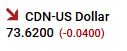
Market breadth tilted negative, with declining issues modestly outpacing advancers. A total of 1,142 stocks declined versus 1,042 advancers, producing a decliner-to-advancer ratio of roughly 1.1:1, while 145 issues finished unchanged. The negative breadth suggests underlying selling pressure despite the index’s ability to hold near flat.
New 52-week highs remained elevated at 218, but declined notably from the prior session’s 372, indicating a deceleration in upside momentum. Meanwhile, new 52-week lows increased to 35 from 24, pointing to selective weakness emerging beneath the surface.
Total TSX trading volume fell 11% to 525.1 million shares, down from 591.9 million the previous day, reflecting reduced participation and a lack of strong institutional conviction. Taken together, the data suggest a market that is consolidating, with leadership narrowing and momentum cooling in the near term.
Toronto Market Wrap-Up Report
The TSX closed marginally higher, but price action reflected limited intraday conviction. The index spent most of the session below the flatline before a late-session bid in the final minutes prevented a negative close. This pattern suggests continued dip-buying interest, though momentum remains tentative near current levels.
Sector performance was mixed. Utilities and Basic Materials led the market, followed by Energy and Industrials. Technology underperformed, falling 1.27%. Retail-related sectors were notable laggards, with Discretionary Consumer Goods & Services lower on the day and Durable Consumer Goods & Services declining 1.71%, signaling ongoing pressure on consumer-sensitive names.
Bombardier Inc. (TSX: BBD.D), which dropped 9.33% yesterday following an analyst downgrade, rebounded 3.64% to $8.77. Goldman Sachs had cut the aerospace manufacturer to Sell from Neutral, and today’s bounce appears corrective rather than a clear reversal signal.
Basic Materials stocks delivered a mixed performance and may be entering a near-term consolidation or pullback following a strong recent advance. Fewer gold miners closed in positive territory; however, those that did posted outsized gains. NovaGold Resources (TSX: NG) surged 11.45%, while several other gold miners finished lower but well off their intraday lows, suggesting selective profit-taking rather than broad-based liquidation. Silver and industrial metals miners were generally weaker, with Pan American Silver Corp. (TSX: PAAS) and First Majestic Silver Corp. (TSX: AG) both ending the session in the red after recent periods of strong performance.
.
The US Markets
U.S. equity markets finished mixed, reflecting ongoing rotation beneath the surface. The Dow Jones Industrial Average declined 408.99 points, or 0.83%, to close at 49,003.41, pressured by weakness in several large, price-weighted components. In contrast, the S&P 500 advanced 28.37 points, or 0.41%, to 6,978.60, while the Nasdaq Composite outperformed, climbing 215.74 points, or 0.91%, to finish at 23,817.10, supported by continued strength in growth and technology shares.
The Russell 2000 gained 7.02 points, or 0.26%, closing at 2,666.70, recouping a portion of the prior session’s decline. With all major indexes higher except the Dow, the session highlighted a rotation away from select mega-cap industrial names and toward small-caps and growth-oriented equities. This divergence suggests investors remain engaged in risk assets, but are increasingly selective as leadership continues to shift.

Tuesday’s U.S. Market Statistics
New York Stock Exchange (NYSE)
Market breadth was firmly positive, with advancing issues outpacing decliners. A total of 2,700 stocks advanced versus 1,674 decliners, with 399 issues unchanged, producing an advancer-to-decliner ratio of 1.61:1. This breadth strength points to broad-based participation in the rally.
New 52-week highs surged to 693, sharply higher than the prior session’s 185, while new 52-week lows increased to 95 from 18. The sharp expansion in highs signals renewed upside momentum, although the concurrent rise in lows suggests pockets of distribution beneath the surface.
NYSE trading volume rose 7% to 5.40 billion shares, up from 5.03 billion, indicating improved participation and stronger institutional engagement.
NASDAQ
Breadth was also positive on the NASDAQ, though less decisive than on the NYSE. Advancers totaled 2,725 versus 2,056 decliners, with 299 unchanged, yielding an advancer-to-decliner ratio of 1.32:1.
New 52-week highs increased to 339 from 284, while new lows climbed to 157 from 119, reflecting continued leadership in growth stocks alongside rising dispersion within the tech-heavy exchange.
NASDAQ volume increased 7% to 8.28 billion shares, up from 7.71 billion, reinforcing the view that investors remain active and selectively adding exposure rather than exiting risk assets.
U.S. Market Wrap-Up Report
U.S. equity markets delivered a broadly positive performance, with eight of the eleven major sectors ending the session higher. Leadership came from traditionally defensive and cyclical groups, with Utilities gaining 1.64%, Energy up 1.35%, and Basic Materials advancing 1.09%. Telecommunications Services and Healthcare were the only sectors to close in negative territory, modestly lagging the broader market. Overall sector participation reinforces the view that the current rally remains intact and is continuing to build momentum.
The Nasdaq extended its advance to a fifth consecutive session, underscoring sustained strength in growth-oriented equities. The Dow Jones Industrial Average, which gained yesterday, reversed lower today, weighed down in part by UnitedHealth Group (UNH). Shares of UNH declined following a disappointing update related to Medicare reimbursement, exerting notable pressure on the price-weighted index. Ongoing rotation between mega-cap and small-cap stocks also appears to be influencing index-level performance.
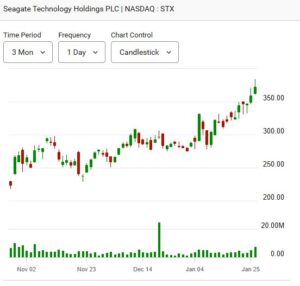
Earnings season is now underway, with a particular focus on the memory and storage segment this week. Seagate Technology (STX) reported earnings after the close, initially trading down approximately 2% before reversing sharply to finish up about 7% in after-hours activity—suggesting a constructive investor response to the report. Western Digital (WDC) and SanDisk (SNDK) are scheduled to report on Thursday, with both stocks trading higher in after-hours action this evening. Micron Technology is expected to report earnings around March 19, 2026, though the company has not yet confirmed the date.
Looking ahead, macro focus will shift to monetary policy. The Federal Reserve is scheduled to release its latest interest rate decision on Wednesday at 2:00 p.m. ET, followed by a press conference with Chair Jerome Powell at 2:30 p.m. ET. Market participants will be closely monitoring policy language and forward guidance for clues on the rate path and its implications for equity valuations.
Fed Decision: Bullish and Bearish Scenarios – Traders and Investors
Bullish Scenario
Markets would likely respond positively if the Federal Reserve delivers a rate decision in line with expectations while signaling increased confidence that inflation continues to trend lower. A softer tone from Chair Powell—particularly any acknowledgment that policy is sufficiently restrictive or that future rate cuts remain on the table later in the year—would support risk assets. Under this scenario, growth stocks and small caps could extend recent gains, Treasury yields may ease, and sector leadership could broaden further beyond mega-cap names.
Bearish Scenario
A more hawkish outcome—such as emphasis on persistent inflation risks, higher-for-longer messaging, or reduced flexibility around future rate cuts—could pressure equities in the near term. Markets may interpret firm policy language as a headwind to valuations, especially in rate-sensitive areas such as technology and consumer discretionary. In this case, volatility could rise, leadership may narrow, and profit-taking could emerge following the recent rally.
Market Positioning Implication
Given the strength of the current advance, the Fed decision represents a near-term catalyst that could either reinforce upside momentum or trigger a consolidation phase. Traders should be alert to post-announcement price action, yield movements, and sector rotation for confirmation of the market’s next directional move.
Fed Decision: Day Traders vs. Swing Investors
Day Traders – Tactical Playbook
For day traders, the Fed announcement is primarily a volatility event rather than a directional forecast.
- Key Time Windows: Expect whipsaw action immediately after the 2:00 p.m. ET rate decision, followed by a more tradable move during Chair Powell’s 2:30 p.m. press conference. Initial reactions are often reversed.
- Bullish Reaction Setup: A dovish tone that pushes yields lower could trigger momentum breakouts in Nasdaq, high-beta tech, and small-cap ETFs. Look for confirmation through expanding volume and sustained price action above VWAP rather than the first spike.
- Bearish Reaction Setup: Hawkish language may spark fast downside moves, particularly in rate-sensitive sectors. Short opportunities are often cleaner on failed rebounds or lower highs after the initial selloff.
- Risk Management: Keep position sizes smaller than usual, widen stops modestly, and avoid holding positions through both announcements unless momentum is clearly sustained.
Swing Investors – Positioning Framework
For swing investors, the Fed decision serves as a trend-confirmation or consolidation signal.
- Bullish Outcome: If the Fed maintains a neutral-to-dovish stance and markets hold post-announcement gains into the close, recent leadership groups—growth stocks, small caps, and cyclical sectors—could offer follow-through opportunities over the next several sessions.
- Bearish Outcome: A hawkish tilt that leads to a close below key short-term support levels may signal a near-term pause or pullback. This would favor patience, tighter stops, or partial profit-taking after the recent rally.
- Base Case Expectation: A “no-surprise” decision could result in choppy, range-bound trade, with the broader uptrend remaining intact. In this scenario, swing setups may emerge on post-Fed pullbacks rather than immediate breakouts.
- Risk Consideration: Watch Treasury yields and market breadth in the days following the decision—sustained weakness or narrowing participation would be early warnings that momentum is fading.
NOTICE TO READERS
The Canadian Vanguard Stock Market is about empowering you to build and manage wealth by yourself. There is certainly no magic in managing finances or wealth but one needs to know what to do and commit to doing what is needed. When you are ready to start the journey to Put Your Destiny In Your Own Hands, read The Canadian Vanguard every market day. If you need more information please Contact Us
Our readers are strongly advised to conduct their own research into individual stocks before making a purchase decision. In addition, investors are advised that past stock performance is no guarantee of future price appreciation. Any recommendation is not a guarantee of any particular stock’s future prices, and The Canadian Vanguard accepts no responsibility or liability for investors’ or readers’ purchases.
Stocks In The News/ Stocks To Watch and Market Strategy will soon be available but only to Paying Subscribers.
(c) This article is published by The Canadian Vanguard on January 27, 2026