





Uncertainty Looms as FAA Head Sidesteps Question on Canadian Plane Certification
The head of the U.S. Federal Aviation Administration provided little clarity Monday about whether the agency would strip the safety permits for Canadian-made planes as President Donald Trump’s threats against Bombardier Inc. and other domestic manufacturers continue to loom large over the industry.
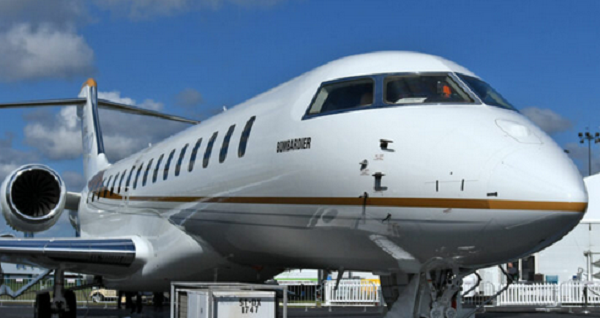
FAA administrator Bryan Bedford declined to say whether the agency would pull the certifications for planes made in Canada, which include Bombardier Global and Challenger business jets as well as the Airbus A220 airliner and De Havilland turboprops and waterbombers. But he did raise questions about whether regulators in other countries were doing as much as the FAA on the approvals process, suggesting that lack of effort is hurting American plane makers.
“Our concern is whether or not sufficient resources are being applied to U.S. products equal to the resources that we’re applying to certify foreign products,” Mr. Bedford said on the sidelines of the Changi Aviation Summit in Singapore. “So, we just want a level playing field.”
Mr. Trump sent a shock wave through Canada’s aerospace industry last Thursday with a social-media post saying the United States is decertifying Bombardier’s Global Express jets and “all Aircraft made in Canada” until Canada approves the new business jets made by Savannah, Ga.-based Gulfstream.
He said Canada has “wrongfully, illegally and steadfastly refused” to certify four Gulfstream jet models, and he threatened a 50-per-cent import tariff on Canadian aircraft sold into the U.S. if the situation was not immediately addressed.
The declaration sparked alarm and confusion among aviation-sector leaders in both Canada and the United States, with some commentators saying Mr. Trump was using his power to undermine the safety functions of regulators. A White House official later clarified that the President did not mean to say that Canadian-made aircraft already in operation are decertified – only new ones.
With aerospace possibly becoming a new front in Canada’s trade war with the United States, the industry remained on edge Monday. Officials with Bombardier, Airbus and De Havilland declined to comment on the situation, while in Ottawa, federal government officials stuck to remarks made last week. Gulfstream did not respond when contacted.

Industry Minister Mélanie Joly has said that the Gulfstream’s certification process is under way, and that U.S. demands for approvals were made only recently. She told CBC Friday that she believes the Trump administration’s criticism about the delays can be resolved but that the safety approvals process is “something we don’t politicize.”
U.S. and European regulators have certified Gulfstream’s G700 and G800 models but with an exemption lasting until the end of 2026 to give the company time to do more testing and prove it has addressed potential issues related to ice in the aircrafts’ fuel system. Canada hasn’t granted that exemption.
Ehsan Monfared, an aviation lawyer with YYZlaw in Toronto, said that while it might be fair for the FAA to push Transport Canada to apply appropriate resources for validation work, it shouldn’t expect Canada to greenlight aircraft just because the U.S. has.
“It has never been the practice to just rubber stamp another government’s approval,” Mr. Monfared said in an interview, adding the same is true of other approval processes, like vaccine authorization, for example. “Each government around the world independently validates the data presented by vaccine proponents to say ‘Yes, this is safe for public consumption in this country.’”
Industry consultant Rolland Vincent, creator of the JetNet iQ Survey, said there’s “nothing commercial” in what Transport Canada does and that the notion that Canada is somehow trying to undermine Gulfstream is misplaced and largely inconsequential to the company’s sales success. Of the roughly 800 business jets sold last year globally, only “a handful” would involve Canadian buyers purchasing the kind of big-cabin jets that Gulfstream makes, he estimated.
“Gulfstream had a very good year” in 2025, Mr. Vincent said. “Their deliveries were up. Their book-to-bill was up. Their backlog is up. They seem to be coming down the learning curve on their production lines [for the new jets]. So, I’d say it’s all systems go in Savannah.”
The aerospace intrigue is the latest in what appears to be a growing rift between Mr. Trump and Prime Minister Mark Carney. In a speech last month in Davos,
Switzerland, Mr. Carney urged countries to start publicly condemning economic coercion, even when practised by an ally, a clear reference to the U.S. Mr. Trump later responded by saying, “Canada lives because of the United States.”
Analysts had warned that Bombardier could come under significant pressure in a trade war. The Montreal-based company generated about US$5-billion of its US$8-billion revenue from U.S.-based customers in 2023, while assembling and shipping out its planes largely from factories in Canada. Its products remain tariff-free under the Trump administration’s exemption for goods stamped compliant under the United States-Mexico-Canada Agreement.
That could change. The U.S. Department of Commerce is now wrapping up a Section 232 investigation into imports of commercial aircraft and related parts to determine if they threaten national security. According to Washington-based lawyers at Cassidy Levy Kent, the department had until Jan. 26 to finish its work and transmit a report to the President.
Bombardier chief executive officer Éric Martel said in November that the plane maker did not have an extensive backup plan in the event that new tariffs become a reality. “We haven’t worked on it drastically in terms of being prepared, because our assessment of the risk is low,” he said at the time.
With a report from Reuters.
This article was first reported by The Globe and Mail