





Iran Conflict Pressures Canadian Fuel Prices, Though Global Oversupply May Limit Increases
Canadians could pay as much as six cents more per litre at the gas pumps this week after the U.S. and Israel launched strikes on Iran, though an oversupply of oil will likely provide a buffer from the worst price shocks, analysts say.
While Canada is a net exporter of energy, growing tensions across the Middle East are hitting commodity markets and hiking the price of heavy crude, the raw material refined to create gasoline and diesel.
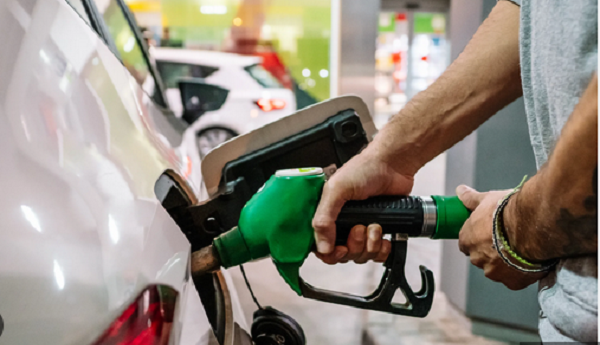
The price of regular gas across Canadian provinces hovered at around $1.43 on average Monday, according to data from En-Pro, up roughly 4 cents from the previous week.
Still, “with respect to what we paid a year ago,” the prices are “fairly low,” said Normand Mousseau, scientific director of the Trottier Energy Institute at Polytechnique Montreal.
But that’s the view for the short term. If the Middle East conflict continues well into the spring, experts say consumers should expect higher prices for other goods and services, and gas as well.

In afternoon trading, the price of West Texas Intermediate crude, one of the major global benchmarks for the commodity, hovered at around US$72 a barrel, up from around US$66 last week. In comparison, for most of 2024, oil prices were above US$72 a barrel.
Gasoline prices have been dropping since last spring for Canadians, with the federal government removing the consumer carbon levy while oil prices dropped in early April after initial uncertainty around U.S. President Donald Trump’s tariffs. At the time, Canadians started saving anywhere from $10 to $20 each time they filled up their tank compared with the year prior.
The world currently has large quantities of oil in what’s called “floating storage,” meaning oil stored on tankers that have been idle for seven or more days. That floating inventory could provide a buffer against supply disruptions caused by the current conflict in the Middle East, said Brooke Thackray, research analyst at Global X.
But in an analyst note Sunday, RBC Capital Markets analyst Scott Hanold said events over the weekend could push oil prices up 10 to 15 per cent with the potential risk that the oil price moves above US$100 a barrel if the Strait of Hormuz is blocked.
About 20 per cent of the 105 million barrels of oil the world consumes daily passes through this narrow corridor linking the Persian Gulf to global markets.
If prices were to climb to just US$80 a barrel, drivers could see an eight-cent-per-litre increase at the pump, said Roger McKnight, chief petroleum analyst at En-Pro. At US$90 per barrel, the increase would hit around 14 cents per litre, and at US$100 per barrel, prices could rise by about 20 cents per litre.
Prices at the pump in the Toronto area could go up to roughly $1.56 per litre within a few days, under those conditions, up from about $1.36, said Mr. McKnight. “Everything depends on how long it lasts [and] how many people get involved.”
Oil and natural gas prices jumped Monday, on the third day of U.S. and Israeli attacks on Iran, as tanker traffic in the Strait of Hormuz shipping lanes virtually disappeared and Iran targeted Saudi and Qatari energy sites.
Large crude carriers transit the area, and the mere threat of missile attacks on vessels is enough to disrupt flows because uninsured ships place full financial liability on carriers, said Dan McTeague, president of Canadians for Affordable Energy, a sector advocacy group.

“We’re just in the early days, it’s only been, what – 60 hours since the attack,” he said. “Everything depends really on the extent of the response by Iran – the threat to other OPEC producers in the Persian Gulf is critical because it means that there [could be] a clear lessening of the supply of oil.”
Mr. McTeague said that on an average 50-litre tank, a six-cent increase per litre would amount to an additional $3 a week. But that figure could be much higher for Uber drivers and others who drive extensively for work.
Still, Canadians are likely shielded from sustained major spikes at the pump in the near-term, said Mr. Mousseau. The price that Canadians pay is directly linked to international prices, even if the oil we consume is produced in Canada and the U.S. But unless the Strait of Hormuz is closed for an extended period, there is enough oil supply to handle smaller losses, he said.
That said, the heavy crude Iran produces is especially important for making diesel fuel, the price of which is rising much more sharply, by roughly 12 to 13 cents per litre, Mr. McTeague said.
“Most economies run on diesel,” he said, with transportation and freight systems relying on it. When diesel prices rise, they push up the cost of transporting goods across the economy, Mr. McTeague said.
Beyond gasoline, any good that relies on transportation can be affected if fuel prices rise significantly, Mr. Mousseau said. Even with moderate volatility in the price of oil, airlines may add fuel surcharges to tickets.
For now, “it’s not looking good, but it’s not that bad either,” Mr. McTeague said.
This article was first reported by The Globe and Mail