





Escalating Trade Tensions Drive Mounting Losses at Algoma
Algoma Steel Group Inc.’s ASTL-T losses ballooned in the fourth quarter as U.S. President Donald Trump’s continuing trade war battered Canada’s last remaining independent steelmaker.
Sault Ste. Marie, Ont.-based Algoma on Wednesday evening reported a net loss of $364.7-million for the quarter ending Dec. 31, compared with a loss of $66.5-million during the same period last year.
The company’s steel shipments fell by 31 per cent to 378,533 tonnes. Algoma incurred $60.6-million in tariff costs in the quarter. As the importer of record, the company pays the tariff on any steel it sells into the U.S.
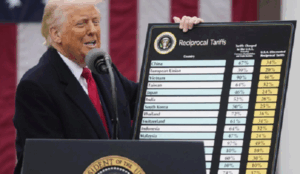
Since March of last year, Algoma has been dealing with tariffs in the U.S. market. Mr. Trump first imposed a 25-per-cent levy, but then doubled the duty to 50 per cent in June. That essentially shut Algoma and other Canadian producers out of the U.S. market.

Before the trade war began, the U.S. used to account for about 60 per cent of Algoma’s revenue. The company has been trying to win more business at home, but margins in the Canadian market are falling owing to fierce competition that led to an oversupply.
Algoma on Wednesday said that Canadian steel prices were as much as 40 per cent lower compared with the U.S. across many steel product categories. The price discrepancy reduced Algoma’s revenue by $27-million in the quarter.
In response to the trade war, Algoma last year made the decision to accelerate by one year the rollout of its electric arc furnace technology. The first of those two EAFs went into production in July. The company said on Wednesday that the furnace is now running 24 hours a day, up from its earlier six-day-a-week schedule, and meeting quality expectations for both steel coil and plate.
In January, the company decommissioned its legacy blast furnace and coke oven operations. The EAFs give Algoma flexibility to produce less steel than with a blast furnace, as EAFs can be run on batches, and they significantly reduce its carbon emissions.
Algoma chief executive Rajat Marwah in the Wednesday evening statement said that producing high-quality sustainable steel from the EAFs at scale “represents a critical milestone in our multiyear transition.”
EAFs require far fewer people to operate than blast furnaces and coke ovens. In December, Algoma issued layoffs to 1,005 of its unionized workers as a result of the early transition to EAFs.
While the layoffs had been expected, the timing was earlier than originally planned because of the trade war. The layoffs, which take effect on March 23, will see the company’s work force fall to about 1,800 workers. As a result of the layoffs, the company incurred severance costs of $45.8-million.
Mr. Marwah took over as CEO in January after the retirement of Michael Garcia, who ran the company for 3½ years. Mr. Marwah was previously the chief financial officer for Algoma.
To try to distance itself from its Canadian competitors, Algoma is increasingly focusing on making steel plate. It is the only domestic producer of plate, which is used in military applications such as ships and submarines. As it produces more plate over time, Algoma will scale back its output of coil, where margins are much slimmer.

“This strategic pivot is expected to substantially reduce tariff exposure, lower operating costs, and enhance overall cash efficiency as the EAF ramps up,” the company said in its statement.
Algoma in September secured $500-million in low-interest federal and provincial loans that provided it with substantial liquidity to weather the trade war.
Ottawa also lent the company $200-million in 2021 to build its electric furnaces. The loan is forgivable if Algoma meets certain emissions standards over time. In addition, the company received a government loan of $130-million in 2019 to modernize its plate mill.
Algoma closed Wednesday at $5.90 a share on the Toronto Stock Exchange, and have fallen 29 per cent over the past year.
This article was first reported by The Globe and Mail