





Consumer Spending Faces Pressure as Oil Costs Raise Canada Recession Risks
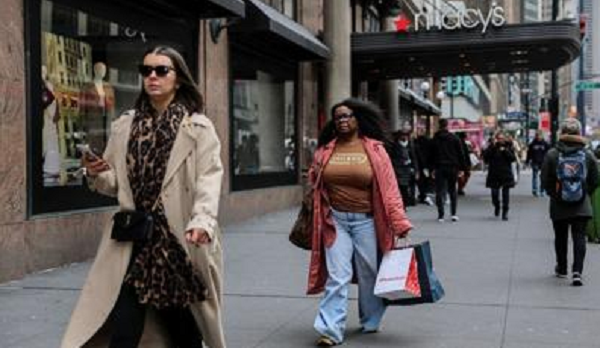
With the war in the Middle East looking to last weeks — if not months — economists say Canadians will likely cut spending on everything from dining out and buying clothes to getting new furniture.
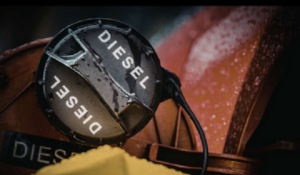
Since the U.S.-Israel attack on Iran Feb. 28, the price of oil and gas has soared worldwide. For Canadian drivers, that means an instant reduction in disposable income, said Douglas Porter, chief economist at BMO.
“A rise in gasoline prices is effectively a tax on consumers,” Porter said. “They can’t change their driving, so the extra money either comes out of savings or what they spend in other areas.”
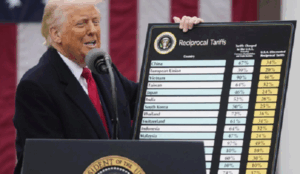
Add in anxiety over U.S. President Donald Trump’s tariffs, Porter said, and many Canadians were already tightening their belts.
“When people are worried about the economy, they cut back on entertainment and dining out. Clothing’s another area,” Porter said. “They think ‘oh, I’ll just keep this coat for another season.’”

While rising oil prices boost the bottom line of energy companies and the Alberta economy — including wiping out their provincial deficit — the rest of the country isn’t so fortunate, Porter said.
Overall, he added, there may initially be a small spike in the size of the Canadian economy — thanks to rising oil revenues and increased construction in Alberta — but the longer fuel prices stay high, the greater the drag on the rest of the country.
“If it’s a small move, they’d cancel each other out. But a large move tips into being a negative,” Porter said. “The danger is we came into this in fairly weak shape. I’d be quite concerned if oil stayed high for a quarter or two.”
Even if fighting in the Mideast stops and the Strait of Hormuz reopens to shipping, there’s a strong chance oil will remain well above its pre-war price for a while, said Pedro Antunes, chief economist at Signal 49 Research.
Could push Canadian economy into recession
“There will be a risk premium,” said Antunes. “I’m not saying they’d stay at 80 or 100 bucks a barrel. But they might not go back down to 58 a barrel, either.”
And if that lasts for a few more quarters, he added, it’s the type of thing that could push the already-sputtering Canadian economy into recession.
“We’ve had a couple of quarters of negative growth on and off recently anyway. And when you’re not growing that quickly, it doesn’t take much to push things negative,” said Antunes. “It’s suboptimal timing.”
For Canada’s beleaguered hospitality industry, having customers cut spending feels like more of the same after the COVID-19 pandemic.
“We’re always impacted. We’re unfortunately the first thing that consumers have to cut back on,” said Kelly Higginson, CEO of industry advocate Restaurants Canada.
The war in the Mideast is a double whammy for restaurants, said Higginson: Consumers are cutting back on spending, at the same time the price of supplies — including food — is rising.
“This sector has dramatically changed,” said Higginson, adding that 44 per cent of Canadian restaurants are either operating at a loss or barely breaking even. “Profit margins have been eviscerated.”

That, in turn, will have an impact on Canadian farming, she added, with restaurants accounting for “about 50 per cent of Canadian agricultural sales.”
For businesses in all sectors of the economy, more uncertainty is the last thing needed, said Matthew Holmes, chief of public policy for the Canadian Chamber of Commerce.
‘You hear about the polycrisis or the permacrisis’
After the pandemic, the impact of Russia’s invasion of Ukraine, and the trade war sparked by Trump’s tariffs, businesses have already survived through plenty of chaos.
“You hear about the polycrisis or the permacrisis, and that’s what this is starting to feel like,” said Holmes. “The unpredictability and uncertainty for businesses is just toxic. It makes it almost impossible to plan.”
And, said Holmes, that uncertainty is here for the foreseeable future.
“Right now what we know is that supply chains are increasingly volatile, and people need to expect that, whether it’s this crisis or the next one.”
This article was first reported by The Star