







The Canadian Vanguard Stock Market Report – Weekend March 13 – 15, 2026 Edition
Equities Fall on Rising Oil Price and Geopolitical Concerns
. The Canadian Vanguard Stock Market Report is updated regularly during the weekend
The Toronto Market on Friday
The Toronto Market Index
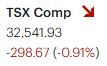
The S&P/TSX Composite Index fell 298.67 points (-0.91%) to close at 32,541.93, marking its third consecutive day of losses. This is the first time in the past four months that the index has declined for three straight trading sessions.
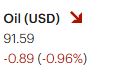
Market sentiment has been negatively affected by the ongoing conflict in the Middle East, which continues to create uncertainty in global markets. Meanwhile, oil prices surged again today, briefly rising above US$100 per barrel earlier in the trading session.
Today’s TSX Market Statistics
At the S&P/TSX Composite Index, declining issues outnumbered advancing issues. Specifically, there were 1,197 decliners and 916 advancers, resulting in a decliner-to-advancer ratio of 1.30 to 1, or roughly six decliners for every five advancers. In addition, 135 issues remained unchanged.
The exchange recorded 64 new 52-week highs and 49 new 52-week lows, compared with 82 new highs and 63 new lows on Thursday.
Total trading volume on the TSX reached 479,480,627 shares, representing a 7% decline from the 515,662,991 shares traded on Thursday.
Today’s Toronto Market Wrap-Up
Friday marked another broad sell-off in the Toronto market, extending the current pullback. The S&P/TSX Composite Index has now declined for four consecutive sessions and seven of the past ten trading days, highlighting the increasingly cautious tone among investors.
Geopolitical developments remain the dominant driver of market sentiment. The ongoing conflict in the Middle East continues to inject uncertainty into global financial markets. Historically, markets tend to respond negatively to geopolitical instability, as investors reassess risk exposure and move toward defensive positioning. The resulting volatility has contributed to the recent weakness in equities, even as commodity prices—particularly oil—remain elevated.
Sector Performance
Despite the broader market decline, several defensive sectors posted gains. Consumer Durable Goods & Services led the market, advancing 1.77%, followed by Utilities, up 0.89%, and Energy, which rose 0.67%. Overall, five of the TSX’s ten major sectors finished the session higher, suggesting selective rotation rather than a uniform sell-off.
On the downside, Technology was among the session’s weakest sectors, falling 1.90%, while Basic Materials declined sharply by 4.28%. The Financial sector also continued to underperform, adding pressure to the broader index given its significant weighting within the TSX.
Canada’s major banks experienced notable declines:
- Bank of Montreal (TSX: BMO) fell 1.73%, closing at $186.15.
- Canadian Imperial Bank of Commerce (TSX: CM) declined 0.94% to $130.86.
- Bank of Nova Scotia (TSX: BNS) dropped 1.03%, ending the session at $94.38.
Company Highlights
While technology shares broadly weakened, investor interest appeared to shift toward resource-linked and energy-related companies, reflecting the market’s sensitivity to geopolitical risk and commodity price movements.
- Power Corporation of Canada (TSX: POW) gained 2.49%, with approximately 2.9 million shares traded.
- TC Energy (TSX: TRP) rose 1.64%, supported by 1.9 million shares in volume.
This rotation suggests investors are increasingly seeking exposure to sectors that may benefit from higher energy prices or defensive characteristics during periods of market turbulence.
Market Outlook for Traders and Investors
With markets currently driven by geopolitical headlines, short-term volatility is likely to remain elevated. For traders, this environment may present selective opportunities but also requires disciplined risk management. For longer-term investors—particularly retail participants—capital preservation becomes especially important during uncertain periods.
Maintaining higher cash positions, reduced portfolio exposure, or focusing on defensive sectors may be prudent strategies until market conditions stabilize. As always, one of the most critical principles in trading and investing is protecting capital during periods of heightened uncertainty.
.
The US Markets
U.S. Market Indexes Overview
U.S. equity markets closed lower across the board on Friday, as geopolitical uncertainty continued to weigh on investor sentiment. The Dow Jones Industrial Average declined 119.38 points (-0.26%) to close at 46,558.47.
The broader S&P 500 fell 40.43 points (-0.61%) to finish at 6,632.19, while the technology-heavy Nasdaq Composite recorded the steepest decline among the major indexes, dropping 206.62 points (-0.93%) to close at 22,105.36.
Although all major indexes finished in negative territory, the Dow Jones Industrial Average showed relative resilience, supported by several large-cap blue-chip components. In contrast, weakness was more pronounced in growth-oriented technology stocks and smaller capitalization companies.
The Russell 2000 Index, which tracks small-cap companies, slipped 8.94 points (-0.36%) to close at 2,480.05, reflecting broader pressure across smaller and mid-cap equities.

U.S. Market Statistics
New York Stock Exchange (NYSE): Market breadth on the New York Stock Exchange was clearly negative, as declining issues significantly outnumbered advancing stocks.
- Declining Issues: 2,904
- Advancing Issues: 1,532
- Unchanged: 352
This produced a decliner-to-advancer ratio of 1.89 to 1, or roughly two declining stocks for every advancing stock, reflecting broad selling pressure across the exchange.
The NYSE recorded 71 new 52-week highs and 185 new 52-week lows
This compares with 62 new highs and 122 new lows recorded in the previous session, indicating that downside momentum expanded during the trading day.
Total NYSE trading volume reached 5,384,960,535 shares, representing a 15% decline from the 6,359,202,301 shares traded in the prior session, suggesting somewhat lighter participation during the market pullback.
NASDAQ Market Activity: At the Nasdaq Stock Market, market breadth was also negative, with declining stocks substantially exceeding advancing stocks.
- Declining Issues: 3,079
- Advancing Issues: 1,714
- Unchanged: 321
This resulted in a decliner-to-advancer ratio of 1.80 to 1, again indicating that approximately two stocks declined for every advancing stock.
The exchange recorded 53 new 52-week highs and 276 new 52-week lows
This compares with 61 new highs and 235 new lows in the previous session, reflecting increased downside pressure among growth-oriented and technology-related stocks.
Total trading volume on the NASDAQ reached 8,432,991,539 shares, representing a 3.4% decline from 8,727,815,358 shares traded in the previous session.
Today’s U.S. Market Wrap-Up
U.S. equities closed lower on Friday, reflecting continued investor caution amid geopolitical tensions in the Middle East. Market breadth was negative across all major indexes, with declining issues outnumbering advancing issues on both the New York Stock Exchange and Nasdaq Stock Market. The decliner-to-advancer ratio was approximately 2 to 1 on both exchanges, highlighting broad-based selling pressure despite relatively modest index-level declines.
The negative breadth is further underscored by the increase in new 52-week lows, particularly on the NASDAQ, indicating that weakness is more pronounced beneath the surface of the market, especially among smaller-cap and growth-oriented stocks.
Sector Performance
Investors appeared to rotate into defensive and stable sectors amid a rough trading session. The top sectors on Friday were:
- Telecommunications Services: +0.97%
- Durable Consumer Goods & Services
- Energy
- Utilities
These sectors benefited from safe-haven flows as investors sought stability. The laggard sectors were:
- Financials: -0.24%, modest decline
- Technology: -0.97%
- Basic Materials: -2.75%
Basic Materials has been a consistent laggard since the Middle East conflict began, reflecting the market’s concerns over supply disruptions and broader economic uncertainty. Financials and Industrials posted smaller declines but remain under pressure as the market evaluates potential economic impacts.
Looking forward, if the conflict in Iran escalates or persists, all sectors could experience increased volatility, including Technology and Telecommunications Services. Conversely, cybersecurity firms may benefit, particularly if commercial entities become targets of cyber-related geopolitical actions.
Weekly Sector Summary
- Energy: +2.41% for the week
- Utilities: +0.67% for the week
- Financials: -3.15%
- Basic Materials: -3.14%
- Industrials: -2.61%
- Technology: -0.73%
The week was marked by heavy selling across most sectors, driven by the Middle East conflict and its impact on oil markets. Crude oil prices rose above US$100 per barrel, reflecting fears that regional supply disruptions could persist, adding to inflationary pressures globally.
Company and Economic Context
Rising interest rates are also weighing on market sentiment. The 10-year U.S. Treasury yield has increased by 0.3 percentage points since the outbreak of the conflict, signaling higher borrowing costs for businesses. Prolonged geopolitical uncertainty may push long-term rates even higher, potentially slowing economic growth while maintaining elevated inflation.
Investors are closely monitoring both geopolitical developments and interest rate trajectories, as these factors are likely to influence market performance, sector rotation, and trading strategies in the near term.
NOTICE TO READERS
The Canadian Vanguard Stock Market is about empowering you to build and manage your wealth by yourself. There is certainly no magic in managing finances or wealth but one needs to know what to do and commit to doing what is needed. When you are ready to start the journey to Put Your Destiny In Your Own Hands, read The Canadian Vanguard every market day. If you need more information please Contact Us
Our readers are strongly advised to conduct their own research into individual stocks before making a purchase decision. In addition, investors are advised that past stock performance is no guarantee of future price appreciation. Any recommendation is not a guarantee of any particular stock’s future prices, and The Canadian Vanguard accepts no responsibility or liability for investors’ or readers’ purchases.
Stocks In The News/ Stocks To Watch and Market Strategy will soon be available but only to Paying Subscribers.
(c) This article is published by The Canadian Vanguard on March 15, 2026