





Iran Conflict Pushes Up Everyday Costs — How Consumers Can Manage Rising Expenses
Canadians are starting to feel the strain on their wallets amid the conflict in Iran and the disruption of the crucial Strait of Hormuz shipping route, and experts say financial pressures could worsen in the coming months.
Higher oil prices could lead to increased costs for Canadians everywhere, which means paying more at gas pumps, grocery stores and on travel.
Here’s how experts say you can mitigate the impact of increased costs in key areas.
Gas prices
As of Friday, gas prices hit a national average of $1.68 a litre, according to CAA, and analysts say the price could soon reach $2.15 to $2.20 a litre.
“It’s painful, no doubt,” says Douglas Porter, chief economist at BMO Financial Group. It’s possible that oil and gas prices could come back down quickly in the weeks ahead, Porter says, should disruptions in the Strait of Hormuz ease.

In the meantime, certified financial planner and financial adviser Jackie Porter suggests using apps (such as GasBuddy) to find the best prices for gas — and fill up when you find a good deal. Now is also an opportune time to take advantage of loyalty rewards programs that allow you to earn points to spend on gas.
You can reduce your vehicle’s fuel use by roughly 20 per cent if you drive at 100 km per hour instead of 120 km per hour on the highway, according to CAA. You can also save gas by keeping your tires properly inflated, abiding by your car’s maintenance schedule for engine oil changes and filter replacements (a poorly maintained vehicle can use up to 25 per cent more gas), and removing unnecessary weight (like bike racks not in use) from your car.
Grocery prices
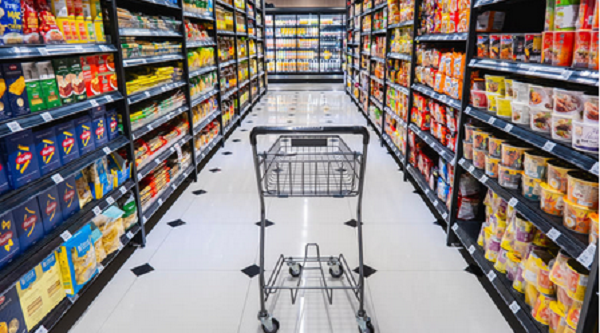
The food industry requires a lot of energy, says Sylvain Charlebois, director of the Agri-Food Analytics Lab at Dalhousie University. Whenever oil prices surge, he says, you’ll see increases in food prices across the board.
Heavy products are mostly impacted, Charlebois says. Meat, dairy and liquids tend to be more impacted by energy costs than other categories. The cost of imported fruits and vegetables could also rise as the cost to transport produce in trucks increases.
On April 1, the industrial carbon price will increase to $110 per metric tonne from $95, which Charlebois says will impact the entire supply chain and eventually lead to higher retail prices. “If crude remains quite high, we’re lining ourselves up for a double whammy here,” Charlebois says, adding that we could see food inflation “at around six per cent for quite some time.” If the conflict continues, he estimates groceries will cost a family of four an extra $300 to $400 this year.
Charlebois says Canadians can find savings at small, independent grocers. “They tend to be cheaper because they work the supply chain very differently.”
Maximize food savings by keeping an eye on weekly flyer deals and comparing prices between grocery stores with apps like Flipp and Gofer.
Airfare
Canadians are already seeing the effects of higher oil prices in the air travel industry, says John Gradek, head of the aviation management program at McGill University.
Air Transat has added higher fuel surcharges on flights to Europe, while Air Canada and WestJet indicated that their prices may also change soon.
The price of fuel has gone up 30 to 40 per cent, and fuel represents about 30 per cent of the cost of your flight, Gradek explains. “Every flight is losing money. So the question is, how long can the airlines hang around losing money day to day?”

Airfare to Europe could go up around $100 to $200, Gradek says.
The closure of air space in the Middle East is affecting flight routes, also impacting air travel costs. A flight between Mumbai and Toronto is taking two to two-and-a-half hours longer, burning an extra two hours of fuel. Gradek estimates Canadians could see increased charges of $200 to $300 for flights to the Indian subcontinent and Southeast Asia.
Now that March break is over, Gradek says, the airlines are in a season of low demand until Victoria Day, which means fuel surcharges on domestic flights may be delayed.
“My thinking right now is that the Canadian carriers will stay away from significant increases in fuel surcharges for the next two or three months,” he says. We may see surcharges of $20 to $30 over the next couples of months, but if the conflict continues through May and June, those charges will likely increase to $50 to $100, he adds.
Unfortunately, booking summer flights in advance may not protect you from expensive fuel surcharges, Gradek says.
Given the high cost of gas, Canadians may want to delay travel plans and look for fun experiences within their own communities this summer.
Mortgage rates
While the Bank of Canada held its overnight interest rate at 2.25 per cent on Wednesday, the five-year fixed mortgage rate has jumped in response to the surge in oil prices and inflation risk.
The longer the war in Iran lasts, the higher the price per barrel. That means increased inflation, pushing up Canadian government bond yields, which translates to higher fixed mortgage rates.
A month ago, you could get a three-year fixed-rate mortgage for 3.69 per cent, and now that’s closer to 3.94, which is significant, says Ron Butler, principal broker at Butler Mortgage.
For those whose mortgages are up for renewal in late May, June or later, there’s a possibility of even higher rates. “When you combine that with the price at the pumps going up, then that’s tough on affordability,” Butler says.
Canadians who currently have renewal notices should act immediately. “If they’ve had any sort of an offer from their bank of early renewal and the rate is a fixed rate below four per cent, they should take it,” Butler says.
Electronics, furniture and clothing prices
Ongoing conflict in Iran will increase prices across the retail sector, says Andre Cire, an associate professor in the department of management at the University of Toronto.
“I don’t think there is one product nowadays that doesn’t depend on oil in some way or another,” Cire says.
Most clothing today is made with synthetic materials that are derived from petrochemicals, such as polyester, which means the price of oil will have a direct impact on the cost of clothing.
The price of electronics is also likely to rise. Cire says helium, a byproduct of natural gas production, is used to make memory chips.
Cire, who also researches transportation, points out that because many ships are being rerouted, freight costs could go up.
Consumers who want to save money on textiles and electronics should look to second-hand markets and retailers that sell refurbished goods.
If you’re thinking about making a big purchase, such as a new sofa or TV for the living room, Cire suggests buying now rather than waiting, as prices may increase in the coming weeks.
Energy bills
In response to the ongoing crisis, countries such as Japan are taking measures to save on natural gas. More than 80 per cent of the liquefied natural gas (LNG) that passed through the Strait of Hormuz in 2024 went to Asia, according to the U.S. Energy Information Administration.
While prices have gone up a bit here, says Doug Porter, Canada is a bit more insulated than other countries when it comes to natural gas prices.

“It’s not in the same league as what we’ve seen for oil and gasoline prices,” he says. “Natural gas prices could be going crazy in Europe, like they are, without really having much effect here in North America, because it’s not really a world market for natural gas.”
Market volatility
Surging oil prices often cause market volatility, which can cause panic among investors.
“People who try to time the market end up being the biggest losers,” Jackie Porter says. She points out that many people withdrew investments during the crash in 2020, only for the market to rebound months later. “It’s important to be mindful of your long-term goals,” she says. During periods of market volatility, she adds, you should avoid making decisions that could potentially cost you money that you can’t get back when the market recovers.
While the rapid increase of oil and gas prices is “a pretty important shock for the global economy,” Doug Porter says, “it is entirely possible that things will come back down relatively quickly.” If that’s not the case, he says, Canadians lived through a serious shock four years ago when gas prices went up to more than $2 per litre and oil went to $120 a barrel.
“The economy soldiered through that,” Porter says, adding that he doesn’t think that what’s happening in Iran now calls for dramatic changes in Canadians’ spending decisions or savings behaviour. “Be just a little bit more cautious and aware of what’s going on.”
This article was first reported by The Star