
Economists Warn of Price Surges Following Historic Energy Supply Disruption
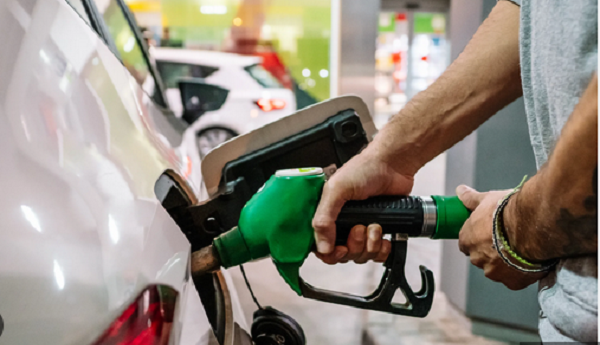
Ryan Harris was shocked when he realized he spent more than $600 on fuel last month.
As gas prices continued to climb due to the Middle East conflict, with the national average hitting $1.824 per litre in April, the 41-year-old father had no choice but to keep filling up his 2006 Honda Pilot.
The Hamilton, Ont., resident needs the SUV to commute to his in-person job as a broadcast media technician in Oakville. He needs it to take his three children to after-school activities and other family outings.
If prices at the pumps remain high, Harris and his wife fear they won’t be able to afford road trips with the kids this summer.
“It feels like an unfair sacrifice to make because of corporate and political decisions that are out of our control,” he told the Star.
He is also concerned about the possibility of a surge in food prices. His children are 11, seven, and five years old and “they’re eating, like, all the time,” added Harris.

Across the country, consumers are already feeling the pinch of higher prices as the conflict in Iran enters its third month. But this could be just the beginning.
Unless there is a quick end to the blockade of the Strait of Hormuz — through which about one-fifth of the world’s oil and gas normally passes — economists are expecting prices to increase across the board this year.
In April, the International Monetary Fund raised its global inflation forecast to an average of 4.4 per cent in 2026.
The Bank of Canada says domestic inflation could peak at around three per cent in April and if the conflict persists, it could stay near that level for most of 2027.
Exorbitant price tags, plus an already soft labour market and slow economic growth, would mean more financial trade-offs for millions of Canadians who haven’t had a break from economic stress in years.
Harris said he can’t simply boycott essential items like groceries, though he is considering switching to an electric vehicle so he doesn’t “have to worry about gas anymore,” he added.
“Everything just feels out of our control.”
Largest disruption in history
The massive disruption to the global oil market — dubbed the largest in the market’s history by the International Energy Agency — is destabilizing supply chains around the world.
The price of West Texas Intermediate (WTI) crude oil soared from $67 (U.S.) a barrel on Feb. 27, a day before the United States and Israel launched strikes on Iran, to a peak of almost $113 a barrel on April 7. It was at $105 on Thursday, representing a 57 per cent increase since the war began.
As a result, higher gasoline and diesel prices will put upward pressure on the prices of “things like fresh fruit and fresh vegetables, or any type of good that has to be transported,” explained Andrew Barclay, an economist at Statistics Canada.
He added that consumers could also see price increases in furniture, appliances and clothing.
Adding pressure to food prices worldwide is the fact that shipments of fertilizers were also intercepted by the closure of the Strait of Hormuz, said Barclay.
In March, Canada’s inflation rate was already capturing some of the impact from higher energy costs due to the war.

The Consumer Price Index was up 2.4 per cent year-over-year. Excluding gasoline, it rose 2.2 per cent.
Gasoline prices jumped 21.2 per cent on a monthly basis — the largest price increase for the fuel on record, according to Statistics Canada.
At the same time, grocery inflation climbed 4.4 per cent year-over-year from 4.1 per cent in February. Prices for fresh vegetables increased 7.8 per cent in March — the largest spike since August 2023.
Oil could hit $150 per barrel
According to research by the International Monetary Fund, a 10 per cent increase in global oil inflation boosts, on average, domestic inflation in advanced and developing economies by about 0.4 percentage points.
Assuming the U.S. and Iran reach a deal by early May, and traffic in the Strait of Hormuz recovers gradually over the remainder of this year, TD Bank economists expect West Texas Intermediate crude oil to trade at around $80 per barrel by year-end.
In the case of a prolonged disruption, however, TD Bank sees the price of oil peaking at $130 per barrel in the second quarter and remaining above $90 by the end of 2026.
Roger McKnight, chief petroleum analyst at En-Pro, told the Star that if the war continues for another month, it is possible the price of oil reaches $150 per barrel.
“I don’t think the economies of the world can handle that,” he said, adding, “I don’t think President Trump would really want to have this carry on when we have a run-up to his midterms.”
Canadians cutting spending
There are early signs that consumers are changing spending habits as essential costs increase.
A recent online survey of 600 households by the Bank of Canada revealed that 21 per cent of respondents have cancelled or postponed their trips due to increases in travel costs. Meanwhile, 28 percent have reduced major spending more broadly since the war in the Middle East started.
Many airlines have already introduced fuel surcharges and higher baggage fees while adjusting operations in anticipation of weaker demand. WestJet recently said it would be cutting flight capacity this summer and Air Canada announced the suspension of six routes.
As the population spends less on trips and other discretionary goods and services, experts expect economic growth in Canada to be stunted this year.
Jimmy Jean, chief economist at Desjardins, is forecasting gross domestic product (GDP) growth of 1.4 per cent, on average, in 2026.
“So that’s not a recession, what we have in our baseline forecast. But it’s still a pattern that is quite weak in terms of growth,” Jean said. “It’s a deceleration even from 2025.”
Jean also believes the unemployment rate — currently at 6.7 per cent — will remain elevated for some time.
“Employers are very prudent as it stands, given all the uncertainty. And so you have much less job openings,” he said.
Oil sector could benefit
The upside of higher oil prices is that Canada is a producer and net exporter of the commodity, with provinces like Alberta benefitting when demand increases.
In the federal government’s spring economic update, officials highlighted a “higher investment” economic scenario, whereby higher oil prices will lead to increased investment in the oil and gas sector.
The feds emphasized that this could result in higher employment and incomes, “helping to offset the drag from weaker global activity.”
However, the spring update also included an alternative “global supply disruptions” scenario, recognizing that global inflationary pressures might not spare the Canadian economy, leading to reduced consumption, investment, exports and productivity.
The government didn’t specify which scenario is most likely to occur.
Possible rate hikes
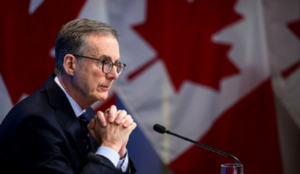
The Bank of Canada held its key interest rate at 2.25 per cent on Wednesday, ultimately choosing to look past the war’s immediate impact on inflation.
“From their lens, there’s very little that changing an interest rate can do about higher energy prices,” said Andrew Hencic, economist at TD Bank.
Bank governor Tiff Macklem warned, however, that if higher energy prices translate into persistent, generalized inflation, “there may be a need for consecutive increases in the policy rate.”

Members of the C.D. Howe Institute’s Monetary Policy Council have called for the Bank of Canada to maintain the policy interest rate at 2.25 per cent until October, and raise it to 2.5 per cent by April 2027.
Hiking interest rates sooner risks making life more unaffordable for households renewing pandemic-era mortgages, added Desjardins’ Jean.
Around 1.3 million mortgage holders are expected to see significant monthly payment increases at renewal by the end of 2027, according to Canada’s banking watchdog.
“If you’re going to deliver rate hikes on top of that,” said Jean, “what you risk engineering is a recession.”
Whether Canada ends up in recession remains to be seen, but in the meantime, inflation-weary Canadians — like Ryan Harris — will have to prepare for yet another potential blow to their household finances.
Harris fears that will mean depriving his kids of cultural experiences and entertainment while they’re young and still learning.
“I make personal sacrifices and all,” he said. “But I don’t want to sacrifice the things that we give them.”
This article was first reported by The Star