





Brampton Real Estate Market Faces Rising Forced Sales Following Overextended Investments
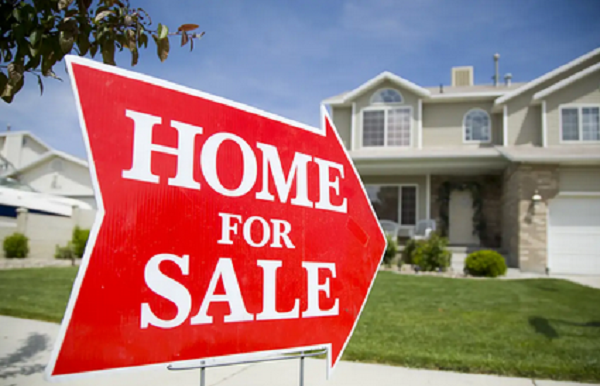
In one home for sale, giant photos of the Toronto skyline at dusk paper the walls of what might have been a rental apartment.
Another house is missing a fridge, but there’s furniture piled in the basement, including a mattress and bed frame.
Some other places have two-car garages; many have large secondary suites. All are mostly empty. On the doors, official notices warn against entry.
The listings are all forced sales in Brampton. The suburb of almost 800,000 people has been hit hard by the Greater Toronto region’s real estate downturn, with more power of sales in the province than any city other than Toronto, according to a new database created by a realtor and mortgage broker.
Unlike Toronto, where tiny condos in tall towers have been the centre of the housing market crash, in Brampton the homes have been bigger and the price drops often more dramatic.

Some of them were bought by local investors as second or third properties. Other buyers purchased homes with basement apartments that allowed them to take on bigger mortgages. In both cases, buyers were counting on rental income local real estate professionals say.
But new restrictions on international students and temporary foreign workers have made it harder to attract tenants to help with mortgage payments. This, combined with big price drops and higher interest rates, have turned what was once seen as a path to success into something much more precarious.
While there’s a silver lining in more affordable homes for younger residents, others are losing big.
“A lot of people were using their homes as ATMs, they were living beyond their means,” said Brampton mortgage broker Rakhi Madan. “Over the last 10 years, things were on their side, the prices were going up so dramatically,” she added.
“That party is over now.”
Power of sales happen when owners miss mortgage payments and the lender takes over to get what they are owed back. The owner technically gets any profit after the sale, but often these days there’s not much left, said Jonathan Alphonso, a GTA realtor and mortgage broker.
It’s hard to track power of sales, although there are often clues, like an empty home because the owners have already been evicted for defaulting on loans. These properties are sold “as is” — the lender makes no promises about the condition.
Alphonso recently created a website that scrapes real estate listings looking for the term “power of sale,” and found that Brampton has the most active residential listings of any city in Ontario (32), second only to Toronto (97), as of press time. That’s still a small percentage of overall listings, but a jump from 2024. In May 2024, only two power of sale listings came on the market in Brampton, compared to 15 in April 2026.
“Brampton is giving us a lot of headaches,” Alphonso said, adding it’s mostly houses that he is seeing in power of sale there, and not condos. They impact the entire market, setting new bottoms because they are “almost always the lowest price sold in the neighbourhood.”
But just a few years ago, the city was seeing huge jumps in home prices and real estate seemed like a sure bet.
Prices steadily climbed, rising almost 32 per cent to about $1.35 million from February 2021 to February 2022, according to the Toronto Regional Real Estate Board (TRREB).
Gurpartap Singh Toor, a regional councillor for both the city of Brampton and the region of Peel, said many residents “bought into this idea of owning a home, and that true success means that you can own a second property,” or even a third.

“When the interest rates were really low, that became everybody’s prime opportunity.”
Madan remembers doing mortgages for 0.99 per cent. Buyers thought the good times were never going to end.
“People were renovating. People were buying houses, people were refinancing, people were buying new cars,” she said. “It was free money.”
Any property went fast, with multiple offers, remembers Laddi Dhillon, a sales representative with RE/MAX Gold Realty Inc. Purchasers were “lining up” and didn’t care about price. “They wanted to get the house.”
But in spring 2022, the Bank of Canada began a series of interest rate increases. Big price drops followed.
Madan said in Brampton a more intense version of what’s unfolding across the GTA is happening. Average prices in the region have dropped by 24 per cent since the February 2022 peak, according to numbers from TRREB, while in Brampton, they’ve fallen 34 per cent over the same period, to $892,000.
Many mortgages done during the pandemic at very low interest rates are now coming up for renewal at higher ones, Toor said. Monthly payments are higher, rental income is lower, and it’s resulting in a lack of investor confidence.
“Now everyone’s wondering, can I carry the second property anymore?”
Data shows some residents are falling behind on their mortgage payments, even if they are able to hold on to their homes.
In the last quarter of 2025, 0.85 per cent of all open mortgages in Brampton were severely delinquent (missed mortgage payments for 90 days or more), that’s up from 0.41 per cent in the final quarter of 2019, and above the Ontario (0.63 per cent) and Canadian (0.62 per cent) averages, as a percentage of the total volume of open mortgages, according to consumer credit reporting agency Equifax Canada.
This has all resulted in some big losses for homeowners who need to sell, even if they’re not forced to by a lender.
One Brampton detached home with a basement apartment sold for $900,000 last fall, a $750,000 loss from the $1.65 million it got in 2021, according to real estate company HouseSigma.
And some owners are just not able to hold on to their homes.

Dhillon said he’s seen a lot more power of sales in the last year, the majority owned by people who bought near the top — 2021 and early 2022 — some of whom were renting out basements to make their mortgage payments.
“They did not have the means to buy it, but they took loans, like lines of credit and refinanced their previous property, ” he said. “But now the market has crashed, and they have nowhere to go, so the properties are going back to the lenders.”
A lot of families in the city are impacted by the ongoing tariffs with the U.S., whether they’re in the trucking industry or self-employed, Madan said. As well, some residents bought pre-construction properties (both condos and freehold homes) before they were built and those are now worth less than what they agreed to purchase them for and they are not able to close.
“They spread themselves too thin,” she said, adding she also saw “people trying to use a basement apartment as leverage to get bigger mortgages.”
Toor, who came to Canada as an immigrant to attend university, said reports of 10 or 15 international students crowded into a basement were based on stereotypes and “super exaggerated.”
But, he said, “a lot of the rental housing was being supported by either temporary foreign workers or international students.” Now that the government is permitting fewer people under those programs, “the rental pricing is also declining.”
According to Statistics Canada, the city’s total population grew from 2021 to 2024 by around 96,000 but then declined by almost 6,000 people from 2024 to 2025, these numbers include both work permit holders and study permit holders with valid permits when the data was collected. It now sits at just under 780,000.
The city’s new Residential Rental Licensing (RRL) Program requires homeowners renting one to four residential units to get a licence. Starting in January 2026, landlords also have to provide proof of insurance and complete an educational program.
Toor feels that fines have been too harsh and that the program has discouraged people from renting basement apartments because they don’t want to go through the process of getting a licence.
“You can’t really rent until it’s legal,” Madan added. “So all of a sudden now they have to make it legal and they need to take out $50 to $70K, which they don’t have.”

Supporters say the program has helped reduce dangerous basement apartments.
Despite the money lost in the market, not everyone is upset.
Younger people who’ve been shut out see the price drops as an opportunity to finally be able to afford a house said Toor, who is 33.
“They’re getting priced out and, you know, they’re either in basement apartments or they’re in condominiums.”
Even with the lower home values, Brampton still made an international list of the least affordable cities by digital money transfer service Remitly (along with Toronto and Mississauga) released earlier this year. It sits at number 15, sandwiched between Nice, France and Madrid, Spain.
Realtor Dhillon also sees this generational divide, and said first-time buyers have a good opportunity.
But people are nervous about further price drops, and not jumping in to take advantage of the moment.
“They go with the herd mentality,” he said.
This article was first reported by The Star