






Chipmaker Equities Stumble as Dollar Relaxes Ahead of Payrolls
Stocks and government bond prices rose on Thursday and the dollar dropped after data showed U.S. job growth slowed more than expected in June and numbers for the prior month were revised lower.
Nonfarm payrolls increased by 57,000 jobs last month, after a downwardly revised 129,000 rise in May, the Labor Department’s Bureau of Labor Statistics said in its closely watched employment report.
Economists polled by Reuters had forecast payrolls advancing 110,000 after a previously reported 172,000 increase in May.
The data caused traders to slightly trim their bets on Federal Reserve rate hikes. They are now not fully pricing a 25-basis-point rate hike until December’s meeting, and see a hike by September’s meeting as finely balanced.

That shift sent the rate-sensitive U.S. 2-year yield down 5 basis points to 4.11% . Benchmark 10-year yields dropped 1 bp to 4.46%.
Bond yields move inversely to prices.
“With the Federal Reserve considering rate hikes, this is not necessarily a bad report for the stock market. Lower bond yields would likely be welcomed by technology investors, who have become increasingly concerned about the rising cost of the AI buildout,” said Shawn Snyder, economic strategist at Potomac Fund Management.
“This report alone is not enough to take a rate hike off the table, but it may be enough to push the timing out.”
S&P 500 futures were last 0.4% higher , having been up around 0.1% before the data, and Europe’s STOXX 600 benchmark index traded up 1%. (.STOXX)
With short-dated bond yields and rate expectations broadly steady, the fall in U.S. yields weighed on the dollar, particularly against the Japanese yen.
The euro and pound each rose 0.8%, to $1.1471 and $1.3378 respectively, their highest in about two weeks, while the dollar slid 1.1% on the yen to 160.78.
The dollar was already trading lower on the yen, with the Japanese currency having strengthened sharply and suddenly early in European trading.
The yen has been teetering around a 40-year low against the U.S. currency, causing traders to brace for the possibility Japanese authorities would step in to support their currency.
It was not immediately clear what had driven the earlier move, but analysts said it was more muted than after previous interventions.
CHIPMAKERS SLIDE
Away from the data, chipmaker stocks were in particular focus on Thursday, with Asian names tumbling a day after the Philadelphia SE Semiconductor index (.SOX) eased 6.3%, albeit after posting dramatic second-quarter gains.
South Korea’s KOSPI (.KS11) sank 7.8%, extending Wednesday’s slide of 2%, after an eye-watering second-quarter surge of 68% on soaring AI-related demand for memory chips. SK Hynix (000660.KS) plunged 14%, and Samsung (005930.KS) tumbled 9%.

“The plunge in Asia semis today is more about a hangover from Wall Street,” said Fabien Yip, a market analyst at IG, adding that profit-taking appeared to be the key driver.
“Layered on top is Apple’s reported outreach to restricted Chinese memory makers for China-market devices, which introduces pricing threat to the Korean and Japanese incumbents.”
There is also potentially some rebalancing going on, as investors use the new quarter to rejig positioning.
Also in the mix was a further decline in oil.
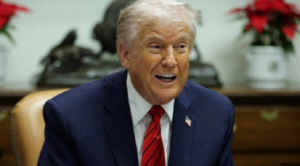
Brent crude hit new four-month lows, down 1.4% at $70.4 a barrel, as U.S. President Donald Trump said talks with Iran had gone well in Qatar and more oil tankers transited through the Strait of Hormuz.
Gold was helped by lower yields, bouncing 2.2% to $4,124 an ounce after a drop of 14% in the second quarter.
Reporting by Stella Qiu in Sydney and Alun John in London; additional reporting by Junko Fujita in Tokyo Editing by Emelia Sithole-Matarise and Alex Richardson
This article was first reported by Reuters