




Future of Canadian Pipelines Depends on Unpredictable Energy Output
Canadian pipeline firms are proposing billions of dollars in new projects despite oil sands companies being reluctant to commit to significant production expansions amid ongoing uncertainty around climate policies and long-term global demand.
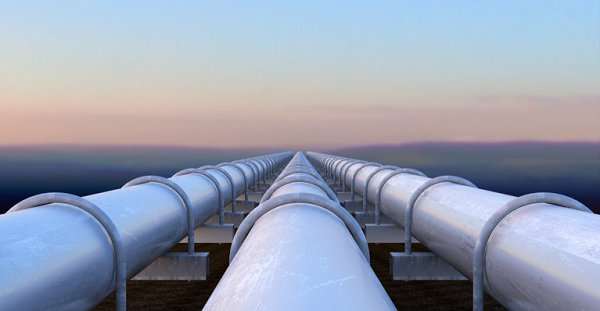
At least six different pipeline projects are underway or proposed in Canada, to move oil to the United States or to export markets on the Pacific coast. If all are built, the country’s export pipeline capacity would increase by 45%, or 2.25 million barrels per day, by 2035, according to a Reuters calculation.
But filling all those pipes would require Canadian oil supply to increase by more than a third by 2034, a near-doubling of its current annual average growth rate. It would also require Canadian producers to move ahead with major new oil sands projects of the type that no company has undertaken in more than a decade.

The mismatch between proposed export pipeline expansions and the pace of output growth highlights how Canada may struggle to achieve Prime Minister Mark Carney’s “energy superpower” ambitions, despite a more supportive regulatory environment and growing interest in Canadian oil from international buyers.
Both Suncor Energy (SU.TO) and Canadian Natural Resources (CNQ.TO) said this month they are not yet willing to accelerate plans for production increases. Pipeline operator Enbridge (ENB.TO) said in July it is postponing plans for a second phase of its Mainline pipeline expansion, one of the six new projects, as customers failed to commit to capacity increases.
“Producers are behaving with discipline,” Enbridge’s executive vice-president for liquids pipelines Colin Gruending said on a conference call. “I think they’ll get there. We were just a little too quick off the line here.”
Canada is the world’s fourth-largest oil producer and a major energy exporter, shipping some 90% of its output to the United States. Northern Alberta’s oil sands hold vast reserves but existing crude export pipeline capacity is almost full.
In the short-term, global buyers are increasingly interested in Canada as the Iran war disrupts oil trade flows, and Carney says he wants to grow Canadian oil exports to help the national economy withstand tariff threats from U.S. President Donald Trump. However, uncertainty about the longer-term impact on demand from domestic and global climate policies and geopolitics is clouding the production growth picture.
Of the six Canadian pipeline projects, incremental capacity expansions like those underway or proposed for the Enbridge Mainline and Trans Mountain system could be done quickly and at a relatively low cost. But a project such as Alberta’s proposed 1-million-bpd east-west oil pipeline to the Pacific coast would be a much riskier bet due to its sheer size and scale.
About half of capacity expansions, or about 950,000 bpd, would ship oil to the U.S., including a proposal for a new crude pipeline that would revive parts of the former Keystone XL project.
SLOWER OIL SANDS CAPITAL INVESTMENT
Building new pipelines has in the past been fraught with political risk and environmental opposition, while low prices, regulatory uncertainty and investor focus on shareholder returns have stifled investment needed to significantly boost oil output.

Canadian oil production grew by 4% in 2025 to hit an all-time record of 5.35 million bpd and most analysts predict another 3% to 4% growth in 2026. That compares to growth of 8% or higher in the 2000s and 2010s, when new oil sands mines were being built.
Annual capital investment in Canada’s oil sands peaked in 2014, at C$35 billion, compared to C$14.2 billion in 2024, according to Statistics Canada. The last major new oil sands project, Suncor’s Fort Hills, started operating in 2018. Since then, companies have concentrated on expanding existing projects.
“If you go back in the last decade, we (the oil sands industry) spent $10 billion per year less than we did the decade before that,” said Imperial Oil CEO John Whelan at a conference in June.
Building out enough production to fill the proposed east-west pipeline alone, as well as construct the carbon capture project the Canadian government has said must be built alongside it, would require more than C$100 billion in capital investment, Whelan said.
“It’s all doable. It’s stuff the oil sands (industry) has done in the past,” said Wood Mackenzie analyst Mark Oberstoetter. “But then you had a different view on long-term oil prices, arguably, and kind of a growth-at-all-means mantra at some of these companies which seems quite different today.”
Energy consultancy Novi Labs identified 19 different oil sands growth projects that could add 652,000 bpd of production by 2037. Only some of the projects, proposed by companies like Cenovus Energy, Imperial Oil, Strathcona Resources and Suncor, have received final investment decisions.
When Novi Labs included other proposed oil sands growth projects — ones companies have indicated are in their medium- or long-term plans, but for which no timing guidance is available — that added another 730,000 bpd, but still fell short of the growth needed to fill the proposed pipes by more than 850,000 bpd.
Canadian oil executives have said they feel more optimistic about the future than they have for years, thanks to Carney’s pledges to speed permitting for energy projects and roll back or water down a variety of environmental and climate rules.

But many of the proposed policy changes negotiated between the industry and the federal and Alberta governments — including agreements around carbon pricing, financial supports, and permitting timelines — have not yet been drafted into final legislation.
“Will we see some big projects moving ahead if we get these investment conditions right? That’s absolutely our objective,” said Kendall Dilling, president of the Oil Sands Alliance industry group in an interview.
Reporting by Amanda Stephenson in Calgary and Arathy Somasekhar in Houston; Editing by Liz Hampton and Nia Williams
This article was first reported by The Globe and Mail