





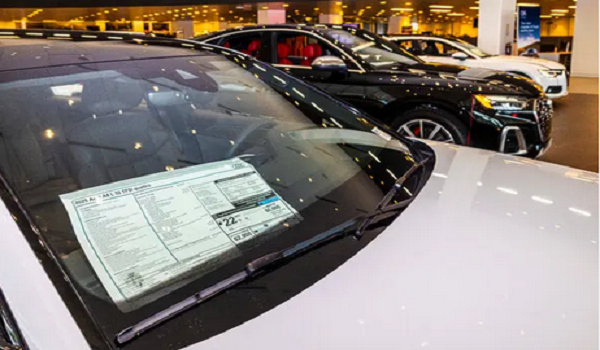
Draft U.S.-Canada Agreement Reportedly Features Fixed 15% Auto Duty
The prospective trade deal being negotiated in Washington this week would lower U.S. President Donald Trump’s tariffs on Canadian autos from 25 per cent to 15 per cent and preserve an existing exemption for the value of American content, two sources familiar with the negotiations say.
However, the deal would not make Canadian and Mexican content in vehicles tariff-free, as Ottawa had pushed for.
As Canada rushed to finalize the pact ahead of a Friday night deadline, Prime Minister Mark Carney’s concessions at the bargaining table drew criticism from Manitoba Premier Wab Kinew. Quebec Premier Christine Fréchette, meanwhile, suggested she might not help close the deal by returning U.S. alcohol to store shelves.

Mr. Carney has not shared the proposed pact’s details with the public and six sources across Canadian industry and government said the Prime Minister has also mostly left them in the dark, just a day before the deal is set to be closed.
The Globe and Mail is not identifying the sources because they were not authorized to reveal the contents of private discussions.
U.S. Vice-President JD Vance, for his part, mocked Mr. Carney’s “climb down” at a private fundraiser.
It all underscores the difficulty the Prime Minister will face in selling the deal to Canadians, after once promising an “elbows-up” approach to Mr. Trump and pledging to get “an even better deal” than Canada already had with its largest trading partner.
Canada-U.S. Trade Minister Dominic LeBlanc spent more than three hours with U.S. Trade Representative Jamieson Greer at the latter’s office near the White House on Thursday afternoon. The meeting was twice as long as any of the pair’s other recent sit-downs. Mr. Carney’s chief of staff, Marc-André Blanchard, was present, too.
When Mr. LeBlanc and Mr. Blanchard left, chief negotiator Janice Charette remained to continue talks. “We had a long, detailed meeting,” Mr. LeBlanc told reporters. “We’re very close. We continue to make progress. We’re going to stay here and do the work that’s necessary.”
Mr. Trump announced on Tuesday evening that the two countries had reached a deal and he would postpone for three days new 50 per cent tariffs on US$20-billion of Canadian goods, originally set to take effect on Wednesday, while the agreement was finalized.
Six sources familiar with the negotiations said both auto and forestry tariffs, imposed by Mr. Trump last year using Section 232 of the U.S. Trade Expansion Act, had been major sticking points. On autos, Canada pushed for all North American content to be exempt from U.S. tariffs, while Washington insisted only U.S. content be exempt. Two of the sources said on Thursday that, so far, the latter demand has prevailed.
An added complication was the U.S.’s parallel negotiation with Mexico, whose auto industry is heavily integrated with the U.S. and Canada’s. On Thursday, Mr. Carney’s office said he had spoken with Mexican President Claudia Sheinbaum that day about “North American trade,” but provided no specifics.
With forestry, Canada had asked for relief from the Section 232 sectoral portion of tariffs on lumber and wood products, while the U.S. wanted the sector excluded entirely from the deal. Canada also sought reductions on Mr. Trump’s 50-per-cent tariffs on steel and aluminum.
In exchange, the U.S. demanded that Canadian provinces end their boycotts of American alcohol and Buy Canadian procurement programs; that Ottawa lift retaliatory tariffs on U.S. autos; and that the system for allocating licences under dairy supply management be changed.
Washington also demanded that Ottawa complete its purchase of F-35 fighter jets from American defence contractor Lockheed Martin; buy American military hardware as part of joining the Golden Dome missile defence system; grant the U.S. right of first refusal in buying critical minerals from Canada; and increase the country’s oil exports to the U.S.
On Thursday, Foreign Affairs Minister Anita Anand met at the White House with U.S. Secretary of State Marco Rubio “to discuss continental security and other global priorities,” according to her office.

Mr. Kinew, meanwhile, became the first premier to openly criticize the prospective deal. He and other provincial and territorial premiers were briefed by Mr. Carney on Wednesday.
Two sources familiar with the call said the Prime Minister provided no details on tariff rates, which he told the premiers were still being haggled over, but asked that they all return U.S. alcohol to store shelves and end their procurement retaliation against the U.S. – measures that some provinces took in response to Mr. Trump’s Section 232 tariffs last year.
Mr. Kinew urged Mr. Carney to keep fighting Mr. Trump for better, arguing that Canada is both agreeing to Mr. Trump’s levies and giving up its ability to put pressure on the U.S.
“The deal will not be right for me,” Mr. Kinew said. “I just wonder if accepting the idea that Trump tariffs are here forever is the move where we wanted to give up some of that leverage.”
The Prime Minister’s request that provinces return American alcohol to store shelves to close the deal was delivered with “the step before begging,” Mr. Kinew said. He said that, if he were to allow the sale of U.S. liquor again, Manitobans should refuse to buy it.
“You can’t get a good deal with a bad person,” he added. “I think if we kept pushing, I think that we’d probably get more.”
In a later interview with The Globe, Mr. Kinew said conceding now to the U.S. would weaken Canada’s hand in the upcoming renegotiation of the Canada-U.S.-Mexico Agreement.
“We are dealing with a negotiating partner who I believe has a weaker hand today than when we first set off on this journey. I just think we can use that to our advantage, and get more right now before we even get into the CUSMA talks,” he said.
Ms. Fréchette said on social media on Thursday that she had spoken directly with Mr. Carney and was still deciding whether to agree to his request to return U.S. alcohol to store shelves as part of reaching a deal with the U.S.
“I will now analyze with all necessary seriousness the information that has been given me and the impact on Quebec before making a decision,” she wrote.
Mr. Carney also spoke one-on-one with Ontario Premier Doug Ford. The province is particularly vulnerable to Mr. Trump’s tariffs, including on autos and steel, and Mr. Ford has so far made no public comments about the tentative deal.
The only premier to miss the Wednesday trade debrief with the Prime Minister was British Columbia’s David Eby. His office said he is on vacation with inconsistent cell reception so Deputy Premier Niki Sharma attended instead.
Given forestry’s importance to his province and his outspokenness, along with Mr. Kinew and Mr. Ford, about the importance of the alcohol ban, Mr. Eby’s cooperation will be crucial if Mr. Carney hopes to fulfill that U.S. demand.
Lana Payne, the head of Canada’s largest private-sector union, criticized the idea of agreeing to exempt only U.S. content from Mr. Trump’s tariffs and not auto parts made in Canada and Mexico.
“Agreeing to the U.S. auto carveout is very concerning as it will impact what we build in Canada and our competitiveness,” said Ms. Payne, president of Unifor, which represents 40,000 Canadian auto industry workers. “My concern is also how this carveout is viewed when we get to the CUSMA table and is seen as a precedent for those talks undermining jobs in this country.”
At a private fundraiser in Southampton, N.Y. this week, Mr. Vance described Mr. Carney as a “very sweet guy,” but mocked his efforts to get a better deal from Mr. Trump.
Mr. Carney “comes in and puffs his chest out and says, ‘I’m going to, like, out-tough Donald Trump,’ ” Mr. Vance said in a recording of the speech obtained by The Canadian Press. “It’s hilarious because Carney presents this as some victory for Canada when fundamentally, like, they climb down on a lot of issues.”
With reports from Mike Hager in Vancouver and Mark Rendell in Toronto
This article was first reported by The Globe and Mail