





Canada Seeks Trade De-escalation Amid New Symbolic Friction Over Lake Ontario Directives
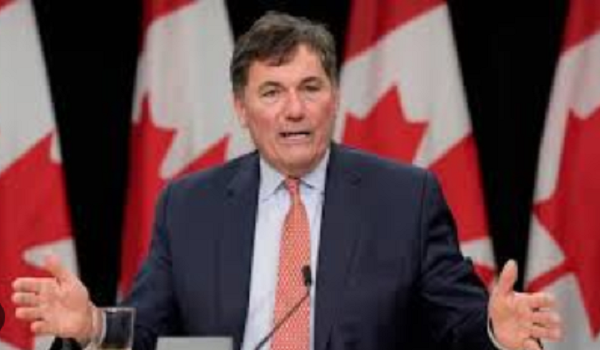
The federal minister overseeing talks with the United States has signalled a potential détente in the worsening trade war, suggesting that Canada was open to new negotiations after receiving what he described as clarifications from his American counterpart.
But that optimistic view from Dominic LeBlanc, who raised the prospect of a “mutually beneficial” trade deal on Thursday, less than a week after negotiations fell apart, was quickly derailed by U.S. President Donald Trump’s declaration that he was renaming Lake Ontario to Lake America.
The minister was responding to comments made a day earlier by his main negotiating partner, U.S. Trade Representative Jamieson Greer, who said that while the American side raised concerns about Canadian policies that urge online streaming companies to promote French programming, it did not insist on changes.

“Canada welcomes that the U.S. is now withdrawing its positions on discoverability and labelling and is confirming that measures to promote French language and Canadian culture will not be subject to future U.S. trade actions,” Mr. LeBlanc said Thursday in a post on X.
“We look forward to further constructive U.S. clarifications on their other positions, which would create the possibility of a mutually beneficial trade agreement that respects Canadian sovereignty.”
Mr. Greer had made the comments in a Wednesday interview with CBC News, during which he acknowledged Canadian frustrations.
“Our view is, you know, don’t retaliate. But I know how people are feeling in Canada and what they think,” he said.
Mr. Trump did not maintain that tone during a Thursday afternoon White House news conference, where he signed an executive order next to a map showing Lake Ontario renamed as Lake America.
“This is official, effective immediately,” he said.
Last year, Mr. Trump declared that the U.S. was renaming the Gulf of Mexico, saying it was in the country’s national interest.
“We changed it, and now it’s very routinely called the Gulf of America. So, if you think about it, we have a gulf and we have a lake. Now all we need is an ocean. So maybe we’ll have to change the name of the Atlantic and/or the Pacific,” he said.
During the news conference, Mr. Trump repeated some of his past grievances with Ottawa, including claims that Canada’s auto policies are unfair and that the country does not spend enough on its military.
“Canada has been ripping us off for a long time on trade,” he said.
On Mr. Trump’s lake renaming, Prime Minister Mark Carney responded with a post on X.
“The name Lake Ontario comes from the Wendat word Ontari’io, which, appropriately, means ‘the lake is beautiful, the lake is big.’
“The name is more than 400 years old, predating both the Confederation of Canada and the Declaration of Independence of the United States of America. We know that America is changing. Their trading relationships, their foreign policies, their national monuments, their hydronyms. Canadians also know that naming reality means calling it Lake Ontario – then, now and always.”
Ontario Premier Doug Ford responded with a social-media post: “It’s Lake Ontario to Canadians and the rest of the world. Now and forever.”
Manitoba Premier Wab Kinew dismissed the President’s announcement.
“You know when a rock band is really over the hill, and you see them in a casino playing some song from like 50 years ago? I think that’s the part of Donald Trump’s presidency we’re at now,” he told reporters in Winnipeg. “It’s not his best work.”
After trade negotiations collapsed late Friday, Mr. Trump approved 50-per-cent tariffs on about $28-billion worth of Canadian goods.

Ottawa responded by outlining on Tuesday countertariffs targeting nearly 900 American products that are scheduled to come into force Sept. 8. However, the Finance Department announced late Wednesday that it would be adjusting its planned tariffs after industry feedback.
The changes included removing seafood and fish products from Canada’s list of countertariffs, while adding new items such as wood charcoal and copper wire.
Restaurants Canada, which represents the Canadian dining industry, welcomed Ottawa’s reversal on seafood tariffs, which would have driven up food costs.
After Canada walked away from the trade negotiations, Mr. Carney suggested Saturday morning that the Canadian side was receiving contradictory messages from the Americans.
He said the Canadian team, which included Mr. LeBlanc and chief negotiator Janice Charette, was unified.
“You could not say that about the United States administration,” he said.
During that Saturday news conference, Mr. Carney said the American side made last-minute changes related to sovereignty, the French language and the treatment of large trucks that ultimately could not be supported.
In his interview this week, Mr. Greer rejected those characterizations.
Speaking in both English and French, he said there is “no way” that his side would have allowed the deal to fall apart over issues related to how streaming services promote French-language programs.
He said there are currently no “open channels” of communication between the two sides and suggested that the U.S. will respond if Canada follows through with its planned countertariffs. On Monday, Mr. Trump said he would double auto tariffs to 50 per cent from 25 per cent as of Jan. 1, 2027, and have them also apply to auto parts, which have so far been exempted.
Mr. Greer disputed Canada’s assertions that it was the U.S. side that brought new last-minute demands to the table. He said it was Canada that pushed for additional changes related to the treatment of the auto sector and large trucks.
The U.S. had offered to lower the tariff on Canadian automobiles to 15 per cent from 25 per cent, but the two sides disagreed about whether the reduction would also apply to medium and heavy-duty trucks.
Tariff relief for trucks is a key issue for Canada given that General Motors Co. produces the Chevrolet Silverado in Oshawa and Ford Motor Co. is spending billions to retool its plant in Oakville to produce F-Series trucks.
The Globe and Mail has reported that there were disagreements within the Trump administration about how hard to push Canada on metal tariffs, which played a role in derailing the negotiations at the last minute. U.S. Commerce Secretary Howard Lutnick demanded that certain products made of aluminum not be included in the tariff reductions.
Speaking to reporters in Washington on Thursday, Mr. Lutnick said the words “medium and heavy trucks” were only raised by Canada last Friday at 4 p.m., hours before negotiations ultimately fell apart.
“I met with LeBlanc 10 times. I spoke to Carney twice. These were not raised. These were not part of it,” he said.
Mr. Lutnick also said that the U.S. was not pushing for limitations on the French language in Canada.
“Do I care about how the Québécois speak? I mean, what could matter less to America? We don’t care,” he said, claiming that Mr. Carney had “manufactured” the language issue.

“Canada made the decision for political purposes. They wanted to walk away. This is politics only,” Mr. Lutnick said, predicting that Canada’s tone will change after Quebec’s provincial election and Alberta’s referendum on whether to remain in Canada or to hold a second, binding vote on sovereignty. Both the referendum and the Quebec election are set for October.
“My guess will be as soon as his elections are over, you’re going to see a plane full of Canadian negotiators flying down,” he said.
“We’re just being used by them. That’s what happened. That’s why it ended. It didn’t happen for math. The math was sensational.”
With a report from Irene Galea in Washington
This article was first reported by The Globe and Mail