





Canadian Energy Scrambles for New Markets as U.S. Eyes Venezuelan Supply
A fractured trade relationship with the United States and potential surge in oil production in Venezuela could add urgency to Canada’s push to expand and diversify its energy exports.
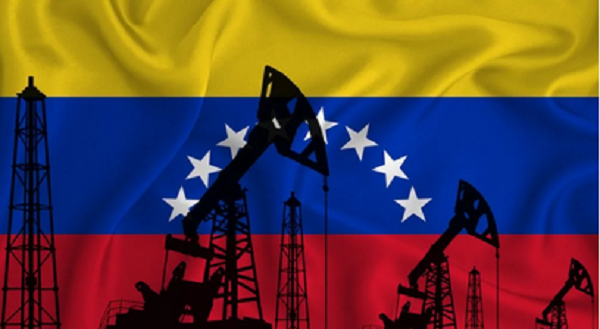
U.S. President Donald Trump announced on the weekend that he had struck a deal to take majority control of Venezuela’s oil reserves, noting on social media that the deal puts the Organization of the Petroleum Exporting Countries and Canada “on notice.”
Though the details are still unclear, a flood of Venezuelan crude making its way to the U.S. market currently seems like a far-off proposition, and one fraught with risks. Venezuela is an OPEC member.

Still, the deal underscores the importance of Canada further reducing reliance on its dominant southern market – a years-long quest, analysts say.
That would require spending billions more dollars expanding pipeline capacity to the country’s coasts.
The recently expanded Trans Mountain system is currently the only pipeline network in Canada that transports Alberta crude oil to the West Coast, where it can be shipped overseas and sold at a premium to North American prices.
Before the expansion came online in May, 2024, Canada shipped about 97 per cent of its crude to the U.S. Since then, non-U.S. crude oil exports have steadily climbed from about 3 per cent to 15 per cent.
In the month of June, non-U.S. crude oil exports jumped nearly 27 per cent year over year, according to Statistics Canada’s latest energy statistics. More recently, that demand has been bolstered by Asian refineries scrambling to replace Persian Gulf crude as the Iran War effectively halted the flow of one-fifth of the world’s supply.
“If you are a big importer of oil, you’re seeing what’s going on in Iran, and you also saw what happened during the initial phase of the war in Ukraine. Those disruptions in global supply can hurt your economy very quickly,” Charles St-Arnaud, chief economist at Servus Credit Union, said in an interview.
“A lot of those countries are trying to find new suppliers, partly to substitute for what they’re losing through the Iranian war, but also to ensure to have the optionality later on if there’s further disruption,” he added.
On Friday, Calgary-based Trans Mountain announced its network moved an average of 840,000 barrels of oil each day, running at 94 per cent of capacity during the second quarter of the year ending June 30th. Two-thirds of that was shipped to Asian refineries.
Canada and its energy industry have benefitted significantly from improved market access after the Trans Mountain expansion, but long-term competitiveness depends on being able to supply different markets rather than being captive to one, according to a TD Cowen report on Monday.
The report noted that Mr. Trump announced the Venezuelan oil deal a month before Ottawa’s Oct. 1 target for listing Alberta’s proposed West Coast Oil Pipeline as a project of national importance.
In July, the federal and Alberta governments announced Trans Mountain would take the lead on building and operating the one-million-barrel-a-day pipeline, running along roughly the same route as its existing system. The project is expected to cost up to $44-billion.

For now, Trans Mountain is in the process of making operational improvements that will boost the current pipeline’s capacity to 1.2-million barrels a day by the end of 2028, chief executive officer Mark Maki told The Globe and Mail.
In the meantime, Canada will continue to export about 4.5-million barrels a day to the U.S.
“We still don’t have the capacity to rotate fully away from the U.S.,” Mr. St-Arnaud said.
Shipping to Asia-Pacific markets is more profitable for Canadian oil producers, as exports are priced against the global Brent crude benchmark, which on Monday was trading at US$88 a barrel.
At home, Alberta producers sell to Canadian and U.S. refineries at the Western Canada Select price, which has recently been selling for a deeper discount to the North American West Texas Intermediate benchmark – as much as US$18.54 a barrel less than WTI as of Monday, compared with about US$12.50 a year ago.
The wider price spread could mean that Canadian oil shippers have filled up available space on the Trans Mountain Pipeline faster than expected when its expansion was completed in 2024, according to TD Cowen.
The lesson from the Venezuelan announcement is that market advantages are not guaranteed to last, the bank said.
With a report from Andrew Willis
This article was first reported by The Globe and Mail