





Trade Disputes: How Ottawa’s Tariff Remissions Offer Corporate Relief
Companies are set to avoid a significant chunk of Ottawa’s tariffs on $28-billion worth of U.S. imports, despite the federal government describing it as a “dollar-for-dollar” counterpunch, according to trade experts and an analysis by The Globe and Mail.
Earlier this month, the federal government imposed or increased duties on 629 American products in response to the Trump administration’s latest round of tariffs on roughly $28-billion worth of Canadian goods.
In some cases, however, importers won’t end up paying these countertariffs, thanks to a “remission” system that Ottawa has been running for the past 18 months to blunt the impact of its own duties on domestic manufacturers that rely on imported parts.

Roughly one-third of the 629 items targeted for duties are already named in remission orders and carry some kind of tariff relief, according to The Globe’s analysis of those orders.
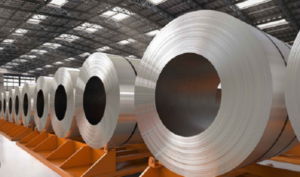
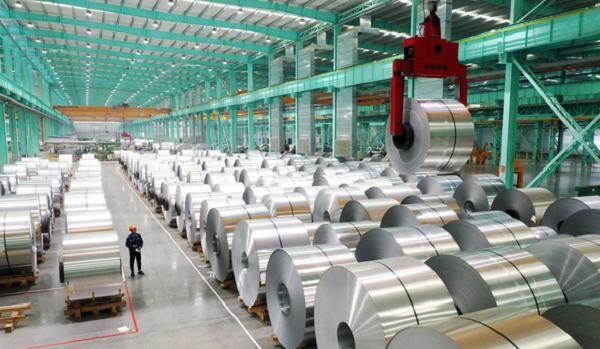
That share rises to more than three-fifths for the roughly 300 steel and aluminum goods on the list.
The Department of Finance said in a statement that it’s already receiving tariff relief requests related to the Sept. 8 countertariffs, which range from 15 per cent to 50 per cent. So in addition to existing relief already in place, newly tariffed products may be covered by future remission orders related to those requests.
The department said it has received more than 1,800 remission requests related to U.S. surtaxes since March, 2025, noting a single request can cover hundreds of different products.
Ottawa’s countertariffs are designed to shore up the domestic market for Canadian companies that are losing ground in the U.S. because of American tariffs. But retaliation can have unintended consequences, including driving up the cost of inputs for Canadian manufacturers, making them less competitive.
The tariff relief program lets companies avoid the import duties if they can prove that the product can’t realistically be sourced domestically or from non-U.S. suppliers, or if the tariff would cause severe damage to the Canadian economy.
“You want to push back, but you realize that this whole thing is really a tax on both our economies that are highly integrated,” said Tony Stillo, director of Canada Economics at the advisory firm Oxford Economics.
The remission system “lessens the hit to the U.S. imports, it keeps that integrated supply chain working and our businesses more competitive, so you actually reduce the risk of domestic offshoring,” he said.
Canada has imposed several rounds of retaliatory tariffs on the U.S. over the past 18 months, including tariffs on U.S. steel and aluminum that have remained in place, and tariffs on a broad range of other products that were imposed early in the trade war then removed last September in a bid to restart negotiations with Washington.
Throughout, Canadian importers have relied heavily on tariff relief, the government’s own numbers show.
Canada assessed $9.7-billion in gross revenue from customs duties on U.S. imports between March, 2025, and April 17, 2026, of which $5.5-billion, or roughly 57 per cent, was remitted back to importers, according to this year’s spring economic update.
The Globe’s analysis focused on product-specific remission orders published in the Canada Gazette, most of which were granted to businesses that applied for them.
However, there is also “horizontal” tariff relief that is automatically available on all imported products if they are to be used for specific purposes, such as steel for auto and aerospace manufacturing, products used in health care, or non-steel goods used in manufacturing, processing and food packaging.
The government does not publish any details on these horizontal remission claims. As a result, the number of products for which that relief is granted is likely even higher than The Globe’s analysis shows.
Jessica Horwitz, a trade lawyer at Bennett Jones LLP, said that companies with a compelling case for relief have generally been successful in their remission applications, although the turnaround time can range between three and eight months.
“The Department of Finance does take into consideration whether a request is urgent. They don’t necessarily review all of the requests on a first-come, first-served basis; they’re triaging based on the level of urgency and the need to mitigate unintended consequences,” Ms. Horwitz said.
Some of the remissions that have been granted are permanent, while others are time-limited, giving companies a runway to adjust their supply chains.
“The government wants to give businesses an opportunity to pivot those supply chains, but still urge them to actually move forward with that change and not remain with the status quo,” Ms. Horwitz said.
Permanent remissions, she said, tend to be granted where there’s no reasonable likelihood of pivoting away from a U.S. supplier.
“An example might include something like a specialty grade of steel that no Canadian producer is capable of producing, and it would require significant capital investment in terms of retooling manufacturing facilities in Canada and investing in new equipment to create that capability.”
It’s impossible to put an exact dollar figure on the U.S. imports that existing remission orders will cover unless the government eventually releases that information itself. Product-specific remissions orders include information on whether the relief covers select companies or all importers of a particular item.
The orders also describe imports in finer detail than available trade data. Cardboard boxes are a case in point. Based on 2025 trade data, Canada imported $655-million of “cartons, boxes and cases of corrugated paper or paperboard.” However, the remission order specifically describes the containers it relieves from tariffs, with measurements down to the half inch, so there is no way to know how much of the $655-million worth of cardboard boxes are exempt from tariffs.
Among companies identified in open remission orders using their business numbers, a few big names stand out.
Magna International Inc. holds eight remission approvals, more than any other company in the schedules, covering 17 tariff categories of steel, including screws and bolts, galvanized sheet, cold- and hot-rolled steel, all of which now carry an increased 50-per-cent duty.
“As a global automotive supplier, Magna evaluates a variety of mechanisms available under applicable trade regulations and remains focused on serving customers while complying with all laws and policies,” Dave Niemiec, director of corporate external communications at Magna, wrote in an e-mail.
Another company, MHI Canada Aerospace, Inc., has two approvals that cover 37 tariff categories, including aluminum plate, screws, bolts, nuts, rivets, washers and hand tools. Its approval related to U.S. countertariffs is conditional on the goods being imported for sale to Bombardier Inc.

In early September, Bombardier signed a deal to purchase the assets of MHI Canada Aerospace from Japan’s Mitsubishi Heavy Industries, Ltd.
Christina Lemyre McCraw, Bombardier’s communications manager, said in an e-mail the company was “not in a position to speak on behalf of MHI Canada Aerospace or comment on matters specific to its operations.”
Beyond company-specific reasons for remissions, there are broader economic arguments in favour of dulling the bite of retaliatory tariffs.
A Bank of Canada study of Ottawa’s retaliatory measures against the U.S. last year found that prices for targeted items rose by around 6 per cent – with roughly a quarter of the 25-per-cent tariff being passed along to end consumers. At the peak of the price shock, the countertariffs added about 0.3 per cent to headline inflation.
Mr. Stillo of Oxford Economics estimates Ottawa’s latest countertariffs would add 0.12 per cent to Canadian consumer price index inflation, before considering remissions, while much of the tariffs would be absorbed by businesses in their profit margins rather than passed along to consumers. Likewise, he estimates the combined impact of the latest round of U.S. tariffs and Canadian countertariffs could shave around 0.3 per cent off Canadian economic growth in 2027.
When you add in the remissions, he said, “the price impact is less, the cost impact is less and the impact on the Canadian economy is less.”
This article was first reported by The Globe and Mail