






US Consumer Watchdog report: Internal Strains Lead to Softer Regulatory Stance
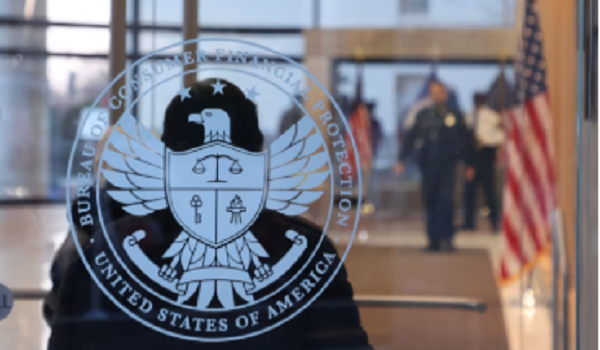
Examiners at the US Consumer Financial Protection Bureau gave a largely clean bill of health to most of the companies they inspected earlier this year, a light-touch approach that marked a departure from the past for the watchdog, according to three people with knowledge of the matter.
The CFPB resumed examinations in the spring after President Donald Trump’s administration had suspended most of the agency’s work upon taking office last year.
More than half of those exams went through an “expedited review,” which means supervisors identified at most only minor lapses with little risk of harm to consumers, making penalties unlikely, the people said.

Such reviews are more lenient and were historically rare, said the people. But the agency’s new political leadership had made it clear via policy changes and other communications that thorough scrutiny was unwelcome and that examiners’ jobs were at risk, they added.
The high proportion of expedited reviews, which Reuters is reporting for the first time, could expose consumers to harm if the agency overlooked or minimized serious problems, supervisory experts and former agency officials said.
It also shows how the administration’s effort to cut federal workers, narrow exams, and encourage companies to report officials they feel are too tough on them is reshaping frontline oversight of the financial industry, they added.
Representatives for the CFPB did not respond to requests for comment. The White House referred Reuters to the CFPB.
SHIFT IN AGENCY FOCUS
The Trump administration says financial industry oversight has become too onerous, hurting lending and the broader economy, though consumer advocates dispute that. It has also said it is trying to focus examiners on core risks.
Russell Vought, the CFPB’s former acting director, has accused the agency’s staff of “thuggery” in their dealings with firms. He told lawmakers in July that it has shifted its supervisory approach with the aim of doing “as little damage as possible,” adding: “That doesn’t mean we’re taking an approach to do… as little as possible.”
After initially vowing to abolish the CFPB — which Congress created in the wake of the 2007-2009 global financial crisis — the administration tried to slash two thirds of its workforce, including the vast majority of supervisory staff.Those plans are now on pause pending confirmation of a new CFPB director.
The agency last year said it would cut the number of exams by half and refocus them away from what had been core areas, such as student loans and medical debt, and more toward mortgages and redress for military service members.
It also said it would mostly focus exams on banks rather than nonbanks, such as payday lenders, which the CFPB alone oversees at the federal level.
The agency also now requires examiners to recite a “humility pledge” during exams to work efficiently, transparently and collaboratively with the company concerned. Reuters reported in August that a top CFPB examiner reminded staff of that pledge and warned of “most unpleasant” consequences if they were too aggressive.
Larry Lee, a former CFPB attorney who left the agency in August, said examiners have no incentive to look diligently for violations in the current climate, even as companies benefit long term from robust oversight.
“Today’s undiscovered compliance issues may fester and explode into tomorrow’s widespread but preventable consumer injuries,” said Lee, who now leads consumer financial protection policy at nonprofit Better Markets.
EXAMS HELP CATCH PROBLEMS IN REAL TIME
Under the rules, CFPB officials select for examination companies they believe pose the highest risks to consumers, usually after months of analysis.
This year, roughly 70 companies were selected, about half the usual number, with examinations scheduled roughly evenly across four quarters, according to the people and a fourth person with knowledge of the matter. Reuters could not ascertain exactly how many firms were examined in the spring.
Examiners typically inspect records and talk with company employees to uncover any compliance or regulatory violations before deciding how to proceed. In the past, most exams moved to a “full review,” involving legal analysis of violations and internal discussions on whether the issue merits enforcement action.

However, this spring examiners in most cases determined the inspections were “clean” under agency guidelines and proceeded with expedited reviews, the three people said. That means they determined that any violations were minor and unlikely to harm consumers, and it was therefore unnecessary to escalate them to legal or enforcement teams, according to public CFPB materials.
Austin Hinkle, former senior counsel in the CFPB’s Supervision Division, said that expedited reviews were traditionally rare because the process was designed to focus on the riskiest companies.
“A significant number of expedited track reviews suggest to me that either political leadership simply picked the wrong companies to examine, or that when violations are identified, career staff are being told to back off,” he said.
Examinations are meant in part to correct problems as they are happening. In the past, examiners have identified and swiftly remedied improper vehicle repossessions, harassing or abusive phone calls, attempts to collect money that borrowers do not owe, overcharges and unjustified fees, according to CFPB materials.
Lorelei Salas, who resigned last year as the CFPB’s director of supervision after the agency halted the division’s work, said she felt the CFPB leadership had demonized supervisory staff.
She added that by no longer focusing on nonbanks, it was ignoring “companies that pose the highest risks to consumers” at a time when many are struggling.
“The picture is pretty grim for consumers in the United States,” she said.
Reporting by Douglas Gillison in Washington; editing by Michelle Price and Jonathan Spicer
This article was first reported by Reuters