





Poll Finds Canadians Optimistic About Ottawa’s Collaboration with Provinces
Significantly more Canadians believe their federal and provincial governments are working well together than a year ago, according to new public opinion data released ahead of a meeting between Prime Minister Mark Carney and the country’s premiers.
National survey results, unveiled on Sunday, show 52 per cent of respondents agreeing that the federal and provincial governments are working very well or somewhat well together, an increase of 13 percentage points from 2024.
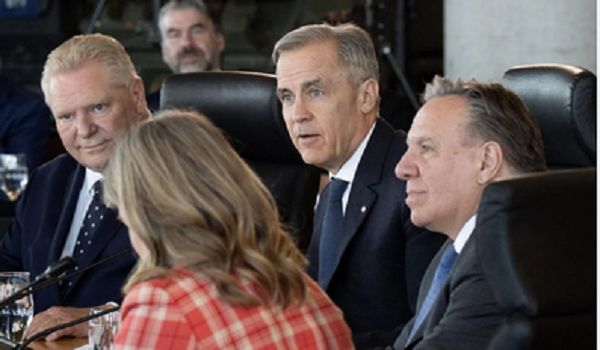
Provincial and territorial leaders are set to meet on Monday in Huntsville, Ont., where Mr. Carney will join them the day after to discuss U.S. President Donald Trump’s escalating threats of higher tariffs and Canada’s push to lift interprovincial trade barriers.
The results are from an annual poll conducted by the Environics Institute for Survey Research and a group of policy and research organizations that includes the Canada West Foundation, the Brian Mulroney Institute of Government at St. Francis Xavier University and the Centre of Excellence on the Canadian Federation.
The numbers may partly reflect the impact of a new prime minister after Mr. Carney formed a minority Liberal government after the election in April, Andrew Parkin, executive director of the Environics Institute, said in an interview.
But he said they also show the public is reacting to the recent series of premiers’ meetings that have displayed the relative unity of provincial leaders in response to Mr. Trump’s tariff and annexation threats.
“The public has responded to the change of prime minister, change of leadership, and to this recognition by leaders across the country that this is a significant moment that requires everyone to up their game,” Dr. Parkin said. “Now governments have to deliver on that.”


The public’s improved evaluation of federal-provincial relations is reflected in results in every region, except for the North, where respondents retained a consistently positive outlook. In the Prairie provinces, dominated by the Opposition Conservatives in the April federal election, 40 per cent of respondents said the federal and provincial governments were working well together, a large jump from the 24 per cent who said so last year.
Only in two provinces did a plurality of people say the two levels of government were not working well together, with 49 per cent taking that view in Quebec and 59 per cent in Alberta.
The survey of 5,391 adults was conducted between May 1 and June 16, with 90 per cent of responses collected online. As is the case with all online surveys, there is no margin of error as the sample, while representative, is not drawn strictly at random.
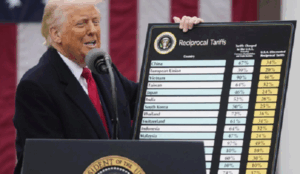
The results predate the latest threats from Mr. Trump, who has since warned of a Aug. 1 deadline for a 35-per-cent tariffs on goods not compliant with United States-Mexico-Canada Agreement, in addition to the levies he has already imposed on steel, aluminum and vehicles. At last month’s G7 summit in Alberta, Mr. Carney had announced a July 21 deadline to negotiate a new trade deal with the U.S.
The polling also suggests an increase in the trust for both levels of government. The numbers show a drop in the proportion of respondents across the country who said they did not trust either the federal or provincial governments to handle handle certain key issues, after three years of consecutive increases in distrust.
For example, on health care, in 2024, 28 per cent of respondents said they trusted neither government on health care, a number that fell to 19 per cent in this year’s survey. On climate change – with Mr. Carney having eliminated Ottawa’s consumer-facing carbon price – the number of distrustful respondents fell to 20 per cent from 28 per cent.
This article was first reported by The Globe and Mail