


China presses for renewed cooperation following Trump–Xi trade truce
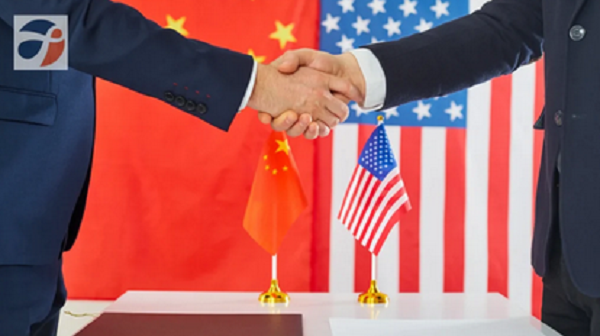
U.S. President Donald Trump and Chinese leader Xi Jinping agreed to reduce tariffs and export restrictions Thursday, stepping back from a trade war that has roiled the global economy.
Speaking to reporters after an in-person meeting with Mr. Xi in the South Korean city of Busan, his first since 2019, Mr. Trump described the talks as “amazing,” ranking them “12 out of 10.”
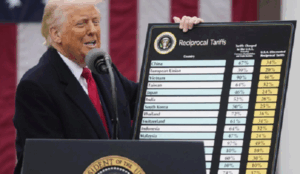
He said the U.S. would reduce tariffs on Chinese imports to 47 per cent by halving a 20-per-cent punitive levy imposed over fentanyl, after Beijing took “strong action” to stop the sale of precursor chemicals related to the deadly drug.
For its part, China will resume purchases of “tremendous amounts” of U.S. soybeans, Mr. Trump said, a key priority for American farmers, and suspend controls on the export of rare earths announced this month that threatened to derail Thursday’s meeting.
“I was extremely honoured by the fact that President Xi authorized China to begin the purchase of massive amounts of Soybeans, Sorghum, and other Farm products,” Mr. Trump wrote on social media Thursday. “Our Farmers will be very happy!”
He added China “has agreed to continue the flow of Rare Earth, Critical Minerals, Magnets, etc., openly and freely.”
In a statement, China’s commerce ministry said the two sides had reached a “consensus” on tariffs, including extending a truce agreed in May after a round of tit-for-tat escalations drove up levies to more than 100 per cent, which would have essentially ended trade between the world’s two largest economies. The current agreement was set to expire on Nov. 10 and will now run until October 2026.
 “The recent twists and turns in Sino-U.S. economic and trade relations have provided lessons for both sides,” Mr. Xi said. “Economic and trade relations should continue to be the ballast and engine of Sino-U.S. relations, not a stumbling block or point of conflict.”
Both sides, he added, “should consider the long-term benefits of co-operation and avoid falling into a vicious cycle of mutual retaliation.”
Nick Marro, lead analyst for global trade at the Economist Intelligence Unit, said it was “not just the U.S. and China that are breathing a sigh of relief, but the entire world.”
Had China fully implemented its threatened export controls, “it would have had repercussions for global industry, including for markets like the EU,” he said. “So walking back from the brink is a win.”
Han Lin, China director at The Asia Group, a Washington-based advisory firm, said the Trump-Xi meeting “represents more of a tactical pause than a strategic breakthrough.”
“Yet though the core issues of the U.S.-China rivalry – such as technology controls, supply chain tensions, and security frictions – remain unresolved, even a temporary truce is better than an uncontrolled trade war,” he said. “It maintains momentum for additional Trump-Xi summits, giving both sides time to explore areas of common ground.”
Both leaders went out of their way to praise each other and avoid contentious issues unrelated to trade. Mr. Trump praised Mr. Xi as a “very tough negotiator,” joking this was “not good” for him, but that they “have a great relationship.”
In turn, Mr. Xi said it was a “great pleasure” to see Mr. Trump again, adding China’s development “goes hand-in-hand with your vision to Make America Great Again.”
In a rarity for high-level U.S.-China meetings, the issue of Taiwan – the U.S.-backed island democracy claimed by China – did not come up.
“It was not discussed actually,” Mr. Trump told reporters on Air Force One as he travelled back to Washington. A Chinese readout of Mr. Xi’s remarks – typically far less detailed than U.S. accounts – also did not mention Taiwan.
The two leaders also seem to have skirted the issue of advanced computer chips, export of which the U.S. has been limiting to China, stifling some of the country’s high-tech industries, including those focused on artificial intelligence.
Mr. Trump acknowledged China’s desire to import more chips from Nvidia, suggesting Washington could act as a “referee” in such talks, but said the company’s most advanced Blackwell chip had not come up, before he was interrupted by an aide who said discussions with Mr. Xi had focused on Chinese rare earth controls.
“The Trump–Xi summit deliberately avoided Taiwan and deeper strategic issues to keep the focus on short-term economic de-escalation,” Mr. Lin said. “Both sides smartly prioritized securing a temporary truce on tariffs and trade irritants rather than reopening politically charged topics that could derail talks.”
One issue that seemed poised to potentially derail Thursday’s meeting was Mr. Trump’s announcement, minutes before Mr. Xi arrived in Busan, that the U.S. would resume nuclear testing in response to measures taken by China and Russia to strengthen their respective atomic arsenals.

Mr. Trump said he would “like to see a denuclearization,” but given “other countries testing programs” it was “appropriate” to begin testing “on an equal basis,” for the first time in more than 30 years.
China has greatly expanded its nuclear arsenal in recent years, and now has an estimated 600 warheads, far behind the 3,700 operated by the U.S. or Russia’s estimated 5,460, according to the Federation of Atomic Scientists. None of the three powers have tested a nuclear weapon since 1996, though Russia has recently expanded testing of launch devices.
Beijing maintains a “no first use” nuclear policy, but has previously resisted joining denuclearization talks between Moscow and Washington – that have essentially been abandoned since the war in Ukraine – pointing to the relative size of its arsenal.
Speaking to reporters Thursday, a spokesman for China’s foreign ministry said Beijing hoped the U.S. would abide by its current moratorium on nuclear device testing and “maintain global strategic harmony and stability.”
Mr. Trump said he will visit China in April, a trip confirmed by Beijing, after which Mr. Xi will travel to the U.S. This schedule could help relations “remain stable, at least until the first quarter of next year,” said Mr. Marro, the EIU analyst.
“But there’s still a lot of volatility, and importantly, U.S.-China relations are increasingly entering this cyclical phase, whereby we see a temporary period of calm, and then something reignites tensions, and then frictions restart all over from the beginning,” he said.
“I think that’s very much the new normal that we need to get used to, particularly over the next three years of Trump’s term.”
This article was first reported by The Globe and Mail