





Saudi Minister Targets Canadian Investment Opportunities in Food and Mining Sectors
Saudi Arabia’s Minister of Investment says he received a warm welcome in Ottawa on a tour meant to rebuild economic ties between Canada and the Middle East energy superpower.
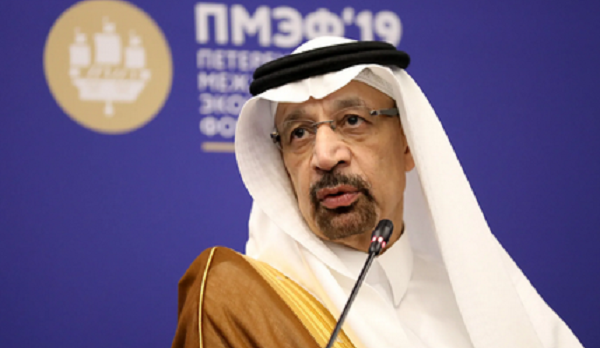
Khalid Al-Falih, the politician charged with preparing Saudi Arabia for life after oil, spent the first two days of the week in Ottawa and Toronto pitching for an increase in reciprocal investing between the two countries, rebuilding diplomatic ties. On Wednesday, the Saudi charm offensive heads to Washington.
In 2018, the Saudi government temporarily froze Canadian trade and investment in the country in the wake of federal government tweets, in Arabic, citing human-rights abuses. The regime also faced worldwide condemnation for murdering journalist Jamal Khashoggi, a government critic.
At an event in Toronto on Tuesday, Mr. Al-Falih called the spat “regrettable.” He said Prime Minister Mark Carney has reset the relationship, with Saudi Arabia and Canada finding common cause in trying to navigate a world where economic nationalism, rather than globalism, dominates industry and finance.

Mr. Al-Falih said Mr. Carney’s experience as a central banker and a deal-making investment banker will serve Canada well as the government negotiates tariffs and a new trade relationship with U.S. President Donald Trump.
In meetings Monday with Mr. Carney and federal ministers, and in Tuesday’s session with Ontario Economic Development Minister Vic Fedeli, Mr. Al-Falih highlighted diverse expansion opportunities for Canadian companies. He rolled out the welcome mat for food producers, banks, AI platforms, miners, health care providers and hospitality companies.
The Saudis want the circus to come to town in Riyadh, to help build the country’s brand as a tourist destination.
“We have built Saudi Arabia’s tourism industry with partners such as Four Seasons, and we would welcome Cirque du Soleil, a global entertainment leader born in Canada,” said Mr. Al-Falih.
Toronto-based Four Seasons Hotels Ltd. is minority owned by Saudi Prince Al-Waleed bin Talal. The chain operates a hotel in Riyadh and is developing three properties in the kingdom, including a resort on the Red Sea.
The Prime Minister and politicians such as Minister of Artificial Intelligence and Digital Innovation Evan Solomon pitched the Saudi government on investments in domestic infrastructure and a range of businesses. Mr. Al-Falih said the kingdom is open to committing capital to projects or companies that benefit both countries.

Last April, Saudi Arabia’s Public Investment Fund and state-owned mining company Ma’aden paid US$2.5-billion for a 10-per-cent stake in Vale Base Metals Ltd. VALE-N owner of Sudbury and Labrador nickel mines. Mr. Al-Falih said the government made the investment on both its merits and the potential to build Saudi mining expertise.
The minister praised Barrick Mining Corp. ABX-T -or building a copper mine in Saudi Arabia six years ago and welcoming Ma’aden as a partner on the project.
At Tuesday’s event, Lazard Canada chairman and former Canada Pension Plan Investment Board chief executive Mark Wiseman introduced Mr. Al-Falih by pointing to the common challenges Canada and Saudi Arabia face as energy superpowers that rely on exports to the U.S. and China, countries that are recasting trade relationships.
Mr. Al-Falih took his cues by highlighting the two countries’ common goal of developing LNG export facilities. He said there is a strong case for investment in natural gas as a “transition fuel.”
The federal government made expanding LNG Canada’s

export terminal in Kitimat, B.C., a top priority for the recently launched Major Projects Office, and predicted the project will attract $33-billion in private-sector capital.
The Saudi government, led by Crown Prince Mohammed bin Salman, is focused on building an economy and society that thrives long after the kingdom’s oil reserves run dry. Mr. Al-Falih, the former chief executive officer and chairman of the world’s largest oil producer, Saudi Aramco, is responsible for achieving that goal under directives such as the “Vision 2030″ development plan.
On Tuesday, Mr. Al-Falih said his ministry is hitting the government’s goals – he joked that inevitably prompts the Crown Prince to raise the targets – but the country is still overly reliant on oil exports as a source of revenue.
Saudi Arabia is Canada’s largest trading partner in the Middle East, with $4.1-billion of imports and exports in 2024.
This article was first reported by The Globe and Mail