



Ottawa Eyes Major Export Diversification as Carney Targets Global Growth Beyond U.S.
Prime Minister Mark Carney says his government’s fall budget will pledge to double exports to non-U.S. markets over the next decade, shift the focus of Canada’s climate and immigration policies and make spending cuts to boost investment in major projects.
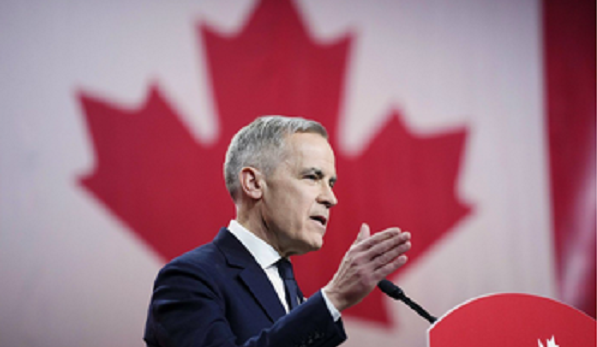
Mr. Carney made the comments in an evening speech at the University of Ottawa, where he told students the Nov. 4 budget will demand sacrifice as the country responds to the unprecedented pressures facing the Canadian economy in light of U.S. President Donald Trump’s protectionist trade policies.
He said the U.S. has fundamentally changed its approach to trade, raising its tariffs to levels last seen during the Great Depression. As a result, he said, Canada’s economic strategy must change dramatically, to focus on diversifying trade and building goods at home.
“Our goal for Canada is to double our non-U.S. exports over the next decade, generating more than $300-billion more in trade,” he said. “We used to build things in this country. We can build again.”
Economists expect the budget will feature much larger deficits than the Liberals projected during the April election campaign. Mr. Carney’s speech hinted that significant deficits are in fact coming.
“Our government has the fiscal capacity to act decisively and we must draw on these strengths now,” he said, adding that the “core” of the government’s budget strategy will be to “catalyze unprecedented investments” over the next five years.

Mr. Carney said the budget will introduce a “climate competitiveness strategy,” which he said would “focus on results over objectives.” He did not provide further detail.
He also said the budget would include a new immigration plan that would match immigration levels “with our needs and our capacity to welcome them.”
The budget will also announce support for apprenticeships, skills training and a new talent strategy “for the next generation of scientists and innovators to build their careers in Canada.”
He also said the budget will support a Buy Canadian policy, particularly for Canadian steel, aluminum, lumber, manufactured goods, and technology for Canadian projects.
At times, the speech made references to sacrifice and “difficult” decisions, without providing a clear sense of what would be cut as the government tries to find internal savings.
“We will have to do less of some of the things we want to do, so we can do more of what we must do to build a bigger, better Canada,” he said, adding that essential social programs will be protected.
Canadian Labour Congress president Bea Bruske issued a statement shortly after the speech, expressing concern with Mr. Carney’s suggestions that cuts are coming. She said new investments should be funded by raising corporate taxes and closing tax loopholes.
“Canada’s unions agree that investment is key but workers cannot be asked to pay the price through cuts to the public services and supports their families rely on. You don’t build resilience by hollowing out the very systems that help people weather hard times,” she said.
Earlier in the day, Mr. Carney held separate meetings with Conservative Leader Pierre Poilievre and Bloc Québécois Leader Yves-François Blanchet about their budget priorities.
The meetings took place a day after Government House Leader Steven MacKinnon raised the possibility that the opposition parties could trigger a federal election by making impossible budget demands.
The minority Liberal government is three votes short of a majority, meaning it needs MPs from another party to either vote with it or abstain to avoid an election on the budget.
Mr. Poilievre released an open letter Monday that said the budget should keep the deficit under $42-billion, in reference to the government’s deficit projection that was announced in the December, 2024, fiscal update. He also said it should reduce taxes on income, capital gains, the industrial carbon tax and “homebuilding taxes” and should eliminate various taxes related to packaging, fertilizer and farm equipment that he calls “hidden taxes on food.”
Mr. MacKinnon dismissed the Conservative demands as “ludicrous” and said Wednesday that Mr. Poilievre’s references to taxes on food are imaginary.
Mr. Carney delivered his speech at 7:30 p.m. ET. He met with Mr. Poilievre for about half an hour at 4:30 p.m. ET.
After that meeting, Mr. Poilievre described his own proposals as “very reasonable.”
“My message is it’s time to reverse course on the costly decade of deficit spending that has given us more expensive food and housing,” he said. “So if the Prime Minister is serious about making Canada a more affordable country, then he needs to bring forward an affordable budget.”
Mr. Blanchet told reporters the Bloc’s budget demands are well known and could be funded by removing federal subsidies for the oil and gas sector.
“It’s their responsibility to find somebody to vote with them, and only theirs,” he said.
Randall Bartlett, Desjardins’ deputy chief economist, released a detailed report Wednesday that lays out expectations ahead of the budget.
“While it’s difficult to know exactly how big the planned deficits will be, announced spending and tax cuts make clear that they will be among the largest in recent memory as a share of GDP outside of a recession or pandemic,” he wrote.

The Desjardins report said the deficit for the current fiscal year could exceed $70-billion, which is similar to an estimate released last month by the Parliamentary Budget Officer. The C.D. Howe Institute said this year’s deficit could be more than $92-billion.
Mr. Bartlett projects the federal net debt-to-GDP – a key metric of a government’s fiscal health – will rise steadily over the coming decade.
“While a debt downgrade isn’t imminent, Canada’s AAA status shouldn’t be taken for granted,” he wrote.
The federal debt-to-GDP ratio spiked to 47.2 per cent from 31.2 per cent during the COVID-19 pandemic. It improved to 42.1 per cent for the 2023-24 fiscal year.
The government’s December, 2024, fiscal update had projected that the debt-to-GDP ratio would decline slightly each year.
The government recently said that within three years, the entirety of the federal deficit will be used for capital spending that boosts growth, as opposed to operational spending.
Mr. Carney referenced that plan during Question Period.
“What the government is going to do is use that deficit to grow this economy like it has never seen before,” he said.
With a report from Stephanie Levitz
This article was first reported by The Globe and Mail