



Canada Gains Potential Trade Leverage as Oil Prices Surge Before CUSMA Talks
The soaring price of oil could give Canada more leverage in CUSMA trade talks this summer, but whether it’s used — and whether Donald Trump would care — is an open question, trade experts and business leaders say.
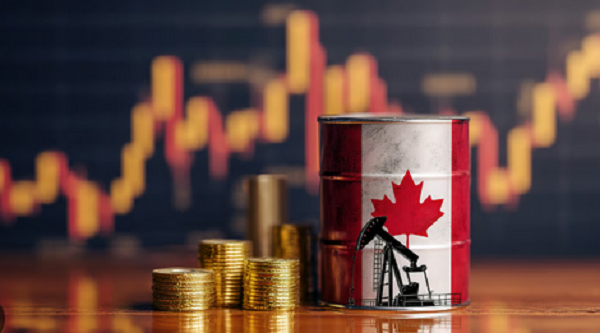
Since the U.S. and Israel’s attack on Iran Feb. 27, the price of West Texas Intermediate oil has soared to as high as $119 (U.S.) a barrel from $65, and was at $93.62 a barrel by 4 p.m. Monday.
Brent Crude has followed in near lockstep rising to a high of $119 a barrel from $71, and was at $100.34 Monday afternoon.
With a review of the Canada-U.S.-Mexico trade agreement set to begin this summer, those soaring crude prices should remind the U.S. government that having a reliable source of oil right next door benefits both countries, said Matthew Holmes, head of public policy at the Canadian Chamber of Commerce.
Read More On Our Daily Stock Market Reports – Markets Rally As Oil Prices Retreat
“What this disruption does is really reaffirm the fortress North America concept, especially with energy security,” Holmes said. “There’s a mutual reliance. A lot of American refiners are using our heavy crude oil.”

That crude oil refined in the U.S. is then sent back to Canada — and shipped to other markets — in the form of gasoline, generating a tidy profit for U.S. oil and gas firms, Holmes said.
With Iran continuing to block shipping in the Strait of Hormuz — which handles 20 per cent of the world’s oil supply — U.S. negotiators should be more aware than ever of their country’s reliance on Canada, Holmes said.
“It provides the right backdrop for a positive conversation,” said Holmes.
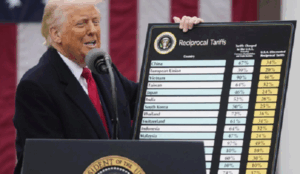
Trump’s ongoing shifts in trade policy and tariffs, as well as his repeated public questioning of CUSMA’s value, make it far from a sure thing that the trade talks will be successful, Holmes said.
“I wouldn’t say anything has been linear or logical from where we’re sitting,” Holmes said. “But I continue to have to be optimistic.”
The head of Canada’s Automotive Parts Manufacturers’ Association was more straightforward. “These are arguments for reasonable or intelligent people, and I’m not sure this administration is dominated by reasonable or intelligent people,” said CEO Flavio Volpe.
The war in Iran might not last until the CUSMA review begins formally, Volpe suggested. If it does, it could potentially give Canada leverage, he added.
“If we’re still talking about this in June and July, a secure source of oil makes for an interesting CUSMA dynamic. But that would mean they’re mired in this for another 12-14 weeks,” Volpe added.
International trade lawyer Barry Appleton, however, questions whether Canada would even use any leverage to its strategic advantage in CUSMA talks.
“Canada is the only country in the world that has leverage and hasn’t been using it,” said Appleton, co-director of the Center for International Law at New York University and a fellow at the University of Waterloo’s Balsillie School of International Affairs.
Appleton pointed to several recent examples, including the last-minute withdrawal of the Digital Sales Tax after Trump threatened to pull out of trade negotiations with Canada.
“We sit here and bemoan the fact that they supposedly hold all the cards, but we’ve got substantial leverage,” Appleton said. “Not only have we not used it, in some cases we’ve even backed down. “That’s not how you deal with a bully.”
Appleton pointed to the U.S. refining industry’s reliance upon Canadian crude oil, as well as Canada being a major supplier of critical minerals and metals, including uranium and aluminum. And, he argued, Canadian consumers and businesses are the biggest source of business for U.S. digital services.

“We’re the largest market the U.S. has for their digital stuff; AI, cloud software,” Appleton said. “We’re their largest export market.”
When it comes to oil, Canada also supplies roughly 60 per cent of U.S. imports, Appleton noted.
“Entire refineries in the Midwest would shut down without Canadian crude,” Appleton said. “We are the plumbing of their energy economy.”
Part of the problem, he suggested, is that Canadian decision-makers have been slow to realize that the nature of our long-cherished relationship with the U.S. has changed — potentially for good.
“We thought we were in a trade marriage. And now we’re in a situationship,” Appleton said. “We sit there talking about who’s right and wrong. It hasn’t worked. What they respect is power and leverage back.”
But there’s another, more politically rational reason for being reluctant to use oil as leverage with the U.S., Appleton admitted: National unity.
“If the U.S. is the only export market for Alberta crude and we say ‘we’re taking that away,’ it would give the independence movement a boost.”
This article was first reported by The Star