



Canada–U.S. Trade Talks Enter Pivotal Phase, Carney Confirms
Prime Minister Mark Carney says that intense negotiations continue at the highest levels of the Trump administration for tariff relief on key Canadian sectors, and that those talks include reviving the Keystone XL pipeline.
Dominic LeBlanc, the minister responsible for U.S. trade, had remained in Washington since Tuesday’s meeting between the Prime Minister and President Donald Trump.
He returned to Ottawa on Friday, and said on X that Canadian officials will continue talks with U.S. officials over the weekend. A source told The Globe that the discussions are substantive and that Mr. LeBlanc is expected to return to Washington early next week.
At a news conference in Ottawa on Friday, Mr. Carney acknowledged that the U.S. talks are at a critical stage.
“Intensive negotiations are in train right now for the sectors of steel and aluminum and in parallel conversations on forest products and automobiles,” he said.
Ottawa is hoping to reach an agreement so that those industries are not punished again when the United States-Mexico-Canada Agreement comes up for renewal next year. That continental trade deal allows about 85 per cent of Canadian goods and products to flow duty-free into the United States.

“We are negotiating specific sectoral deals with them, which would likely persist with a revised USMCA,” the Prime Minister said. “It means that this is not one simple trade deal which will resolve all the issues, which is why we are focused on retaining the huge advantage that we have relative to the rest of the world.”
Mr. LeBlanc and and Kristen Hillman, Canada’s ambassador to the U.S. and Ottawa’s chief negotiator, have been meeting since Tuesday with U.S. Commerce Secretary Howard Lutnick and Trade Representative Jamieson Greer.
Privy Council Clerk Michael Sabia, Canada’s top public servant, had also been part of the Washington talks but returned to Ottawa late Thursday.
Mr. Carney, who ran for prime minister on a promise to defend the Canadian economy against U.S. protectionism, has been under pressure to achieve relief from punitive U.S. tariffs, especially those on steel, aluminum, lumber and autos from Canada and other countries.
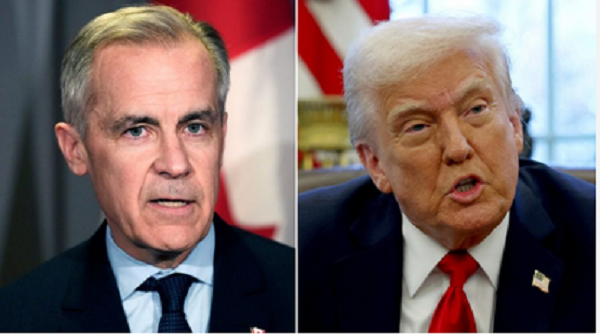
After the meeting this week, Mr. Carney and Mr. Trump instructed their ministers to work quickly to try to iron out a deal on the sector-specific tariffs. The source said Canada is building on the momentum of the Carney-Trump Oval Office discussions to move toward a sectoral agreement.
The Globe and Mail is not identifying the source, who was not authorized to discuss the negotiations that are being held under a cone of silence.
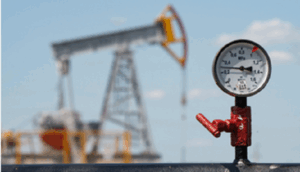
At Friday’s news conference, Mr. Carney said both sides are also “bearing down on a few projects within the energy sector,” including reviving the Keystone oil pipeline to Texas from Alberta, which was cancelled by former president Joe Biden.

Mr. Carney said members his government have held talks with possible proponents of Keystone, but he did not get into details of which companies have been approached.
The Prime Minister also did not rule out a second oil pipeline from Alberta to the West Coast, providing there is a viable corporate sponsor, Indigenous buy-in and measures in place to protect the climate.
“This government believes in nation-building projects, in both clean and conventional energy,” Mr. Carney told reporters. “Those projects have several characteristics – material, economic benefits, linking together different parts of our economy, consistency with our climate objectives and benefits and participation for Indigenous peoples. So those elements can come together in a pipeline to the West Coast.”
He also said Ottawa has not ruled out lifting the industrial emissions cap and a tanker ban on the Pacific Coast – if conditions such as an overall reduction of greenhouse gas emissions through carbon capture and storage can be achieved.
The tanker ban, enacted by the former Justin Trudeau government in 2019, prevents tankers carrying more than 12,500 metric tons of crude oil from docking, loading or unloading at ports on B.C.’s north coast.
Mr. Carney’s willingness to consider another oil pipeline through B.C. is at odds with what Natural Resources Minister Tim Hodgson told a Senate committee on Thursday.
He said the pipeline, advocated for by Alberta Premier Danielle Smith, would need the support of B.C. Premier David Eby, who is strongly opposed to the project.
“You need support of the jurisdiction you build through,” Mr. Hodgson said. “If they want to build, that’s something between the province of Alberta and the province of British Columbia. We’ve said we will be a constructive participant in that three-way discussion.”

Ms. Smith, who plans to spend $14-million to fund an initial planning of a pipeline, has expressed hope that a memorandum of understanding can be reached with Ottawa by Nov. 16.
The proposed project would then have to go to the federal government’s Major Projects Office early in the New Year for review and approval.
Conservative Leader Pierre Poilievre accused Mr. Hodgson of inventing a “fake provincial” veto for Mr. Eby.
“The courts have ruled on this question again and again. When it comes to interprovincial pipelines, it’s the federal government that has the sole power to decide. Full stop,” he said.
This article was first reported by The Globe and Mail