




Canadian Industries Vulnerable to Escalating Tariff Threats
The White House has ramped up its trade war with Canada by threatening tariffs on a seemingly esoteric list of goods that would deliver a serious blow to companies caught in the crosshairs, even if the broader impact on the country’s economy should be limited.
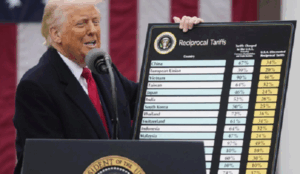
On Monday, President Donald Trump issued a trio of executive orders imposing 50-per-cent tariffs on more than 500 categories of products, ranging from larger sectors such as electronic equipment and furniture to a hodgepodge of products including hockey sticks, Canadian whisky and even some antiques.
The tariffs, which are set to take effect on Aug. 19, would apply to roughly US$20-billion of imports from Canada, which represents roughly 5 per cent of Canada’s shipments to the U.S. in 2025.

“We’re talking about a 50-per-cent tariff, which is pretty major. The microeconomic impacts are actually potentially quite severe,” said Stuart Bergman, chief economist at Export Development Canada.
The new duties, which Mr. Trump invoked using Section 338 of the Depression-era Tariff Act, would directly override the U.S.-Mexico-Canada Agreement exemptions. When the Trump administration’s emergency tariffs were in place, prior to being overturned by the U.S.’s top court, more than 80 per cent of Canadian exports were shielded by USMCA.
For manufacturers like Northern Cables Inc., a commercial and industrial power cable manufacturer based in Brockville, Ont., losing that protection would be “devastating,” the company’s president Todd Stafford said.
“There’s 30 days, so it could change 15 times, but as written now, that’s probably half our business,” he said.
If the tariffs do go through as threatened, however, the only alternative for the company would be to open a manufacturing facility in the U.S., he said. Northern Cables currently operates all three of its manufacturing facilities in Ontario, but has several warehouses spread across the U.S.
“We could probably get some form of operation in probably nine to 12 months.”
Across the electrical equipment and electronics sector, one of the industries hardest hit by the tariffs, companies are scrambling to quantify the potential damage.
As an industry, 90 per cent of the sector’s exports go to the U.S., said Cherith Sinasac, director of government affairs for Electro-Federation Canada, a trade group representing hundreds of electrical and automation companies.
That’s a pattern across many of the sectors targeted this week, EDC’s Mr. Bergman said.
“The industries that were chosen are among some of the industries that have the highest U.S. market concentration. I don’t think that’s by accident,” he said.

At Durham Furniture Inc., a manufacturer of solid wood bedroom furniture northwest of Toronto, Luke Simpson, the company’s president, is taking a wait-and-see approach to the new tariffs because of the history of Mr. Trump’s on-again, off-again threats since the start of 2025.
Still, on Tuesday he fielded an anxious call from one U.S. customer set to take delivery of products for its showroom later next month asking if it should cancel its order in light of the tariffs.
“We assume it’s a negotiating tactic but no one has any idea what is going to happen,” he said. “The uncertainty of it means how do you possibly add new customers?”
A swath of the furniture industry was already reeling from Section 232 tariffs targeting U.S. imports of cabinets, said Gilles Pelletier, president and chief executive officer of the Quebec Furniture Manufacturer’s Association, so a 50-per-cent tariff on other furniture products “is pretty much an embargo,” he said. If the tariffs do take effect, those furniture products would “get more tariffs than China or Vietnam, which is ridiculous.”
One aspect of the new tariffs that makes them so damaging is that they generally target small and medium-sized exporters, a segment that accounts for roughly two-thirds of private sector jobs in Canada.
At Cheekbone Beauty, Canada’s first Indigenous-owned cosmetics brand, founder and CEO Jenn Harper said she was caught off guard by the new tariffs, which would include lipstick, eye-makeup and other cosmetics.
While the St. Catharines, Ont.-based company has about a dozen full-time and contract employees, it has made big inroads into the U.S. market, including a deal to carry its products in close to 150 JCPenney stores. Roughly one-quarter of its e-commerce sales are also to the U.S.
The company was already absorbing some tariffs on Italian-made goods it sold in the U.S., “but at 50 per cent that’s too much for us,” she said. “As a small business we have a lot less room to absorb something like this.”
On the other end of the business-size scale, Vancouver-based mining giant Teck Resources Ltd. could be caught up in the new tariffs, though the impact will be minimal through tariffs on refined lead.
Last year, Canada exported US$224-million of the product to the U.S., but in a statement Sarah Payne, a spokesperson for the company, said refined lead sales account for only 2 per cent of the company’s revenue.
“We do not currently anticipate a material impact as a result of tariffs,” she wrote.
The new tariffs are also set to impact a broad range of Canadian forest products.
The sector already faces significant trade barriers in the U.S., including long-standing duties on softwood lumber and more recent Section 232 tariffs. Expanding the tariffs is deeply disappointing, Derek Nighbor, president and CEO of Forest Products Association of Canada and the Canadian Wood Council said in a statement.
“Forest sector workers and communities across Canada have been dealing with escalating and unnecessary U.S. trade actions for far too long and it continues to hurt Canadian and American families alike,” he said.
While the targeted nature of the tariffs would minimize the impact on the broader Canadian economy, economists said it would still leave its mark.
“If these tariffs are kept in place permanently, real GDP growth could be about 0.1 percentage points lower in the long run,” according to a report from economists at Desjardins.
Meanwhile, “heightened uncertainty could dampen business confidence and curb investment plans,” they wrote.

With the 30-day window before the tariffs take effect, some companies are planning to move as many goods across the border as possible, a pattern that played out in the lead-up to Mr. Trump’s first round of tariffs on Canada and Mexico in early 2025.
Mr. Stafford, at Northern Cables, said that while his company will try to fill their U.S. warehouses with their finished goods before the new tariffs are implemented, his seven warehouses can only hold about two weeks’ worth of manufacturing supply.
In the meantime, Mr. Stafford said the tariffs will force a temporary delay of hiring and capital spending plans, and the company will “not make any decisions until we see which way things are going.”
This article was first reported by The Globe and Mail