




Carney Aims for Trade Breakthrough and Diplomatic Reset on China Visit
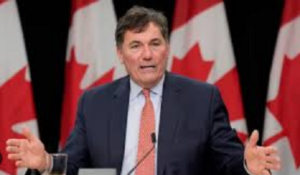
Mark Carney makes his first trip to China as prime minister this week with an agenda that would have seemed unlikely before U.S. President Donald Trump took office: warming relations with the authoritarian state to a degree not seen in a decade, plus carving out a bigger role for Beijing in Canada’s economy.
It hasn’t even been one year since a public inquiry’s final report warned Ottawa that China is “the most active perpetrator of foreign interference targeting Canada’s democratic institutions,” and during the 2025 election campaign Mr. Carney himself described China as Canada’s biggest security threat.
It’s a significant pivot, entirely because of the need to offset the economic damage that Mr. Trump’s protectionist tariffs – and threats of more – are doing to Canada.
The last prime ministerial visit to China was more than eight years ago by Justin Trudeau, before ties between Beijing and most Western countries frayed over rising national security concerns, the Chinese Communist Party’s quashing of civil liberties in Hong Kong and its militarization of the South China Sea.
Mr. Carney’s entourage for the trip beginning Wednesday will include five cabinet members, the biggest ministerial delegation that has accompanied Mr. Carney on a foreign trip so far. That group is made up of Foreign Affairs Minister Anita Anand, Industry Minister Mélanie Joly, Energy and Natural Resources Tim Hodgson, Agriculture Minister Heath MacDonald and International Trade Minister Maninder Sidhu. The Prime Minister will meet President Xi Jinping on Friday.
Mr. Carney’s short-term imperative in Beijing is a breakthrough in a punishing trade war triggered by 2024 Canadian tariffs on Chinese electric vehicles that prompted retaliation on Canadian agricultural products from canola to seafood. China’s ambassador has made it clear Beijing would remove levies if Canada scraps the EV tariff.
Saskatchewan Premier Scott Moe is joining Mr. Carney for a portion of his trip to China, the provincial government announced Monday, raising expectations of a deal involving canola or other agricultural exports to China.

The Prime Minister’s bigger ambition is not only boosting exports to China but attracting new capital to Canada, where foreign direct investment has slowed since Mr. Trump began talking of restricting Canadian access to the U.S. market. Mr. Carney, who has vowed to build “resilience by diversifying abroad,” in November spoke of welcoming Chinese investment in the energy sector, including renewable energy and battery storage.
“We have to attract investment in Canadian companies. That’s really the core challenge. Otherwise, talk of resilience is illusionary,” said Janice Gross Stein, the Belzberg professor of conflict management at the University of Toronto.
Negotiations on deals with China are expected to continue right up to Mr. Carney’s arrival in Beijing this week.
One senior government official said a breakthrough that could affect canola shipments is possible but that Canada will not strike an agreement to cut EV tariffs if it’s not sufficiently beneficial to Canada. One business executive said they had been told by Canadian officials there was a glimmer of hope for an agreement affecting EV levies but that discussions are continuing.
The Globe and Mail is not identifying the sources, who are not authorized to speak publicly about the matter.
The government official said the strategy is to build a fully developed relationship rather than just a series of transactions, and that the visit itself is part of that effort.
Mr. Carney’s challenge is rebuilding Canada’s ruptured relationship with this emerging Asian superpower while avoiding alienating Mr. Trump, who expects allies to support his tough-on-China agenda.
The Prime Minister is aiming to open the door to more trade and investment from China, the world’s second biggest economy, without jeopardizing an expected renegotiation of parts of the United States-Mexico-Canada Agreement this year or sabotaging efforts to reduce punitive tariffs the U.S. President has imposed on steel, aluminum, autos and other products.
The military strike on Venezuela; threats of intervention in Mexico, Cuba and Colombia; and coercive talk of taking Greenland are all further motivation to steer trade away from the United States. But this is also evidence of a President whose administration believes it owns the Western Hemisphere and any assets it wants. Mr. Trump’s demand to take over Greenland is predicated on his claim that countries such as China will take it if he doesn’t.
“Carney’s on a tightrope and as he crosses the gorge, it just got a lot windier,” said Fen Hampson, chancellor’s professor and professor of international affairs at Carleton University.
Canada-China relations are emerging from a deep freeze that analysts date back to 2018 when Beijing jailed two Canadians – Michael Kovrig and Michael Spavor – in retaliation for Ottawa arresting Chinese tech executive Meng Wanzhou on an extradition request from the United States.
However, Guy Saint-Jacques, a former Canadian ambassador to China and a 40-year veteran of this country’s diplomatic corps, said the erosion of the relationship started in 2017 when Mr. Trudeau tried but failed to launch negotiations with Beijing on a free-trade agreement.
That was the last prime ministerial visit to China: evidence of the hardball Beijing can play.
Trade talks during the 2017 Trudeau trip went off the rails after the Chinese balked at Canada’s demand to include labour standards as one of the key subjects up for negotiation.
By the time Mr. Trudeau’s term as prime minister ended in 2025, a series of measures had opened up a gulf between Ottawa and Beijing. Many were taken in concert with Western allies who had recognized that China under Mr. Xi was becoming a rival, not a friend.
In the name of national security, Mr. Trudeau blocked high-profile corporate takeovers by Chinese companies, including in the critical minerals sector, banned China’s flagship tech giant Huawei from the country’s wireless infrastructure, expelled one of Beijing’s diplomats and called the Hogue inquiry into foreign interference by the Asian power. It also restricted funding for academic collaboration with Chinese military and state security institutions.
Mr. Saint-Jacques said he thinks Mr. Carney is modelling his approach to China after former prime minister Jean Chrétien, whose 1993-2003 tenure is often cited by Chinese officials as the “Golden Decade” of relations between Ottawa and Beijing. Mr. Chrétien looked for business deals in China and minimized public criticism of the country.
The former prime minister, 91, toured China this month ahead of Mr. Carney’s visit, meeting with Chinese officials, including Vice-President Han Zheng and Zhu Hexin, vice-governor of the People’s Bank of China, in what appeared to be efforts to pave the way for the Prime Minister.
The Prime Minister’s Office said Mr. Chrétien’s trip was his own idea. “The Prime Minister’s Office was informed that former Prime Minister Jean Chrétien would be travelling to China in January on a private programme,” press secretary Laura Scaffidi said in a statement. “The Office exchanged views with him on the Government’s objectives for the Prime Minister’s upcoming visit to China, and the Embassy offered support where appropriate.”
The itinerary
The Prime Minister will leave for China on Tuesday. He arrives Wednesday and will spend a couple of days there before departing Saturday.
The Prime Minister is expected to meet Premier Li Qiang on Thursday and President Xi Jinping on Friday. An official dinner Thursday evening will be hosted by Mr. Li.
The risks
What’s driving Canada’s shift in relations with Beijing is not China. It’s the circumstances Canada finds itself in, said Vina Nadjibulla, vice-president of research and policy at the Asia Pacific Foundation.
China, Ms. Nadjibulla said, has not changed. It remains a source of threats ranging from “national security, foreign interference, transnational repression and intellectual property theft,” she said.
As Group of Seven foreign affairs ministers said in a November statement, China remains a “decisive enabler” of Russia’s war on Ukraine. It flouts Western sanctions to buy Moscow’s petroleum, to supply parts for weapons and, through some smaller banks and money-transfer systems, provide financial services to Russians.
Beijing is still menacing Taiwan, interfering in its politics, encircling it with military drills in the hopes of annexing the self-governed island that occupies a strategic location in the western Pacific.
It is also disrupting the international trading system with government-subsidized overproduction of products such as electric vehicles.
The trade-offs
Canada’s 100-per-cent tariff on Chinese EVs is the chief irritant in the bilateral relationship, preventing the two countries from deepening ties.
Mr. Carney’s options are to scrap it or pare it back to a level more commensurate with other trading partners such as the European Union or Mexico, where the maximum tariff for Chinese automakers approaches 50 per cent.
A significant drop in tariffs could allow Chinese EV makers, with their inexpensive labour costs, to make inroads in Canada’s auto market to the benefit of consumers but to the detriment of other carmakers.
Mr. Carney could face a political backlash in Ontario, home to the majority of Canada’s auto industry, and where Premier Doug Ford has publicly warned Mr. Carney against lowering tariffs.
Last week, Mr. Ford suggested Mr. Carney instead invite Chinese automakers to set up shop in Ontario, building factories and employing unionized Canadian workers to make their EVs.
The relationship
The visit gives Mr. Carney a chance to lay the foundation of a relationship with Mr. Xi and establish a channel of communication.
Mr. Saint-Jacques was present for Justin Trudeau’s first prime ministerial visit to Beijing, where he met Mr. Xi, in 2016. The former envoy said it did not go well. Mr. Trudeau presented himself as someone who could help the Chinese ascend to prominence in the world, a pitch that carried the implication Beijing had not already done so.
“He told Xi Jinping that, as his father had helped to bring China into the United Nations, he would help China to take its rightful place on the international stage,” Mr. Saint-Jacques recalled.
“I was there taking notes and saying to myself, ‘Jesus Christ, what is he talking about?’”
He said after this, Mr. Trudeau was perceived “as a peewee” by the Chinese government.
Lowering the fences
Over the past 10 years, Canada under Mr. Trudeau blocked a slew of Chinese investments that targeted sensitive sectors in this country.
Mr. Carney, eager to attract Chinese investment, is expected to provide the Chinese with more guidance on what areas they can invest in. The government official said the Prime Minister should provide more clarity on investment areas during the trip.
Mr. Carney has already flagged three areas that will remain off-limits: artificial intelligence, critical minerals and defence-related companies. Canada is open to energy investments but it remains unclear whether a ban on further Chinese capital in the oil sands, implemented in 2012, is still in place.
The Prime Minister’s visit is fraught with risks but he has little choice, analysts say. China makes up 20 per cent of the global economy and it’s growing. “It’s going to be the world’s largest market. There are lots of our products that they want to buy, and there’s a price for selling everywhere in the world,” Prof. Gross Stein said.
This article was first reported by The Globe and Mail