



Carney says short deadline for Canada-U.S. talks helps to ‘concentrate the mind’
Prime Minister Mark Carney, a day after setting a 30-day target for a landmark economic and security deal with Donald Trump, declined to explain why he selected the time frame, what kind of agreement could be achieved in that period or what would happen if the talks failed.
All he would say is that a fixed date helps people focus.
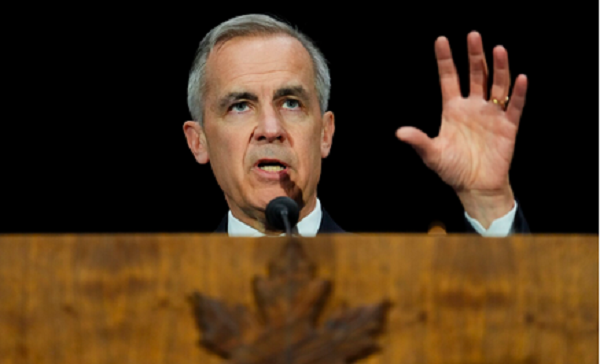
“In negotiations, having a form of deadline is helpful to concentrate the mind,” Mr. Carney told reporters at the conclusion of the Group of Seven leaders summit in Canada’s Rocky Mountains.
It’s rare for the federal government to set a time limit for such important negotiations, even as the U.S. President is still proposing the annexation of Canada and seems committed to permanent tariffs on Canadian goods.
Mr. Carney’s comments capped a two-day summit that managed to avoid the kind of blow-up that marred the G7 meeting in Charlevoix, Que., in 2018, where Mr. Trump called then-prime-minister Justin Trudeau “dishonest and weak.”
Several joint statements issued by the G7 leaders generated little in the way of new collaborative action on big issues, aside from closer co-operation on critical minerals and transnational repression. And Canada’s efforts to demonstrate collective action on Russia’s war on Ukraine fell through.


As in 2018, Mr. Trump quit the 2025 summit early, disrupting plans by multiple world leaders to meet with him in Canada – and before the group could gather jointly with Ukraine’s Volodymyr Zelensky. The U.S. President used his brief time at the summit to lament Russia’s expulsion from the diplomatic forum.
While Mr. Carney offered little insight into his negotiating strategy, he signalled Canada is looking closely at steel dumping as it negotiates a trade deal with the United States, an indication that Ottawa is prepared to respond to American concerns over the dumping of Chinese commodities on North American markets.
Mr. Carney did not mention China by name.
But he described a “need to provide protections” against “third-country flows of steel – and mainly steel, but possibly aluminum – into Canada.”
Canadian negotiators have sought to allay Mr. Trump’s concerns as they push for the cancellation of all import taxes on Canadian goods, a stand in direct opposition to the U.S. President’s deep fondness for tariffs as a tool for raising revenue and boosting the prospects of domestic industry.
”That’s our position. And at present, the United States may have a slightly different position,” Mr. Carney acknowledged Tuesday, speaking at the close of the G7 summit.
“It’s a negotiation,” he said.
An estimated 10 per cent of exported Chinese steel is transshipped through third countries, a trade worth roughly US$7-billion that has been the subject of considerable anger in the U.S.
Canada has already placed a 25-per-cent tariff on Chinese steel, but industry executives say Chinese product is being re-routed through countries such as Vietnam, Thailand and South Korea.
In the February executive order that raised steel and aluminum tariffs to 25 per cent, the White House singled out Canada and other countries that had previously received tariff exemptions only to have Chinese companies take advantage.
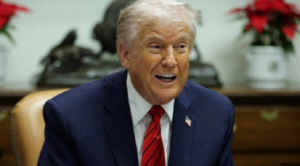
Mr. Carney and the U.S. President on Monday agreed to accelerated negotiations with the aim of striking “within the coming 30 days” an economic and security deal that would end the Canada-U.S. trade war.
The commitment followed a 70-minute meeting between Mr. Carney and Mr. Trump at the start of the G7 summit.
Further Canada-U.S. talks are scheduled for later this week.
Mr. Trump, who told reporters this week he thought a deal with Canada was achievable, suggested that Canadians will end up paying tariffs even if the trade war is resolved. Speaking to reporters on Air Force One as he headed home Monday, he again pitched the idea of Canada becoming the 51st state, saying if this country forgoes annexation, “they’re going to have to pay a lot of tariffs and things.”
Brian Clow, who served as deputy chief of staff to Mr. Trudeau and was among the leading federal officials on Canada-U.S. relations, said he thinks the 30-day deal deadline is “aspirational” rather than a hard target.
Mr. Clow said the commitment to reach a deal within 30 days is a useful tactic to keep the United States engaged as Washington is busy negotiating with more than 15 other countries on their own deals.
“That said, Canada is motivated to get some sort of deal because certain sectors are suffering badly, including steel, aluminum, autos and lumber.”
Mr. Clow said his advice to Canadian negotiators is to keep pushing for a scaling back of U.S. tariffs to levels before Mr. Trump returned to office.
The Wall Street Journal, citing an unidentified U.S. official, reported that Mr. Trump complained about Canada’s protectionism on dairy products during his talk with Mr. Carney in Kananaskis, Alta., saying its dairy industry was rigged against the U.S. because of high tariffs.
Canada faces an uphill challenge in removing all Trump tariffs.
“Officially everybody wants to get to zero tariffs, but we also have heard consistently from the U.S. administration that they’re wanting to maintain a degree of tariff on everybody. And that’s why we don’t have a deal yet,” said David Paterson, Ontario’s trade representative in Washington.
For Canada, he said, economic success lies in securing the most favourable levies possible.
“In a world that perhaps is always going to have a tariff under President Trump, the winner is one that achieves relative competitive advantage,” he said.
Scrapping Canada’s digital services tax is among U.S. demands in trade talks with Canada.
The 30-day negotiating window encompasses one important date: June 30, the deadline for companies to pay amounts owed under Canada’s digital services tax, a 3-per-cent charge on revenues collected by large multinational companies that is retroactive to Jan. 1, 2022.
The U.S. has fought the tax, saying it places an unfair burden on American companies and is filing a dispute under the U.S.-Mexico-Canada agreement.
In his conversation with reporters on Air Force One on Monday, Mr. Trump also said Canada will have to pay dearly to become part of the American ”Golden Dome” missile defence system. He had earlier said the price of admission for Ottawa would be US$61-billion. On Monday night, he said it would be US$71-billion.
The terms of that agreement, however, may be completed separately, Mr. Trump said.
“They’ll be in the Dome,” he said of Canada. And “they’re going to pay.”
Mr. Trump’s unwavering conviction on tariffs is difficult to reconcile with Canada’s resolve to negotiate away all U.S.-imposed import taxes.
On Monday, Canada’s ambassador to the U.S., Kirsten Hillman, said that Ottawa continues to argue that Mr. Trump should cut his import taxes to zero.
”Our goal is to get the tariffs off,” Ms. Hillman said. Only from such a place of trading stability, she said can there be talks with the U.S. ”about if there’s a transformation to happen in the way in which we trade.”


Canada has pursued a two-phase approach to trade talks with the U.S., hoping for an interim deal that can be followed by a broader discussion about new terms under the USMCA.
Saying Canada wants zero tariffs amounts to “stating what your aspiration is,” said Andrea van Vugt, a trade adviser to former prime minister Stephen Harper who has worked on numerous such agreements. “Clearly the negotiations are not at a point where that is no longer the ask.”
But the U.S. has already agreed to drop tariffs on USMCA-compliant products, meaning Canada’s stand amounts to arguing for the elimination of import taxes on non-compliant goods, said Ms. van Vugt, who is now trade practice lead at Wellington Advocacy.
“This is a very awkward conversation,” she said.
“The question is going to become, at the end of the day, where is the line for tariff-free access for Canada?”
That could prove difficult in discussions about U.S. sector-specific tariffs on steel, aluminum and the auto sector, with more expected soon on lumber and pharmaceuticals.
But there, too, Canada may want future assurance from the United States that if those products are UMSCA-compliant, they will not be subject to an additional tariff, Ms. van Vugt said.
She added that Canada’s two-phase approach carries its own risks. Future change to the USMCA is likely to require passage by Congress, where Mr. Trump has already struggled to secure approval for his priorities. The makeup of Congress is also almost certain to change in midterm elections next year.
“We’ve just watched how complicated it was for the President to get the Big Beautiful Bill through, and that was using lots and lots of political capital,” she said. Passing changes to North American trade “is going to be harder.”
This article was first reported by The Globe and Mail