



Carney set to announce Canada’s defence spending in line with NATO’s target of 2% of GDP this fiscal year, sources say
Prime Minister Mark Carney is set to announce what his government is billing as the largest increase in defence spending since the Second World War, measures that sources say would enable Canada to meet NATO’s 2-per-cent military expenditure target this fiscal year, well ahead of any previously announced schedule.
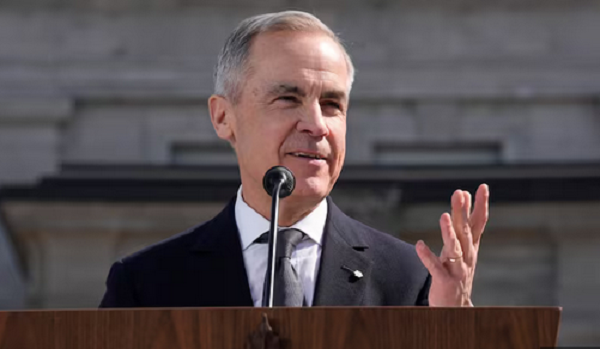
Two senior government sources told The Globe and Mail that Mr. Carney will unveil a new security and defence investment plan during a Monday speech at the University of Toronto’s Munk School of Global Affairs. It will commit the government to rapidly procuring the equipment and technology needed to protect Canada, assert the country’s sovereignty and meet its obligations to the North Atlantic Treaty Organization, the sources said.
The Globe is not identifying the sources, as they were not authorized to speak publicly on the matter.
For years, NATO member countries have agreed they should spend the equivalent of 2 per cent of gross domestic product on defence. But Canada has been a persistent laggard, spending an estimated 1.45 per cent in 2024, according to a recent NATO report.
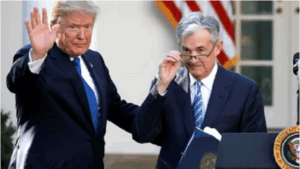
Canada’s existing level of investment has been criticized as insufficient at a time of increasing global threats. Among the critics is U.S. President Donald Trump, who argues his country has devoted too many of its resources to protecting NATO allies.


Mr. Carney’s coming plan will allow Canada to meet the 2-per-cent target in the 2025-2026 fiscal year ending next March and exceed it in future years, the sources said. This represents a rapid shift in Canada’s commitment to defence – already a significant portion of the federal budget – as it moves up the timeline to reach the 2-per-cent target by several years.
The spending increase, worth billions of dollars, is set to be announced ahead of the NATO leaders’ June 24-25 summit. At The Hague gathering, member countries are expected to raise the Western alliance’s military spending target to 3.5 per cent of GDP, plus another amount equivalent to 1.5 per cent for security-related investments.
The sources said the new spending will include higher pay for members of the Canadian Armed Forces; new aircraft, armed vehicles and ammunition; new drones and more sensors to monitor the seafloor and the Arctic; repair and maintenance commitments for existing ships, aircraft and other assets; more health care funding for Forces personnel; and funding to boost the Canadian Coast Guard’s reach and capabilities.
There will also be commitments to increase Canada’s defence industry capacity as well as capabilities in artificial intelligence, cyber, quantum and space technologies, the sources said.
The expedited effort to meet the NATO 2-per-cent target this fiscal year represents a marked change from as recently as 12 months ago, when then-prime minister Justin Trudeau announced it would take Canada until 2032. He also publicly criticized the target as a “crass mathematical calculation” that didn’t properly account for a country’s contributions to NATO.
During the recent federal election campaign, Mr. Carney’s Liberals pledged to accelerate efforts and reach the 2-per-cent threshold by 2030.
The government will provide dollar figures for the announcement on Monday, the sources said. Canadian experts have previously estimated Ottawa would require $15-billion to $20-billion in additional annual military spending to reach the 2-per-cent target.
One persistent problem Canada has faced in acquiring new military equipment is a slow and unwieldy procurement process. Mr. Carney’s Liberals in the recent election campaign promised to create a stand-alone defence purchasing agency to speed up military equipment procurement, and to prioritize buying Canadian gear and materials whenever possible.
It’s also expected that the Canadian Coast Guard, currently a civilian operating agency under the Department of Fisheries and Oceans, will be moved under the Department of National Defence. (The move would mirror the U.S. Coast Guard, which is a branch of the U.S. Armed Forces.)
The Canadian Coast Guard’s annual budget is about $2.5-billion, a small fraction of the Department of National Defence’s yearly spending, which exceeds $41-billion. It’s not clear whether moving the Coast Guard under the Canadian military would change it from a civilian fleet to a military fleet.


The defence spending will also support key capabilities, including the Arctic over-the-horizon radar system investment announced in March, a counter-drone program, joint support ships, long-range precision strike weapons, increased domestic ammunition production and additional armoured vehicles, among other priorities, the sources said.
Monday’s new commitment may not be enough for allies, including the United States under Mr. Trump. Over the past two decades, an agreement among NATO countries to reach the 2-per-cent target has evolved from a guideline to the minimum acceptable obligation.
Moscow’s all-out-assault on Ukraine – the first large-scale land war in Europe since the Second World War – has reignited fears of Russian expansionism and driven many NATO countries to make historic increases in defence spending.
NATO’s top civilian official, Secretary-General Mark Rutte, said recently he expects leaders of member countries at the coming summit to agree to raise military spending and related security expenditures to 5 per cent of GDP.
“Strong defences send a clear message – no one should ever think of attacking us,” Mr. Rutte said in a speech in Brussels on Wednesday. He told reporters later that “if we think that we can keep ourselves safe sticking with the 2 per cent, forget it.”
This article was first reported by The Globe and Mail