



Carney Signals Restraint, Rejects Countertariffs Amid U.S. Trade Talks
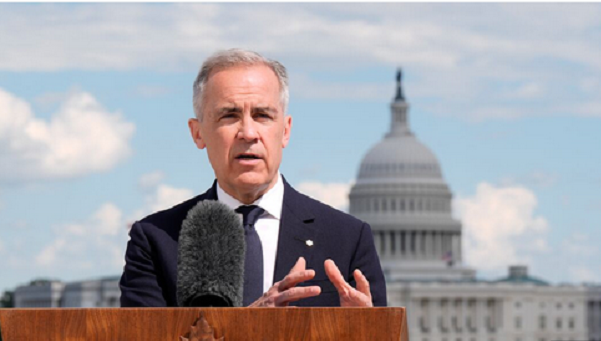
Prime Minister Mark Carney says Ottawa is not prepared to impose countertariffs against the United States while intense trade talks with the Trump administration are under way.
Mr. Carney has been under pressure from unions, some in the corporate sector and several premiers, including Ontario’s Doug Ford, to hit back at the U.S. over its tariffs on steel, aluminum, autos and lumber.
At a news conference Thursday to announce new crime measures, the Prime Minister ruled out countermeasures at this time.
“Right now with the Americans we are engaged in deep negotiations, intensive negotiations on several sectors of the Canadian economy – energy, aluminum and the steel sector,” he told reporters. “There are times to hit back and times to talk and right now is the time to talk.”
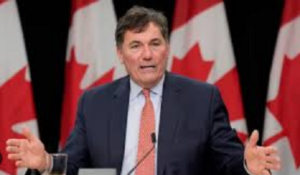
Dominic LeBlanc, the minister responsible for Canada-U.S. trade, Privy Council Clerk Michael Sabia and Kirsten Hillman, Ottawa’s chief negotiator, are holding talks in Washington with senior Trump administration officials.

The negotiations with U.S. Commerce Secretary Howard Lutnick and Trade Representative Jamieson Greer have been going on since an Oct. 7 Oval Office meeting between Mr. Carney and President Donald Trump. The participants took a pause in negotiations over the weekend but resumed Monday.
Mr. Carney said he would be briefing Mr. Ford at a private meeting later Thursday on the U.S. talks, as well as the auto sector and softwood lumber. The two met for an hour at Mr. Ford’s house, with police keeping reporters at a distance.
Canadian steel producers have been particularly hard hit by the 50-per-cent levies on this country’s steel and aluminum sectors imposed by Mr. Trump under Section 232 of the Trade Expansion Act. Canada’s auto sector is facing a 25-per-cent tariff with a carve-out for U.S. parts.
Despite Canadian efforts to work out an auto agreement, Mr. Lutnick has indicated that a trade deal would not involve the removal of tariffs on Canadian automobiles.
Mr. Carney said Ottawa is hoping to reach an agreement so that those industries are not punished again when the United States-Mexico-Canada free-trade agreement comes up for renewal next year. That continental trade deal shields about 85 per cent of Canadian goods and products from tariffs.
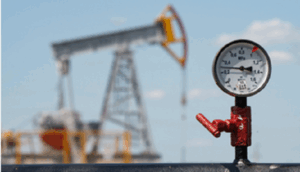
The U.S. negotiations also involve the possible revival of the Keystone XL oil pipeline from Alberta to Texas refineries. The pipeline project was cancelled by former president Joe Biden.
On the decision of automaker Stellantis to move a Jeep production line from Brampton, Ont., to the U.S., Mr. Carney reiterated that Ottawa is prepared to sue the company, which has received significant financial incentives from Ottawa.
Mr. Carney said he spoke to the global CEO of Stellantis, Antonio Filosa, just before the announcement. Mr. Filosa assured him that the company is looking at a different model being produced at Brampton but that won’t happen until the review of the USMCA is concluded next year.
He said Mr. Filosa said financial support would also be provided for the 3,000 workers affected by the decision.
Mr. Carney is also under pressure from China and Saskatchewan Premier Scott Moe and Manitoba Premier Wab Kinew to lift 100-per-cent tariffs on Chinese electric vehicles imports in exchange for Beijing removing its ban on Canadian canola.
Canada is working to solve the canola dispute with China, Mr. Carney said, noting that Foreign Affairs Minister Anita Anand is meeting her Chinese counterpart in Beijing Friday.
Mr. Carney also plans to meet senior Chinese leaders over the coming weeks. That will likely involve a meeting with Chinese President Xi Jinping at the APEC summit in South Korea later this month.
The Prime Minister indicated that the EV tariffs were the direct result of U.S. pressure. Washington is opposed to China flooding the North American market with heavily subsidized and cheaper vehicles.
“The relationship in the auto sector is [not] that simple to just open the door to China with no impact on the relationship with the United States and the activity here in Canada,” he said.

However, he also said that Canada is trying to renew trade and bilateral relations with Beijing that had been damaged by the detention of a senior Huawei executive in 2018 at the extradition request of the U.S. Justice Department. That led China to arrest two Canadians who spent almost two years in Chinese prisons.
“There are different levers or opportunities that we have for China in Canada and we are in the process of having those discussions on a much broader range of issues than single sectors,” he said.
The Prime Minister ran an election campaign on a promise to end the U.S. tariff war and to diversify trade to other markets, including Asia, Europe and the Middle East.
“There is a strong interest in the Middle East but particularly in the Gulf for greater trade and investment in Canada,” he said, adding that some of the big Persian Gulf investors are keen about putting money in Canadian infrastructure.
He plans to visit the United Arab Emirates in November en route to a summit of G20 nations.
This article was first reported by The Globe and Mail