




Crackdown on steel dumping into Canada coming soon, Joly says
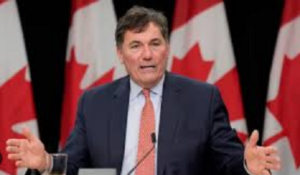
Industry Minister Mélanie Joly says a crackdown on the dumping of cheap foreign steel into Canada is coming – a move that will help cushion the blow for the country’s big three steel producers that have been hit with U.S. President Donald Trump’s 50-per-cent tariffs.
Algoma Steel Group Inc. chief executive Michael Garcia has argued on multiple occasions that mills from China, South Korea, Malaysia, India, Vietnam, the Middle East and Turkey regularly dump steel into Canada and make it nearly impossible for the company to compete in its home market. In meetings with federal politicians over the past few days, he’s pleaded for Canada to immediately place tariffs on all of these countries.
In an interview with The Globe and Mail, Ms. Joly said she’s heard the message loud and clear, and said that action is coming on dumping, which is the practice of foreign steel mills selling below the cost of production to gain market share.
“Our goal is to make sure that we protect our jobs, and therefore we need to protect our market, and we won’t accept any form of unfair trade practices,” she said. “We need to counter dumping, period.”


Ms. Joly made the comments after a meeting with Dofasco executives and employees in Hamilton. Dofasco is owned by Luxembourg-based ArcelorMittal and is one of the big three steelmakers in Canada. Ms. Joly has talked to many CEOs in the sector over the past few days, as well as union leaders, mayors and steelworkers.
“There is urgency. We need to act quickly. I’m working right now as we speak with the CEOs and the industry with labour to find a solution to this problem within the next couple of days,” Ms. Joly said about the dumping problem.
Ottawa also is prepared to offer funding to steel companies to help preserve jobs, Ms. Joly said. Short-term loans will made available on a select basis through Ottawa’s Large Employer Emergency Financing Facility (“LEEFF”). The funding mechanism was used as an emergency mechanism for companies such as Air Canada that were hit hard during the COVID-19 pandemic.
The Canadian Steel Producers Association, which represents 17 companies, including Algoma, Dofasco and Stelco, has repeatedly advocated for antidumping duties.
Barry Zekelman, the billionaire Canadian CEO of Zekelman Industries, a big steel tube and pipe company whose business is heavily focused in the United States, has as well. Mr. Zekelman in an interview with The Globe earlier in the week said that Canada needs to wake up and immediately go after dumpers to appease Mr. Trump.
But not everyone in the Canadian steel industry is in favour of rolling out new tariffs on the rest of the world as a strategy to counter the Trump tariffs.
“I’m fine with countering the U.S. with duties. I mean, we’ve got to do something, but they’re trying to slip in a tariff on the whole world,” said Jim Ritchie, the co-founder and owner of Vancouver-based steel distribution company Cascadia Metals Ltd.
“That is not elbows up. That is sucking up and that is 51st state behaviour.”
While tariffs on foreign steel imports would benefit the big three Canadian steelmakers, it would damage the steel distribution sector, which includes companies such as Cascadia, Varsteel Ltd., and Russel Metals Inc., and tens of thousands of customers who buy steel from them.
Cascadia was founded in 1993 by Mr. Ritchie and his father. It generates about $1-billion in revenue a year. It services 4,000 Canadian customers in sectors such as construction, farm machinery and mining. Cascadia has 16 plants in Canada and the United States with a heavy concentration in the West. The company is a major buyer of Canadian steel but it also sources heavily from overseas suppliers such as the Koreans and Taiwanese.


In the event of Canadian tariffs on foreign steel, Cascadia’s costs will rise immediately, and Mr. Ritchie predicts that Canadian steelmakers will immediately jack up their prices, inflicting a double whammy on the company and its customers.
“Why should Canadians not be allowed to buy steel at the world market price so that they can make products and compete in the world? The special interest issue in Ontario is so toxic for the rest of Canada,” he said.
Mr. Ritchie says that dumping isn’t the huge problem that it’s made out to be in Canada and that there are other factors that make domestic producers uncompetitive. Freight charges are a major one. The cost to have steel sent by rail from Ontario to Vancouver is double what it costs to have it shipped from Asia.
“The Pacific is the cheapest highway in the world,” Mr. Ritchie said.
The way out of the trade war isn’t about appeasing Mr. Trump by cracking down on foreign imports but diversifying further away from the U.S., he said.
This article was first reported by The Globe and Mail