






Economic Reality Check: Experts Dispute Carney’s World Cup Revenue Projections
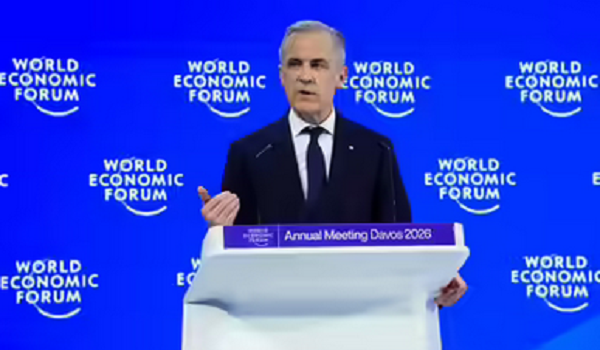
In a statement celebrating the start of the World Cup, Prime Minister Mark Carney touted the economic benefits of the tournament, saying it is poised to yield thousands of new jobs and deliver billions in aid to Canada’s struggling economy.
“The FIFA World Cup is projected to create and support nearly 25,000 jobs and add $2 billion to Canada’s economy,” a release issued by Carney’s office on Thursday reads. “But the real impact will go much beyond the games. It will be Canadians watching our players playing in our stadiums, surrounded by our fans.”
Read More On Our Daily Stock Markrt Reports – Geopolitical Relief Fuels Broad-Based Market Rally
To recession-weary Canadians, those numbers might sound significant. But economists were quick to pour cold water on the notion that the championship will be an economic boon for the country.

“FIFA-related job growth, regardless of size, will likely be temporary and part-time,” Claire Fan, economist at RBC, told the Star.
“So (the World Cup is) not a sustainable source of job growth,” she said, adding that the positions could fade as early as July or August.
Shelly Kaushik, senior economist at BMO, said that employment gains will be concentrated in the tourism and hospitality sector in the cities of Toronto and Vancouver.
Kaushik also emphasized that the positive economic impact will be partly offset by expenses to host the event: The Office of the Parliamentary Budget Officer estimated the price tag to be just over $1 billion for the two host cities, across all levels of government.
Considering the costs, BMO expects Canadian Gross Domestic Product (GDP) to grow 0.1 percentage points, split between two quarters, as a result of the World Cup.
“That’s very, very small,” said Kaushik. “So it’s not necessarily going to change the picture in Canada. The fact is that there’s all these bigger headwinds right now to the economy, specifically the energy price shock, and, of course, all of the trade uncertainty that we’re still dealing with.”

Challenging economic conditions could have an impact on leisure spending, meaning GDP gain may end up being smaller than expected, Fan noted in a podcast episode also released Thursday.
Bahoz Dara Aziz, director of communications to the Secretary of State for Sport, confirmed that the figures cited by Carney came from a FIFA study from Dec. 2024 prepared by Deloitte Canada.
That same study estimated that the tournament could contribute $520 million to the GTA’s GDP.
The projected economic gain is smaller than for a typical World Cup tournament, said Kaushik.
Canada will amass about nine per cent of total fan spending between the three countries, assuming sellout attendance, according to BMO’s calculations. Meanwhile, the U.S. will get nearly 80 per cent of fan spending.
“It’s smaller than the benefit would have been if Canada had hosted the whole thing.”

That said, Kaushik believes the World Cup could add a slightly bigger boost to the local economy than Taylor Swift’s Eras Tour in 2024.
There is a potential for tourists to stay longer in the host cities, she added, and catch more than one game.
“The World Cup is benefiting Canada, and yes, I think we need it,” she said. “It’s a good time to get any sort of support. But at the same time, I’d be cautious of overstating the benefit.”
This article was first reported by The Star