




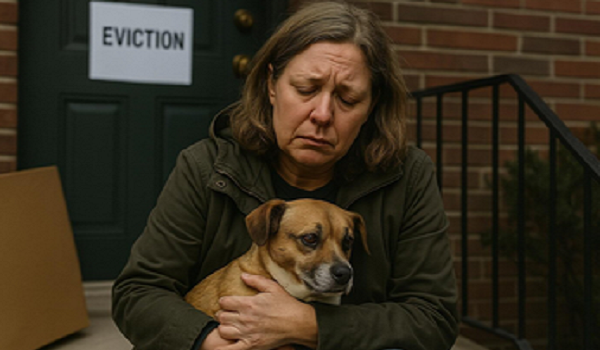
Heartbreaking Trend’: Housing Woes Forcing More Ontarians to Give Up Pets
Jessica Nichol was working at the Toronto Humane Society during last month’s heat wave when a man arrived at the shelter with his dog.
He had been living in his car and depending on friends to provide his dog with air conditioning during the day, but it wasn’t a reliable or long-term solution.
So, Nichol says, he made the “devastating” decision to surrender the dog to the River Street shelter for the pet’s well-being.
“This person loved this animal very much,” says Nichol, the organization’s senior manager of operations. “It’s clear their bond was very strong. This dog was an emotional support for them during what is a very difficult time in their life.”
Despite the popular belief that it’s “bad owners” who hand over their pets to shelters, it’s difficult scenarios like these that have pushed people to surrender their pets, says Melissa Shupak, director of animal sheltering.
“They enter the doors of 11 River St. quite distraught at their circumstances and feeling at a loss that they can’t even provide something for themselves, let alone their pet,” she says.
Most often, people who give up their pet do so because they feel they have no other option, she says.
It’s something animal shelter workers are seeing more of.
Toronto Humane Society has seen a 28 per cent increase in surrenders in the first six months of this year, from 330 in the first half of 2024 to 424 in the first half of 2025, with housing, financial issues and cost of care making up the majority of reasons behind surrenders, according to Shupak.
In 2025 so far, the Ontario SPCA and Humane Society has taken in nearly 3,600 animals across 12 communities. Of those, 59 per cent were surrendered, representing a 16 per cent increase in surrenders compared to last year, the charity said.
And while the charity does not track how often the surrenders are due to financial or housing reasons, it knows anecdotally those are factors. Additionally, it has seen the demand for its low-cost veterinary services rise “higher than ever,” with uptake for basic services last year up 184 per cent.
Shelter operators say they often see people giving up their pets due to unstable or unsafe housing, as well as other financial challenges, high veterinary costs, or pets’ behavioural needs. The shelter may offer resources to the families before taking ownership of the pets, but in many cases, keeping the pet is no longer sustainable, even with the extra help.
When it comes to housing issues, the guardian could be experiencing homelessness, which makes caring for a pet particularly difficult during extreme weather, whether they’re in an encampment in the winter or seeking relief at a cooling centre that doesn’t have capacity for pets. Alternatively, they might face rising housing costs that make pet care impossible to afford, or a sudden loss of shelter and an inability to find pet-friendly housing options, they say.


In King City, Ont., a 23-pound, five-year-old French Bulldog named Louis was surrendered when his family encountered housing difficulties in November. The nap-loving lapdog is now being fostered, but it could be months before he finds a forever home.
The rescue and animal sanctuary that took him in, Dog Tales, receives about 100 requests to surrender pets per month, according to kennel manager Cassandra Ferrante, although they typically only have the capacity to accept about 10.
Housing instability is “one of the most common reasons” for surrender, Ferrante says, noting people may struggle to find housing that allows pets.
That’s despite it being “a clear prohibition under the Residential Tenancies Act” for landlords to forbid tenants from having pets in most cases, says Douglas Kwan, director of advocacy at the Advocacy Centre for Tenants Ontario.
Sometimes, renters may feel they have no choice but to accept the landlord’s terms because they’re in a tight housing market, he said, but there are few instances in which having a pet could lead to eviction.
That’s if having a pet is against the rules for all residents in a condo or co-op, or if the pet could impair the legal right of the landlord, “impair the safety” of other residents or substantially interfere with other residents’ reasonable enjoyment, Kwan said.
“It’s a high bar, and something that needs to be proven at the Landlord and Tenant Board,” he said.
Shelters offer emergency services to prevent surrender
Shelters, before taking ownership of a pet, may offer resources like low-cost veterinary care, food bank programs, emergency foster or boarding programs, or free dog training.
“Our primary focus when folks call us is first to see what we can do to help them keep their pet,” said Ontario SPCA and Humane Society vice-president of operations Sonya Reichel.
The Ontario SPCA and Humane Society provides established food banks in their communities with pet food, in some cases has food “depots,” and sometimes provides food for communities reaching out directly for support, such as those that have experienced wildfires.
It also offers a temporary boarding program for pet parents in need, allowing the animals to stay at a centre for about two weeks or to go into foster care. In that time, the pets receive any veterinary care they might need, such as vaccines, flee treatments or spay or neuter surgery if agreed upon, Reichel said.
Additionally, it offers three high-volume spay/neuter clinics, which also offer basic veterinary care services at reduced rates.
Toronto Humane Society, meanwhile, offers an urgent care program to place pets in foster homes for up to six months while the pet guardian finds stability. Shupak says this plays a “vital role” in diverting people from surrendering their pets so they have time to find their footing before deciding to give up their pet.
It also offers public veterinary services — such as wellness appointments, low-cost spay/neuters and dental services — as well as training services, which are “critical” to keeping pets together, she says.
Shupak, for her part, is grateful pet owners make the decision to turn to Toronto Humane Society for support.
“We try to be as non-judgmental and compassionate in the work that we’re doing because we recognize that humans are a part of the work.”
This article was first reported by The Star