



Investor Anxiety Eases as Trump Commits to Safeguarding Oil and Gas Transit at Hormuz
President Donald Trump’s pledge to ensure safe passage of oil and natural gas through the Strait of Hormuz shipping chokepoint calmed markets somewhat on Wednesday even though Israeli and U.S. attacks on Iran remained in full force and Israel vowed to assassinate the next Iranian leader.
In early trading, European gas prices were more or less flat after climbing more than 70 per cent since Monday, when ships carrying liquefied natural gas (LNG) to Europe and Asia stopped crossing Hormuz.
But oil continued to climb. Brent crude, the international benchmark, was up 3 per cent in London, to US$84 a barrel, taking the one-year gain to 18 per cent. Before the Israeli and U.S. attacks on Iran started on Saturday, Brent was trading at US$73.
Read More On Our Daily Stock Markets Reports – Global Tensions Rattle Markets; Major Indexes Fall in Volatile Trading
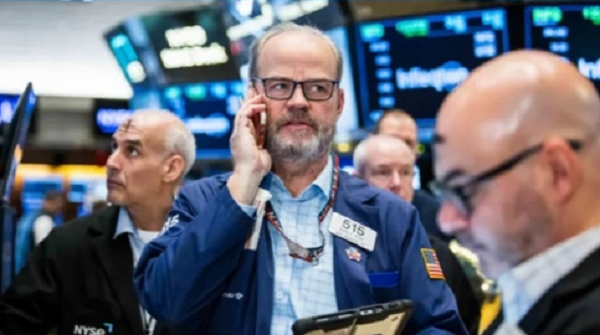
The FTSE-100 index was up marginally; Germany’s DAX index, whose selloff on Monday and Tuesday was severe, was up 1 per cent.

Asian markets continued to see steep declines, reflecting the region’s dependency on the Middle East for oil and LNG supplies. South Korea’s benchmark Kopsi lost 12 per cent after shedding 7.2 per cent on Tuesday – the index’s worst two-day performance since the 2008 financial crisis. Markets in Japan and Taiwan each fell about 4 per cent
Mr. Trump, evidently sensitive to rising gasoline prices in the U.S. during an election year – the Congressional mid-term poll is set for November – on Tuesday said that the U.S. International Finance Corp. would offering shipping insurance to tankers “at a very reasonable” price to ensure the flow of energy through Hormuz.
He also said that the U.S. Navy would escort ships through Hormuz “as soon as possible,” if necessary.
Details were scant and it was not immediately clear when the insurance plan would be in place, or even if U.S. laws allow navy ships to escort merchant ships that were not U.S.-flagged or American-owned.
Hormuz is the narrow channel – 33 kilometres across at its narrowest point – that separates the Persian Gulf from the Gulf of Oman on the Indian Ocean. About 20 per cent of global oil and LNG travels through Hormuz on the way to global markets, especially those in Asia and Europe.
Hormuz has been closed since Saturday due to the cancellation of shipping insurance policies and the possibility of drone and missile attacks from Iran, which effectively controls the strait.
The closing of the strait has triggered oil and LNG productions cuts, since their output can’t be loaded in ships. QatarEnergy, the world’s biggest LNG company, suspended production on Monday following a drone attack. While the damage was minor, its LNG facility has not reopened because gas ships have been unable to travel through Hormuz.
Analysts on Wednesday had doubts whether the U.S. Navy’s presence in the strait would be enough to protect oil and LNG ships from attack.

“Advances in drone warfare make defending the world’s most critical energy chokepoint extremely onerous, even for the most powerful military on the planet,” Montreal’s BCA Research said in its latest investor note.
On Wednesday morning, there was no sign that the Israeli and U.S. attacks on Iran would ease anytime soon.
Israel said it had launched “extensive strikes” against Iranian missile sites, infrastructure and defence systems. Its defence minister, Israel Katz, vowed to assassinate the leader chosen to replace Ayatollah Ali Khamenei, who was killed in his office in Tehran during the initial attacks early on Saturday.
The threats came as reports surfaced that Mojtaba Khamenei would succeed his father as supreme leader as early as Wednesday. He is 56, reclusive and known to have close ties to Iran’s Revolutionary Guards.
Mr. Katz said in a statement that “any leader appointed by the Iranian terrorist regime to continue leading the plan to destroy Israel … will be an unequivocal target for elimination.”
This article was first reported by The Globe and Mail