




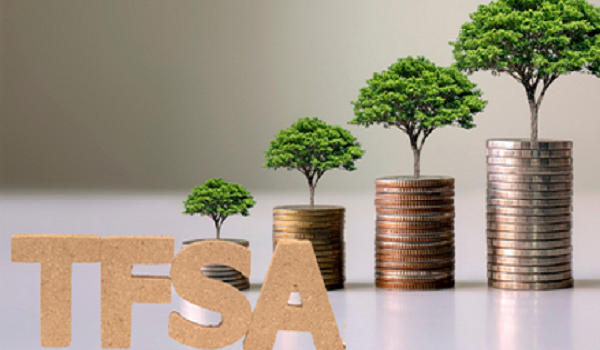
Investors Gain Fresh TFSA Contribution Space as New Year Begins
As of January first, adults in Canada can add another $7,000 in contribution space to their tax free savings accounts (TFSAs).
That brings the total contribution limit for eligible investors who have never contributed to their TFSA since its introduction in 2009 to $109,000.
The total contribution limit could be much higher for individual TFSA investors who have made gains and withdrawn funds over the years because the amount withdrawn is restored as contribution space the following calendar year.
That means any withdrawal made before the end of 2025 will be added to the $7,000 as contribution space in 2026.
Don’t count on CRA to keep track
Individual TFSA holders are ultimately responsible for keeping track of their contribution limits. The Canada Revenue Agency (CRA) normally lists allowable space for individuals on its My Account Portal, but the amount might not be right because it is the responsibility of the financial institution to keep the CRA up-to-date.

In most cases the correct amount is not updated until later in the Calendar year. In 2025, TFSA information was not updated until June or later in some cases.
Over-contributions could result in a penalty of one per cent of the excess amount monthly, which compounds over time.
CRA assessed $166 million in TFSA over-contribution penalties in 2024; up from nearly $131 million in 2023 and $15 million in 2015, according to data compiled by Canadian finance industry publication Investment Executive.
How a TFSA works
Eligible investments held in a TFSA can grow tax free – be they capital gains on equities, or income from dividends and fixed income – and can be withdrawn as cash at any time.
In comparison, half of capital gains on equities in non-registered accounts are taxed and income is fully taxed. Dividends are also subject to full taxation in non-registered accounts with the exception of a tax credit on eligible payouts.
It is important to note, however, that non-Canadian dividends in a TFSA are subject to a withholding tax on behalf of the U.S. Internal Revenue Service (IRS). That includes the big U.S. blue-chip companies. It also includes U.S. mutual funds or exchange traded funds (ETFs), and even Canadian mutual funds and ETFs that hold U.S. equities.
From a tax perspective the closest thing to a TFSA available to the average Canadian is the principal residence tax exemption, which allows Canadians to avoid paying any tax on the capital gains they generate from the sale of their principal residences.
As another comparison, (RRSP) contributions – along with the returns they generate over the years – are fully taxed according to the individual’s marginal rate when the funds are withdrawn. TFSA contributions, however, can not be deducted from your current taxable income like (RRSP) contributions.
Like the RRSP, a TFSA can hold just about any type of investments including stocks, bonds, mutual funds, exchange traded funds, real estate investment trusts and even some options.
Cash alone in a TFSA is pointless, however, considering it yields close to nothing and the TFSA’s primary advantage is to avoid taxation on investment gains.

Despite that, a recent TD Bank survey found 39 per cent of Canadians use their tax free savings accounts (TFSAs) to hold cash rather than investing.
Using RRSP and TFSA strategically to lower taxes
The TFSA has grown into a powerful retirement investment tool that can be used strategically with an RRSP.
Since RRSP withdrawals are fully taxed, investors can divert contributions to a TFSA well before retirement to avoid higher marginal tax rates and even Old Age Security (OAS) claw-backs, by strategically shifting contributions to their
TFSAs well before retirement.
Banking up a significant amount of cash in a TFSA allows retirees to top up needed cash without tax consequences, while keeping RRSP withdrawals at the lowest marginal tax rate.
This article was first reported by BNN Bloomberg