



Ontario’s Tire Recycling Sector Faces Renewed Setbacks
The tire recycling industry in Ontario is facing another crisis after eTracks, an organization that controls the majority of tire recycling in the province, cut tire processing this month by about 50 per cent at one of the province’s biggest recycling plants.
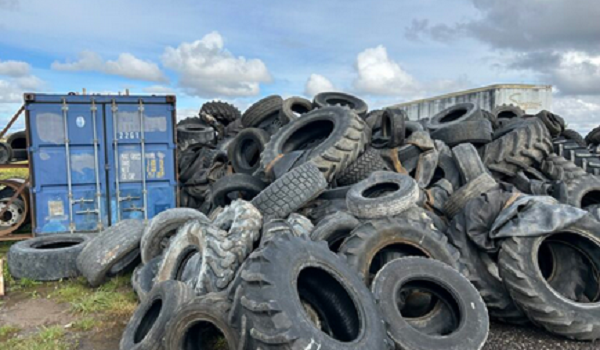
Critics say the cutback is another indication that Ontario’s once robust tire recycling industry has been severely disrupted by a provincial reduction in recycling targets, resulting in stockpiles containing hundreds of thousands of tires at two sites. The stockpiles came about after tire recyclers reached the lowered target before the end of 2025 and slowed or stopped processing tires.
“This raises serious concerns about potential new backlogs across Ontario, particularly as we are only weeks away from the spring tire changeover season,” said Adam Moffatt, executive director of the Ontario Tire Dealers Association. “We saw similar conditions last September ahead of the winter tire season, which ultimately resulted in widespread stockpiling and tire backlogs across the province.”
The province lowered the recycling target in December of 2024 from an 85 per cent collection and management rate to a 65 per cent management rate for the years 2025 to 2029.
Moffatt said the disruption in the industry is continuing to threaten the viability of tire haulers and processors and could lead to more stockpiling, an environmental hazard that prompted the provincial government to start a recycling program in the first place.
A second processor, who Moffatt didn’t name, also received a serious quota cutback for the month of March.

eTracks, however, said it reduced the quota for a Brantford rubber recycling plant named CRM because the facility is more expensive than others, and eTracks needs to save money as it continues to clear the stockpiles.
The organization, which manages recycling for 70 per cent of tire producers in Ontario, including big names like Bridgestone, Goodyear and Michelin, said that it continues to collect tires and send them to other plants.
“The expense to collect and manage (the 2025) surplus has added costs for eTracks that are being managed to ensure collection continues through to the end of the year,” said Melissa Carlaw, eTracks vice-president of communications and sustainability, in an email, adding that she blames the province’s regulatory change for the current state of the industry.
Carlaw said that eTracks processes 85 per cent of the tires that its producers sell on the Ontario market, which was the target before the Ford government lowered it to 65 per cent in December of 2024.
But with a surplus of tires from 2025 still not processed, Moffatt said the slowdown at CRM and the other unnamed plant could impact tire processing for the remainder of the year.
The Ministry of the Environment, Conservation and Parks said in an email that it expects producers and Producer Responsibility Organizations (PROs) to continue to “manage all end-of-life tires as they become available.”
eTracks is one of five PROs in the province that manage recycling on behalf of tire manufacturers and other companies that sell products with tires, collectively referred to as producers.
The PROs are part of a provincial framework called individual producer responsibility, or IPR, which makes tire producers entirely responsible for recycling. The purpose of IPR is to stimulate competition and innovation, thereby ensuring the creation of end-markets for recycled tires.
Sina Varamini, the general manager of CRM, said his plant is a high resource-recovery facility that extracts rubber, steel and other material from tires. The rubber is processed into varying sizes of crumb that can be used in a number of products including rubberized asphalt, sports fields, and rubber-moulded products.
“When processing costs are viewed on an aggregated basis across these material end markets, CRM Brantford stands among the most efficient and cost-effective tire recycling operations in Ontario,” said Varamini.
Plants like CRM also receive a portion of a fee, typically charged to Ontario consumers each time they buy a new tire. The fee filters down from PROs to tire producers and then to consumers.
In Ontario, about 12 million new tires are sold each year, which at about $5 in fees per tire translates into a $60 million industry funded by consumers.
The province has never fully explained why it lowered the recycling target at the end of 2024, but 45 tire producers associated with eTracks could have faced major fines for failing to meet the minimum collection rate of 85 per cent for tires in 2023.

Instead, the Resource Productivity and Recovery Authority settled with eTracks for $7.4 million — not a fine so much but an amount that was equal to the money eTracks would have spent had it recycled enough tires to match the industry average for that year, which was 78.9 per cent.
But it’s not just the change in the target that has created a problem for the recycling industry, say experts.
When the province amended the recycling legislation, it also reduced the number of collection sites, such as garages or car dealers, that PROs were required to collect from, a loophole that together with the lowered target means that PROs don’t need to collect from all the sites in Ontario to meet their targets.
That leaves many businesses outside the formal collection system having to pay to dispose of their tires even though consumers are footing the bill for recycling.
“No tire dealer, collection site, or tire should be excluded from Ontario’s recycling network,” said Moffatt. “If fees are being charged, the services funded by those fees must actually be delivered to every site, every tire, and ultimately every consumer paying for them.”
Critics have said the problems will persist in the industry as long as the recycling target remains at 65 per cent. No one PRO has been publicly singled out by the ministry or by RPRA as being at fault for the recent problem with stockpiling.
Meanwhile, Carlaw of eTracks, said her organization will continue to meets its obligations and service its collection network until the end of the year. But it can’t pick up the slack.
“It is not reasonable to expect that any one PRO can backfill the province’s tire recycling in the absence of other obligated parties and in the absence of any precedent or guidance,” said Carlaw.
This article was first reported by The Star