



Ottawa Considers Expanding Crude Production to Stabilize Tight Energy Markets
Ottawa has asked Canadian oil producers to assess how much crude they could potentially release into the market, Energy Minister Tim Hodgson said Tuesday, as the escalating war in Iran leaves a fifth of global supplies in a chokehold.
The federal government made the request after increasingly urgent discussions between Group of Seven industrialized countries, and members of the Paris-based International Energy Agency, about how to bolster supplies and calm energy markets that have surged to near four-year highs since U.S. and Israeli forces began bombing Iran on Feb. 28.
G7 energy ministers stopped short of proceeding with a release of strategic oil reserves when they met Tuesday morning. Instead, they asked the IEA to examine market conditions and the security of supplies. That in-depth assessment will inform a decision on whether to make emergency stocks from the IEA’s 32 member countries available to the market.
Those countries hold more than 1.2 billion barrels of public emergency oil stocks, with a further 600 million barrels of industry stocks held under government obligation.
Mr. Hodgson, who attended both the G7 energy minister and IEA meetings Tuesday, said there is no specific deadline for a decision, but the IEA is monitoring the situation carefully.
Though Canada is an IEA member, as one of the world’s top producers and a net exporter it is not obligated to keep strategic stockpiles. Refiners and marketers keep buffer supplies on hand in case of emergencies or plant outages, however.

“Canada was clear in the meeting that if there is a desire for a co-ordinated, multilateral release of strategic reserves, we will do our part,” Mr. Hodgson said in an interview.
He said Canada has “a tremendous ability” to tap the oil sands – what he called “the best strategic reserve in the world” – to help with a global effort to get barrels to market.
Prime Minister Mark Carney pledged last year to make Canada an energy superpower, and he has worked to reshape Ottawa’s relationship with the oil sector through an energy agreement with Alberta that included conditions for a new pipeline to the West Coast.
Mr. Hodgson said IEA member countries working together to release reserves is a prime example of what Mr. Carney recently spoke about at the World Economic Forum in Davos – that synchronized actions among nations can be used to reduce the power of any one entity or country, in this case Iran’s weaponization of global oil supplies.
G7 leaders will convene Wednesday to discuss the potential oil release, according to a readout from Ottawa about a Tuesday call between Mr. Carney and French President Emmanuel Macron, who also holds the current G7 presidency.
Should the oil release proceed, Mr. Hodgson said Canada has “a number of tools” to meet its commitments.
Maintenance could be delayed at oil sands or conventional sites to keep production as high as possible, for example. The government may also ask companies to release some of their inventories or tweak production “to get the extra barrels out the door,” or ask refineries that use some imported oil for feedstocks to switch to domestic supplies for now.
The war has essentially closed the Strait of Hormuz, a key shipping route for Persian Gulf oil, choking off about 20 per cent of the world’s supplies to make it the largest-ever disruption.
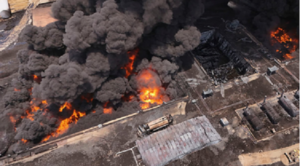
In addition to the challenges of transit through the strait, Iran has launched strikes at critical infrastructure and energy-export facilities across the Gulf states. And producers, including Kuwait and the United Arab Emirates, have begun cutting output as their storage facilities fill up.
French Finance Minister Roland Lescure told journalists after G7 energy ministers met that “everyone is willing to take measures to stabilize the market, including the United States.”
Indeed, U.S. Energy Secretary Chris Wright said the U.S. is considering co-ordinating sales of oil from its Strategic Petroleum Reserve with releases from other nations.
Oil prices fell sharply on Tuesday as traders struggled to weigh the prospects of emergency stockpiles gushing into the market against an unknown timeframe for the military campaign.
International benchmark Brent oil was down 11 per cent in after-hours trade at US$87.80 a barrel. It’s dropped from a high of almost US$120 early in Monday’s session. West Texas Intermediate sold for US$83.45 a barrel after the close of regular trading, down 12 per cent.

This is despite the supply situation remaining relatively unchanged. U.S. Defence Secretary Pete Hegseth said on Tuesday that his country’s bombing of Iran would intensify. Iran, meanwhile, has vowed to prevent all crude exports from leaving the region if U.S. and Israeli bombardments don’t stop.
Rory Johnston, oil-market analyst at Toronto-based Commodity Context, said U.S. President Donald Trump and his officials are sending multiple conflicting messages to the market. On Monday, for instance, the President said the war in Iran would end “very soon,” then moments later, suggested more aggressive military action would come should Iran persist in blocking oil tanker traffic through the Strait of Hormuz.
Mr. Johnston pointed to reports of Iran beginning to set mines in the strait, which could lead to a “nightmare scenario” of the waterway remaining impassable for an extended period. That could push crude toward US$200 a barrel, he said.
Analysts at Wood Mackenzie said the prospects of restoring oil flows from Persian Gulf states have deteriorated in recent days, as attacks have intensified. The possibility still exists that Brent could top US$150 a barrel in the coming weeks, they said, adding that supply volumes at risk are larger than when Russia invaded Ukraine in 2022. “In our view, US$200 a barrel is not outside the realms of possibility in 2026.”
This article was first reported by The Globe and Mail