



Ottawa Shifts Budget Cycle to Fall as New Standard Practice
The Liberal government is permanently shifting to tabling budgets in the fall instead of the spring, and the Nov. 4 budget will aim to present future deficit spending as borrowing that is focused on longer-term gains.
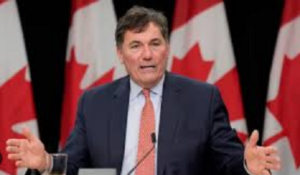
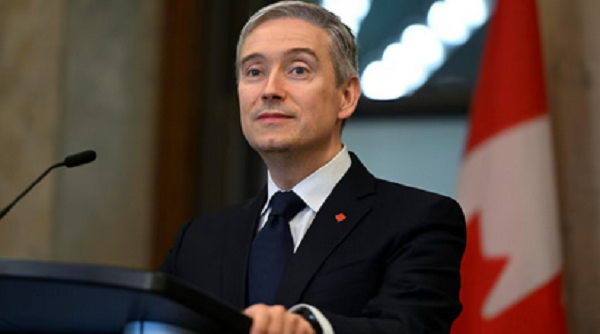
Finance Minister François-Philippe Champagne announced the two changes on Monday. He said fall budgets will help provinces and municipalities plan for the construction season, while separating operational and capital spending will provide the public with additional information that will illustrate Ottawa’s efforts to spend less on internal operations and more on capital projects.
He said the traditional presentation of debt and deficit figures will be maintained.
The minister repeated the Liberals’ campaign pledge that the government would balance its operating budget within three years.
This suggests that by that time, federal spending that is newly classified as capital will be the same size or larger than the traditionally defined deficit.

Mr. Champagne described the change as an effort to provide MPs with additional information that will show how the government is delivering on its pledge to cut day-to-day spending in order to invest more on capital projects.
Conservative and Bloc Québécois MPs criticized the government’s plans as an attempt to distract from the fact that the budget deficit, as it is traditionally defined, is projected by observers to be significantly larger than previous forecasts.
During an appearance before the House of Commons finance committee, Mr. Champagne said the timing change will help provinces move more quickly to approve projects.
“We can’t afford as a nation to miss another construction season,” he said. “We need to make generational investment in our future and that’s why this framework will help us to focus on what matters.”
The federal government has not tabled a budget since April 15, 20
The government’s December, 2024 fall economic statement was overshadowed by the surprise resignation that morning of then-finance minister Chrystia Freeland.
The Nov. 4 budget is expected to include an update on spending plans for the current fiscal year that began April 1, as well as for future years. Federal budgets typically lay out a five-year spending plan.
Monday’s announcement did not include any new details related to deficit projections.
The December economic statement projected a $42.2-billion deficit for the 2025-26 fiscal year. The Liberal platform revised that projection to $62.3-billion in April. The Parliamentary Budget Officer released a report last month that put the estimate at $68.5-billion. A significant caveat that the PBO report pointed to is that, owing to a lack of detail from the government, the forecast did not fully take into account large new spending promises, such as increased defence spending. A July projection by the C.D. Howe Institute said this year’s deficit could be more than $92-billion.
Mr. Champagne was asked Monday if projections of a deficit nearing $100-billion are in the ballpark of what should be expected.
“You’ll have to wait until November 4th for me to provide you with an update on the forecast,” he told reporters, adding that Canada’s deficit is low in comparison to other countries and Canada has a triple-A credit rating.
“I would say the fiscal situation of Canada is solid,” he said.
The Liberals campaigned earlier this year on a plan to “spend less” in order to “invest more” by balancing the operating budget within three years. But the concept of operating and capital budgets was not clearly defined and is not currently part of the way federal spending is presented to Parliament.
Tyler Meredith, who assisted with the 2025 Liberal platform and is a former economic adviser to Ms. Freeland when she was finance minister, said Prime Minister Mark Carney wanted to reclassify federal spending as part of his broader policy goals.
“We have to get capital off the sidelines. And so, part of how you do that is changing the incentive structure within government about how you spend money,” he said. “I think in the Prime Minister’s mind, one of the key things that needed to be done was to change the composition of spending.”
Mr. Champagne said his Nov. 4 budget and future budgets will continue to present the budget balance in the traditional format.
“I can tell you the deficit and the debt will be recorded in the same manner as in previous budgets, but it’s going to provide an additional lens, so you provide more information to people, and as parliamentarians, we should all welcome that,” he said.
Conservative MP Pat Kelly repeatedly asked Mr. Champagne to say when the budget will be balanced. The minister did not answer directly.

Then Mr. Kelly said: “You have refused to answer this question repeatedly, so I am left to conclude that the budget will never be balanced under this government.”
There have long been calls by the Parliamentary Budget Officer and MPs on the government operations committee to move toward an earlier date in the parliamentary cycle.
While much of the public attention on the House of Commons focuses on debates over legislation, MPs also have a formal role in approving government spending through a process called the estimates.
The main estimates must be presented to Parliament on or before April 16 each year. They lay out base funding plans for federal departments. Those budgets can be topped up throughout the year with supplementary estimates.
All estimates must be approved by the House of Commons.
The criticism has been that the typical timing of releasing federal budgets in February or March didn’t provide departments with enough time to include that information in the main estimates, meaning MPs were forced to study spending reports that were incomplete.
Government documents released Monday said capital investment will be defined broadly as any government expense or tax expenditure that contributes to public or private sector capital formation, “held directly on the government’s balance sheet or on that of a private sector entity, Indigenous community or another level of government.”
This article was first reported by The Globe and Mail