




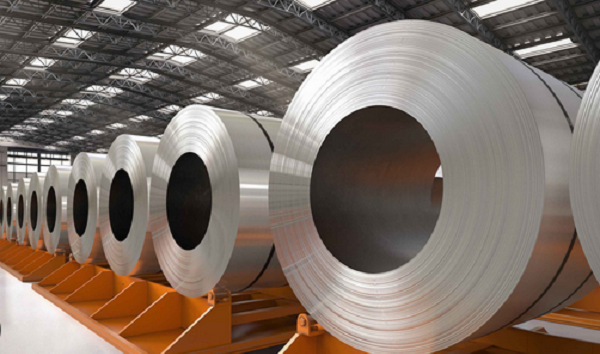
Ottawa Tightens Foreign Steel Restrictions, Boosts Funding for Lumber Sector
The federal government is ramping up support for Canada’s steel and lumber industries, increasing tariffs on steel imports and promising additional money to help lumber mills stay afloat in the face of U.S. protectionism.
Prime Minister Mark Carney announced on Wednesday further limits on imports of steel in an effort to boost domestic demand for Canadian mills that have lost access to their key export market in the United States.
Over the summer, Ottawa introduced tariff-rate quotas (TRQs) for steel imports, setting a threshold above which imported metal will face a 50-per-cent tariff. The idea is to cap the amount of steel coming to the country, without cutting it off entirely.
Starting next month, Canada will tighten these TRQs. For countries that don’t have a free-trade agreement with Canada, such as China and Turkey, the quota will be lowered to 20 per cent of 2024 levels. For countries that have a free-trade agreement with Canada, such as South Korea and Vietnam, the quota will be set at 75 per cent of 2024 levels.

These TRQs don’t apply to the United States or Mexico, although Canada maintains a separate 25-per-cent tariff on steel imports from the United States.
Ottawa will also place a 25-per-cent tariff on targeted steel derivative products, such as wind towers, prefabricated buildings, fasteners and wires. This applies to every country, including the U.S.
The Canadian steel industry has spent months calling for increased protection, as exports to the U.S. have plummeted in the face of 50-per-cent tariffs imposed by President Donald Trump. If Canadian mills can’t compete in the U.S. because of tariffs, the industry argument goes, then Ottawa should erect its own tariff walls to increase the use of Canadian metal within the country.
Canadian steel makers have also warned that steel from countries like China could be increasingly dumped in Canada if it can’t be sold in the United States.
Catherine Cobden, president and chief executive of the Canadian Steel Producers Association, said Ottawa’s latest suite of measures is “a big relief” for the steel sector. “We needed a refreshed package that did more to keep pace for the losses we were experiencing south of the border,” she said.
After meeting at the White House last month, Mr. Carney and Mr. Trump launched a new round of discussions about lowering steel and aluminum tariffs. However, Mr. Trump broke talks off several weeks later, after becoming angry about an anti-protectionist TV ad made by the Ontario government, featuring the late U.S. president Ronald Reagan.
Mr. Carney pitched Wednesday’s announcement as an effort to shore up the domestic industry. But limiting the amount of steel coming into Canada from low-cost jurisdictions in Asia could help Canada-U.S. trade talks, Ms. Cobden said, given Washington’s concerns about Chinese products being shipped into the U.S. through Canada.
Mr. Carney said he was strengthening the Canada Border Services Agency’s tools to detect dumped steel.
“If you take all of those things together and they help the domestic industry combat unfair trade in a very substantial way, then you can turn to the United States and say, ‘Look at us. We are aligned. We are doing what we say we do and we’re doing it well,’” Ms. Cobden said.

Ottawa has sought to support the steel sector directly, giving a $400-million loan to Algoma Inc. and promising to prioritize Canadian steel in federal procurement.
The measures announced on Wednesday may help steel producers, but they will also push up costs for Canadian steel users.
Since the spring, Canada has granted a tariff carve-out for steel imports that are used in Canadian manufacturing. This “remission” system will end on Jan. 31, Mr. Carney said Wednesday.
“You don’t do it overnight, because people have certain relationships, certain contracts. … But you also don’t do it a year from now, or else it doesn’t have any benefit for the Canadian industry,” Mr. Carney said at a press conference after the announcement.
In an attempt to lower the cost of Canadian products for domestic buyers, Ottawa said it will subsidize 50 per cent of the cost of shipping steel and lumber across the country by rail. This appears to be in response to complaints by Western politicians and developers that steel coming from mills in Ontario is much more expensive than imports brought in by ship, given the higher rail transportation costs.
Mr. Carney also announced a suite of measures to help the lumber industry, which is struggling with a combination of rising U.S. anti-dumping and countervailing duties, as part of the long-standing softwood lumber dispute, and a new round of separate U.S. tariffs. Together, this has taken U.S. import taxes on most Canadian softwood producers to more than 45 per cent.
The announcement includes an extra $500-million in loan guarantees to help Canadian producers of softwood lumber with their operations, coming on top of $700-million previously allotted in August.
This is intended to help lumber mills remain solvent while they search out new foreign markets or retool for the domestic market.
So far, promised financial support from Ottawa has been slow to materialize. Tim Hodgson, the federal Energy and Natural Resources Minister, met on Monday with senior banking executives after the forestry industry complained that businesses have yet to receive the loans. The program is run by the Business Development Bank of Canada, but the loans are distributed through the commercial banking system.
On Wednesday, Ottawa said it would establish a “single window” for applications, to make it easier for forestry companies to apply for the loans.
“This is a step in the right direction for companies, workers and the communities that rely on them. But ultimately, a negotiated agreement [with the United States] is the path to long-term stability,” Kurt Niquidet, president of the BC Lumber Trade Council, said in a news release.
Mr. Carney also spelled out new support for workers in industries that have been affected by tariffs. Ottawa is earmarking an additional $100-million over two years for a work-sharing program, which provides wage top-ups from employment insurance for workers facing reduced hours.
This article was first reported by The Globe and Mail