





Markets Retreat as Rising Oil Prices Weigh on Major Indexes
The Canadian Vanguard Stock Market Report – Thursday March 12, 2026 Edition.
.
The Toronto Market
.
The US Markets
U.S. Market Indexes
U.S. equity markets closed sharply lower, with broad-based selling pressure across all major sectors. Heightened geopolitical tensions stemming from the ongoing conflict in the Middle East weighed heavily on investor sentiment, contributing to a risk-off trading environment throughout the session.
The Dow Jones Industrial Average declined 739.42 points (-1.56%) to close at 46,677.85. The S&P 500 fell 103.18 points (-1.52%), ending the session at 6,672.62, while the Nasdaq Composite dropped 404.16 points (-1.78%) to finish at 22,311.98.
Selling pressure was consistent from the opening bell through the close, indicating sustained investor caution rather than a late-session sell-off. All major sectors finished in negative territory, reflecting broad market risk aversion rather than sector-specific weakness.
Small-cap equities experienced even greater pressure. The Russell 2000 Index declined 53.91 points (-2.12%), closing at 2,488.99, suggesting that investors moved away from higher-risk and more economically sensitive smaller-cap stocks.
Interestingly, despite the magnitude of the declines, intraday volatility remained relatively contained. The market drifted steadily lower throughout the trading session rather than exhibiting sharp swings, indicating a persistent and orderly sell-off driven by macro concerns rather than panic-driven trading.

Today’s U.S. Market Statistics
New York Stock Exchange (NYSE): Market breadth on the NYSE was decisively negative, with declining issues significantly outnumbering advancing issues. A total of 2,180 securities declined, while 589 advanced, and 67 issues closed unchanged. This produced a decliner-to-advancer ratio of 3.70 to 1, or roughly four declining stocks for every advancing stock, underscoring the broad-based weakness across the market.
The exchange recorded 62 new 52-week highs and 122 new 52-week lows, compared with 36 new highs and 38 new lows in the previous session, indicating a notable deterioration in market momentum.
Total trading volume on the NYSE reached 6,359,202,301 shares, representing an increase of approximately 12% from the 5,643,592,764 shares traded in the prior session, suggesting elevated selling activity and heightened investor participation during the market decline.
Nasdaq Stock Market (NASDAQ): Market breadth was similarly weak on the NASDAQ, where declining stocks substantially outnumbered advancing stocks. The exchange reported 3,699 decliners and 1,110 advancers, with 183 issues unchanged, resulting in a decliner-to-advancer ratio of 3.33 to 1.
The NASDAQ posted 61 new 52-week highs and 235 new 52-week lows, compared with 61 new highs and 126 new lows recorded in the previous session. The sharp increase in new lows highlights growing downside pressure among growth-oriented and technology-related equities.
Total trading volume on the NASDAQ reached 8,727,815,358 shares, approximately 2% higher than the 8,545,502,423 shares traded in the prior session.
Overall, market breadth and new-low expansion across both exchanges confirmed the negative tone of the session, indicating that the market decline was broad-based rather than concentrated in a small number of large-cap stocks.
Today’s U.S. Market Wrap-Up Report
U.S. equity markets experienced a broad and sustained sell-off, driven largely by the sharp rise in crude oil prices and escalating geopolitical tensions affecting global energy supply routes. Only two of the eleven major market sectors finished the session in positive territory.
The Energy sector led the market with a 0.68% gain, benefiting from the surge in oil prices. Utilities, often viewed as a defensive sector during periods of market stress, posted a modest 0.24% increase. All other sectors ended the session lower.
Among the largest declines, Technology (-1.99%), Financials (-2.14%), and Industrials (-2.31%) were the session’s weakest performers, reflecting broad risk aversion among investors. Basic Materials also declined 1.59%, adding to the negative market tone.
A key driver behind the market weakness was the continued disruption to shipping traffic through the Strait of Hormuz, one of the world’s most critical energy supply routes. The reduced flow of oil shipments through the region has pushed crude oil prices close to $100 per barrel. Rising energy costs increase input costs for manufacturers, transportation companies, and consumers, raising concerns that inflationary pressures could intensify.
Higher inflation expectations also reduce the likelihood that the Federal Reserve will lower interest rates in the near term, a factor that has weighed on equity valuations. The negative sentiment was reflected in market performance, with major U.S. indexes closing near their lowest levels of the year. The Dow Jones Industrial Average closed below the 47,000 level for the first time this year, signaling a deterioration in technical momentum.
Financial Sector
Weakness was particularly evident in large U.S. banks. Shares of Bank of America, JPMorgan Chase, and Wells Fargo are currently trading below their 200-day moving averages, indicating a potential longer-term bearish trend in the sector. Meanwhile, Goldman Sachs is trading near its 200-day moving average, suggesting that the stock is testing a key technical support level.
Company Highlights
Corporate stock performance was broadly negative, although energy producers and refiners were among the few areas showing strength.
Shares of Chevron Corporation rose 2.7%, closing at $196.97 with approximately 27 million shares traded, benefiting from the continued rise in crude oil prices.
The Technology sector underperformed overall, but there were isolated pockets of strength. Palo Alto Networks gained 1.93%, closing at $168.12 on 8 million shares traded. After several weeks of heavy selling pressure across the software industry, some technology stocks are beginning to show early signs of stabilization and selective buying interest.
Fertilizer Sector Strength
Agricultural and fertilizer companies were notable gainers during the session. Shares of CF Industries Holdings surged 13.21%, closing at $136.00 with 14 million shares traded. Meanwhile, Nutrien Ltd. advanced 5.84% to $83.94 on 11 million shares traded.
The strength in fertilizer producers may reflect expectations of rising agricultural input prices and increased demand for crop nutrients, trends that can emerge during periods of elevated commodity prices.
Key Takeaways for Traders (U.S. Markets)
- Risk-off sentiment dominated the session: Broad declines across sectors indicate investors are reducing exposure to growth and cyclical stocks amid geopolitical uncertainty.
- Energy remains the primary beneficiary: Rising crude oil prices continue to support energy producers and refiners.
- Financials showing technical weakness: Several large banks trading below their 200-day moving averages suggest weakening momentum in the sector.
- Inflation concerns returning: Higher oil prices may complicate the **Federal Reserve’s policy outlook, potentially delaying interest-rate cuts.
- Selective buying emerging in oversold areas: Some technology stocks are showing early stabilization after weeks of selling pressure, which traders will watch closely.
Implications for Tomorrow’s TSX Session
Given the strong correlation between U.S. and Canadian markets, the negative performance across major U.S. indexes—including the S&P 500 and the Nasdaq Composite—may weigh on sentiment at the open for the S&P/TSX Composite Index.
However, higher crude oil prices could provide relative support for the TSX, which has a larger weighting in energy companies compared with U.S. markets. As a result, Canadian energy producers may help cushion broader market declines.
Traders will be closely monitoring overnight oil price movements, developments in the Middle East, and early trading signals from U.S. futures markets to gauge whether the TSX will stabilize or follow U.S. markets lower at the opening bell.
Commodities and Bonds
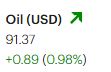
Oil: U.S. crude oil is trading higher, up $0.35 (0.34%) at $96.06 per barrel at the time of this update. Elevated oil prices continue to reflect geopolitical tensions in the Middle East and ongoing supply concerns, supporting the Energy sector in both U.S. and Canadian markets.
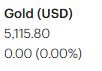
Precious Metals: Gold declined $38.10 (-0.71%), closing at $5,089.30 per troy ounce, while silver fell $2.22 (-2.63%) to $82.94 per ounce as of 12:30 a.m. EST Friday. The weakness in metals is largely due to a firmer U.S. dollar, which typically pressures dollar-denominated commodities.
Cryptocurrency: Bitcoin (BTC-USD) is trading higher at $71,950.60, up $1,614.24 (2.30%), suggesting continued investor interest in digital assets as an alternative store of value amidst traditional market volatility.
U.S. Treasury Yields: The 10-year Treasury yield extended its recent gains, rising six basis points to 4.27%, marking its highest level since early February. As of 12:30 a.m. EST Friday, the yield stands at 4.267%, reflecting market expectations of sustained interest rates amid inflation concerns.
After-Hours Futures:
U.S. equity futures are showing mixed signals following Thursday’s session:
- Dow futures: down 29 points (-0.07%)
- S&P 500 futures: down 5.5 points (-0.09%) at 6,670.50
- Nasdaq 100 futures: down 42.25 points (-0.18%) at 24,515.00
Note: Overnight futures often exhibit limited correlation with the next day’s regular session. Figures above reflect conditions at the time of posting.