







U.S. Stocks Weaken as Crude Oil Prices Resume Uptrend
The Canadian Vanguard Stock Market Report – Tuesday March 24, 2026 Edition.
.
The Toronto Market
The Toronto Market Index
The S&P/TSX Composite Index advanced by 57.78 points, or 0.18%, to close at 31,941.59. Despite opening below the prior session’s close, the index exhibited early upward momentum, surpassing that benchmark within the first hour of trading. Thereafter, price action remained relatively constrained, with limited upside extension and no subsequent breach below the previous closing level, indicating intraday stability.
Relative to its North American counterparts, the TSX demonstrated modest outperformance. Market dynamics continue to be predominantly influenced by upward pressure in global oil prices, which has provided support to energy-weighted components of the index and contributed to the overall positive performance.

Today’s TSX Market Statistics
Market breadth on the S&P/TSX Composite Index was marginally negative, as declining issues slightly outnumbered advancing issues. Specifically, 1,111 securities declined compared to 1,040 that advanced, resulting in a decliner-to-advancer ratio of approximately 1.07:1, with 103 issues remaining unchanged. This distribution suggests a modestly bearish underlying tone despite the index’s positive close.
New 52-week highs and lows were nearly balanced, with 74 securities reaching new highs and 75 registering new lows. This compares to the prior session, which recorded 33 new highs and 40 new lows, indicating a notable increase in overall price dispersion and market activity at extreme levels.
Total trading volume on the TSX amounted to 491,654,422 shares, representing a decline of approximately 30% from the 695,745,165 shares traded in the previous session. While current volume remains slightly below the historical average for the exchange, it reflects a normalization relative to the elevated levels observed in recent sessions. Notably, the unusually high volume recorded on Friday was largely attributable to a pronounced market sell-off, compounded by the effects of Triple Witching, which typically amplifies trading activity due to the simultaneous expiration of equity derivatives contracts.
Today’s Toronto Market Wrap-Up Report
The S&P/TSX Composite Index delivered a modest gain in today’s session, though underlying conditions reflected a more cautious and uneven market environment. Geopolitical developments—particularly the ongoing tensions surrounding the Iran conflict—continue to play a central role in shaping investor sentiment and short-term market direction.
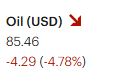
Crude oil prices rose overnight amid escalating uncertainty, contributing to a firmer opening for the TSX. However, intraday momentum remained constrained. While markets had responded positively in the prior session to a temporary pullback in oil—driven in part by signals of delayed military escalation—the broader outlook for de-escalation remains limited. As a result, renewed upward pressure in oil prices has reintroduced volatility and sectoral divergence into the market.
Sector performance was notably mixed, with only five of the ten major sectors closing in positive territory. Basic Materials led gains (+1.31%), followed by Energy (+1.25%) and Utilities (+1.08%), reflecting continued strength in commodity-linked and defensive segments. In contrast, Technology was the weakest-performing sector, declining 3.54%, while consumer-oriented equities also lagged. The session effectively reversed much of the broad-based strength observed earlier in the week, highlighting fragile market breadth and shifting risk appetite.
This cautious tone is further reflected in internal market indicators. Market breadth was slightly negative, with 1,111 declining issues compared to 1,040 advancers, producing a decliner-to-advancer ratio of approximately 1.07:1. Meanwhile, new 52-week highs (74) and lows (75) were nearly balanced, signaling increased dispersion and a lack of clear directional conviction among investors.
Trading activity moderated significantly, with total volume declining by approximately 30% to 491.7 million shares. While this represents a normalization following elevated turnover in recent sessions—particularly the surge associated with Triple Witching—it also suggests a degree of hesitation among market participants amid ongoing geopolitical uncertainty.
At the individual equity level, performance was heavily concentrated in commodity-sensitive names. Methanex Corporation emerged as one of the top performers, advancing 9.2% to close at $80.84. Nutrien Ltd. gained 5.72% to $105.72, signaling renewed investor interest after a period of relative divergence from broader commodity trends. Celestica Inc. also posted a strong gain of 5.28%, closing at $414.61.
Conversely, several large-cap consumer and technology names weighed on the index. Dollarama Inc. declined sharply by 9.60%, while Shopify Inc. fell 3.82%, reflecting continued pressure on growth-oriented equities amid shifting macro conditions.
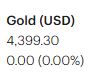
Precious metals equities also showed selective strength, with several silver miners outperforming. However, this move should be interpreted with caution. After an extended period of outperformance over the past 18 months, gold and silver equities appear to be losing relative momentum as capital rotates toward energy and other commodity segments more directly tied to current geopolitical developments.
Investor Takeaway: The TSX’s headline gain masks a market characterized by weak breadth, sector concentration, and heightened sensitivity to geopolitical risk. Energy and materials remain key drivers in the near term, but sustainability will depend on the trajectory of oil prices and global risk sentiment. Traders should remain attentive to volatility in commodity markets, while longer-term investors may look for confirmation of broader participation before increasing exposure to equities.
.
The US Markets
U.S. Market Indexes
U.S. large-cap equity benchmarks closed lower, reflecting continued pressure on risk sentiment amid macroeconomic and geopolitical uncertainty. The Dow Jones Industrial Average declined by 84.41 points, or 0.18%, to 46,124.06. The S&P 500 fell 24.63 points, or 0.37%, ending at 6,556.37, while the Nasdaq Composite underperformed, dropping 184.87 points, or 0.84%, to close at 21,761.89.
All three major indexes opened notably below their respective prior session closes but attempted an early recovery. However, intraday price action was characterized by sustained volatility, with repeated oscillations around the previous closing levels. The inability to maintain upward momentum ultimately led to broad-based declines, with each index finishing in negative territory and well below intraday highs—an indication of persistent selling pressure into the close.
In contrast, the Russell 2000 outperformed, rising 11.12 points, or 0.45%, to 2,505.44, making it the only major U.S. index to close higher. This relative strength in small-cap equities may suggest early signs of sector rotation, as investors reallocate capital in response to rising oil prices and ongoing geopolitical risks.
From a technical perspective, the Russell 2000 has now moved above its 200-day moving average, a development often interpreted by market participants as a constructive signal for medium-term trend strength.
Investor Takeaway:
The divergence between large-cap weakness and small-cap resilience highlights a potential shift in market leadership. While broader indexes remain constrained by macro uncertainty and commodity-driven volatility, traders may find selective opportunities in small-cap equities. However, confirmation of sustained rotation will require continued relative strength and supportive market breadth in the sessions ahead.

Today’s U.S. Market Statistics
Market internals across major U.S. exchanges reflected broad-based weakness, reinforcing the negative performance observed in large-cap indexes.
On the New York Stock Exchange (NYSE), declining issues outpaced advancing issues by a notable margin. A total of 2,599 securities declined compared to 1,985 advancers, with 336 issues unchanged, resulting in a decliner-to-advancer ratio of approximately 1.31:1. This imbalance indicates a moderately negative breadth profile, suggesting that selling pressure extended beyond headline index performance.
New 52-week highs totaled 149, while new lows reached 199, representing a significant increase in downside extremes relative to the prior session (59 highs vs. 109 lows). This shift points to an expansion in negative momentum and growing distribution across individual equities.
Total trading volume on the NYSE declined to 5.43 billion shares, down approximately 11% from the previous session’s 6.10 billion shares. The reduction in volume suggests somewhat diminished participation; however, when combined with negative breadth, it may also reflect a lack of strong buying conviction at current levels.
On the NASDAQ, market breadth was even weaker. Declining stocks significantly exceeded advancers, with 2,936 decliners versus 1,857 advancers, and 331 issues unchanged—yielding a decliner-to-advancer ratio of approximately 1.58:1, or roughly three decliners for every two advancers.
The number of new 52-week lows (253) substantially exceeded new highs (65), and both metrics increased relative to the prior session (54 highs and 199 lows). This continued expansion in new lows highlights persistent weakness, particularly within growth-oriented and technology sectors.
NASDAQ trading volume totaled 8.84 billion shares, a modest 3% decline from the previous session’s 9.11 billion shares. While the decrease in volume is relatively limited, it does little to offset the negative implications of deteriorating breadth and increasing downside extremes.
Investor Takeaway:
Across both exchanges, market internals point to weakening participation and expanding downside pressure. The combination of negative breadth, rising new lows, and declining volume suggests that recent market weakness is not isolated but broadly distributed. Traders should remain cautious in the near term, as the absence of strong buying interest may limit upside potential, while investors may look for stabilization in breadth and a contraction in new lows as early signals of a potential market bottom.
Today’s U.S. Market Wrap-Up Report
U.S. equity markets closed lower, with weakness concentrated in large-cap and growth-oriented sectors, as macro uncertainty and rising commodity prices continued to weigh on investor sentiment. The Dow Jones Industrial Average declined 0.18%, while the S&P 500 fell 0.37%. The Nasdaq Composite underperformed, losing 0.84% amid sustained pressure on technology and high-growth equities.
Trading dynamics throughout the session reflected heightened volatility and a lack of directional conviction. All three major indexes opened below their prior session closes and attempted an early recovery; however, repeated intraday reversals around those levels signaled persistent selling pressure. By the close, each index had retreated into negative territory and finished well off intraday highs, underscoring continued caution among market participants.
In contrast, the Russell 2000 advanced 0.45%, outperforming its large-cap counterparts. This divergence suggests a potential near-term rotation into small-cap equities, possibly driven by shifting expectations around domestic economic resilience and sectoral exposure to rising oil prices. Notably, the Russell 2000 has moved above its 200-day moving average, a technically constructive development that may attract additional momentum-driven flows if sustained.
However, underlying market internals present a more cautious picture. On the New York Stock Exchange (NYSE), declining issues outnumbered advancers by a ratio of 1.31:1, while the NASDAQ exhibited even weaker breadth, with a decliner-to-advancer ratio of 1.58:1. This broad-based imbalance indicates that selling pressure extended well beyond the major indexes.
Further reinforcing this negative tone, new 52-week lows exceeded new highs on both exchanges. The NYSE recorded 199 new lows versus 149 new highs, while the NASDAQ posted a more pronounced divergence with 253 new lows compared to just 65 new highs. The expansion in downside extremes suggests increasing distribution and weakening momentum across individual equities, particularly within growth sectors.
Trading volume declined modestly across both exchanges, with NYSE volume falling 11% and NASDAQ volume down 3% relative to the prior session. While lower volume may indicate reduced participation, it also reflects a lack of strong buying interest sufficient to counterbalance ongoing selling pressure.
Investor Takeaway:
Despite relative strength in small-cap equities, the broader U.S. market remains under pressure, with negative breadth, rising new lows, and subdued volume signaling fragile conditions. The divergence between small-cap and large-cap performance warrants close monitoring, but confirmation of a sustained rotation will require improvement in market internals. In the near term, traders should remain cautious and attentive to volatility, while longer-term investors may look for stabilization in breadth and a reversal in downside momentum before increasing equity exposure.
NOTICE TO READERS
The Canadian Vanguard Stock Market is about empowering you to build and manage your wealth by yourself. There is certainly no magic in managing finances or wealth but one needs to know what to do and commit to doing what is needed. When you are ready to start the journey to Put Your Destiny In Your Own Hands, read The Canadian Vanguard every market day. If you need more information please Contact Us
Our readers are strongly advised to conduct their own research into individual stocks before making a purchase decision. In addition, investors are advised that past stock performance is no guarantee of future price appreciation. Any recommendation is not a guarantee of any particular stock’s future prices, and The Canadian Vanguard accepts no responsibility or liability for investors’ or readers’ purchases.
Stocks In The News/ Stocks To Watch and Market Strategy will soon be available but only to Paying Subscribers.
(c) This article is published by The Canadian Vanguard on March 24, 2026