



Trump Casts Doubt on Canada Trade Pact as Negotiations Stall
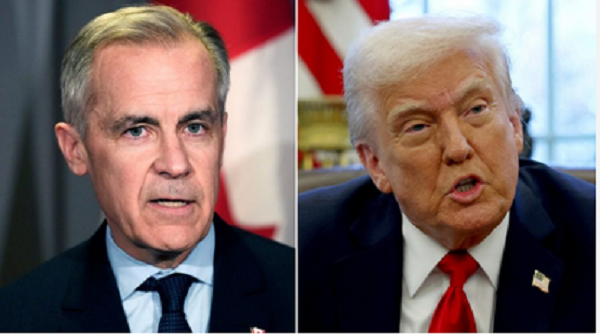
U.S. President Donald Trump says he may not reach a new trade deal with Canada and is suggesting he might instead impose more tariffs on the country unilaterally.
Mr. Trump’s warning follows signals from Prime Minister Mark Carney that the two sides may not be able to reach an agreement by a self-imposed deadline of Aug. 1 to end a trade war that’s nearing the five-month point.
“We haven’t really had a lot of luck with Canada. I think Canada could be one where there’s just a tariff, not really a negotiation,” Mr. Trump told reporters Friday as he left the White House for a trip to Scotland. “We don’t have a deal with Canada.”
Separately on Friday, one of B.C.’s biggest forestry associations said it has received word that U.S. anti-dumping duties imposed on Canadian softwood are set to increase.
The BC Lumber Trade Council (BCLTC) said it has been notified that the U.S. Commerce Department is increasing anti-dumping duties on Canadian softwood for most producers to 20.56 per cent. Most Canadian producers are currently paying 7.66 per cent in anti-dumping duties.
The BCLTC called the tariffs unjustified and harmful.
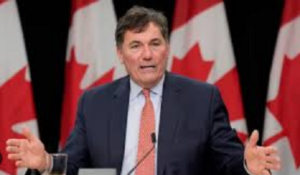
As talks have intensified, Mr. Carney has dispatched his new chief of staff Marc-André Blanchard to take part in discussions in Washington on two occasions: this week with officials including Intergovernmental Affairs Minister Dominic LeBlanc, and last week with Kirsten Hillman, Canada’s ambassador to the United States.
William Pellerin, a partner with McMillan LLP’s international trade group, said Mr. Trump’s Friday comments may be an effort to extract further concessions from Canada, and is consistent with the U.S. administration’s penchant for negotiating in public and through the media.
Matthew Holmes, chief of public policy at the Canadian Chamber of Commerce, said the personal involvement of Mr. Blanchard in Washington meetings is for him a “very strong signal that this is escalating and getting into some form of a home stretch.”
Mr. Trump’s trade war with Canada – with Washington hitting Canadian imports with tariffs – is starting to have an impact in the United States. Companies are passing rising tariff costs onto U.S. consumers, real-time pricing data show.
The two countries already have a trade deal, the U.S.-Mexico-Canada Agreement. But Mr. Trump wants to supersede key parts of that pact with new provisions that would cut back on American imports of autos, steel, aluminum and other goods from Canada.
The negotiations between Washington and Ottawa have also included national security matters, including the border, defence spending and Mr. Trump’s proposed Golden Dome missile defence system.
The U.S. has for many decades targeted Canadian softwood as unfair trade because it says the fees that producers in Canada pay to chop down trees on Crown land are too low.
It has also repeatedly alleged that Canadian producers are dumping lumber into the U.S. market at below fair value.
Today, most softwood producers are paying countervailing and anti-dumping duties that total 14.4 per cent. That rate will climb with Friday’s notice of higher anti-dumping duties and is expected to increase further after the U.S. announces higher countervailing duties in several weeks.


Goldy Hyder, president of the Business Council of Canada, said he’s not hopeful a trade deal can be reached by Aug. 1.
He said Mr. Trump appears to feel he has the upper hand given the lack of significant economic backlash from imposing tariffs on trading partners.
“We have not seen today, at least, the American economy stall or regress. We haven’t seen inflation take off. We haven’t seen unemployment take off,” Mr. Hyder said.
The Business Council president said the terms being offered for a deal appear to be too much for Canada to stomach. “We’re being asked to swallow things that that our government feels that it just simply cannot swallow because it may affect the very competitiveness of the industries that are being impacted by this.”
He said Canada needs to work with Mexico to expedite a scheduled 2026 renewal of the USMCA – to launch renegotiations now as a way of funnelling the trade dispute and aiming to emerge with tariffs that are lower than those on other U.S. trading partners.
Since returning to office earlier this year, Mr. Trump has hit Canada with a string of tariffs: 50 per cent on steel and aluminum, 25 per cent on autos, and 25 per cent on any goods traded outside the USMCA, with the exception of oil, gas and potash, at 10 per cent. He has threatened to increase the non-USMCA tariff to 35 per cent if there is no deal by Aug. 1.
Mr. Holmes said the biggest task in trade talks with Washington is to remove or reduce Mr. Trump’s Section 232 tariffs on Canadian products such as steel, aluminum and autos and prevent further such levies – which the White House controversially says are needed for the sake of national security – on products such as copper.
The baseline Trump tariffs of 25 per cent on all imports are waived for goods that are traded in compliance with the USMCA. This comprises as much as 90 per cent of trade with the U.S., Mr. Holmes said. Even if this is raised to 35 per cent after Aug. 1, most Canadian products would be exempt.
Earlier this week, Mr. Carney told reporters that Canada“will not accept a bad deal” just to meet the deadline. “Our objective is not to reach a deal whatever it costs. We are pursuing a deal that will be in the interest of Canadians.”
Mr. LeBlanc delivered a similar message during a visit to Washington for talks with Commerce Secretary Howard Lutnick.
“We’ve made progress, but we have a lot of work in front of us,” he told reporters on Capitol Hill Thursday. “All of these deadlines are with the understanding that we’ll take the time necessary to get the best deal.”
Ms. Hillman, Canada’s envoy to the U.S., added that the Canadian government will “continue negotiating” until it gets to a satisfactory deal.
Mr. Trump’s targeting of Canada is part of his larger global trade war, which is aimed at reaching deals in which other countries accept more protectionism in the U.S. economy. In his deals with Britain and Vietnam, for instance, both countries have accepted tariffs on their exports to the U.S. in exchange for Mr. Trump not imposing even higher tariffs.
Sign up for our redesigned Morni
This article was first reported by The Globe and Mail