




Unions Prepare for Showdown Over Service Cuts as Bargaining Looms
Unions are gearing up for a fight against proposed cuts to the federal public service as they warn of possible job losses ahead of contract negotiations this fall.
The Public Service Alliance of Canada (PSAC), the largest union representing public sector workers, says it will be holding virtual town halls Tuesday and Wednesday evening for workers to discuss the government’s plan to find $25 billion in savings over three years and what that could mean for them.
“Tonight’s about the fact that our members heard this announcement in the media. They didn’t hear from their department heads,” said PSAC president Sharon DeSousa in an interview with CTV News Ottawa.
“What we want to do is reach out and have a conversation with them to find out what’s happening in their workplaces, how are they affected and let them know what their rights are.”
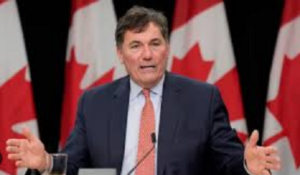
Finance Minister François Philippe Champagne sent letters to Prime Minister Mark Carney’s cabinet on July 7 stating that ministers must present plans to find 15 per cent in day-to-day operational savings in their respective departments over the next three years.
Federal unions have taken aim at the cuts, warning that public service jobs will likely bear the brunt of the measures and criticized the government for announcing them before consulting workers and unions. The Professional Institute of the Public Service of Canada (PIPSC) has warned of “Harper-style austerity.”
“Let’s not forget: this government ran on a promise of “caps, not cuts.” That promise has been torched. These aren’t caps or “efficiencies” – they’re deep, dangerous cuts that put jobs and critical public services at risk,” PIPSC said in a news release on July 18.
“What we’re seeing is the most devastating attack on the federal public service in a generation – Harper-style austerity with a red logo slapped on.”


During the federal election, Carney had promised to find savings from “increased government efficiency” with $6 billion in savings in 2026-27 and $13 billion a year in 2028-29.
DeSousa says the union has exchanged demands with the employer, with negotiations on a new contract for more than 120,000 public servants set to begin this fall and as the government prepares to table its 2025 budget.
“Right now, all we have is an announcement, what we don’t know are the particulars,” she said.
“We don’t know what departments are affected, we don’t know overall where these cost savings and efficiencies are. Right now, what we need to do is find out what are the next steps, what is it that is the intention of the government.”
DeSousa says the union will be presenting its own solutions for savings and efficiencies, including proposing relaxed hybrid work rules. Since 2024, public servants in the core public administration are required to be in the office a minimum of three days per week, while executives are expected to be on-site a minimum of four days a week.
“There’s something to be said about the billions of dollars that could be saved if the government embraced remote work,” DeSousa said.
“You better believe it’s one of the solutions that we’re presenting instead of cutting public services or looking at efficiencies that are detrimental to public services. We’re providing an alternative solution or solutions that they can embrace where they can find the cost savings and efficiencies.”
DeSousa warns further job cuts could have a detrimental impact on public services and on the economy of the national capital region.
“This is the major hub that governs Canada, so you can imagine the amount of jobs that are affected are not just in the national capital region but those who report to the national capital region,” she said.
“For those living here, when you don’t have that kind of a job, that means, can they afford to live in Ottawa? Would they have to move? What does it mean for the economy and the buying power of those families? Of course they would be affected. After all, federal public sector workers are the heartbeat of Ottawa.”
PSAC says 10,000 federal jobs have already been lost in the last year. Statistics released by the Treasury Board of Canada Secretariat in the spring show 357,965 people worked for the federal government as of March 31, down from 367,772 people in 2024.
“Carney ran on a platform of caps and not cuts and so I’m hoping that he keeps to his promise. This is about his integrity as a prime minister. This can be done without jobs being affected, so let’s see what he does,” DeSousa said.
This article was first reported by CTV News