






Republican-Led House Backs Partial Repeal of Trump Tariffs Targeting Canada
The U.S. House of Representatives has voted to end some of President Donald Trump’s tariffs on Canada, with a handful of Republican legislators delivering the White House a rare rebuke by joining the Democratic opposition to pass the measure.
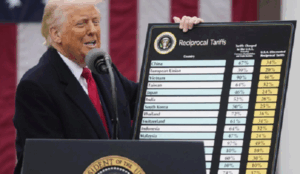
The 219-to-211 vote – in which six Republicans broke with Mr. Trump – is mostly symbolic: Even if it passes the Senate, the President will almost certainly veto it, a move that would require a two-thirds majority of each chamber of Congress to override.
But it signals a growing willingness by Mr. Trump’s once unfailingly loyal party to defy him on one of his signature policies amid mounting voter disapproval of his handling of the economy and the inflationary effects of his trade war.
As the vote unfolded on Capitol Hill Wednesday evening, Mr. Trump took to Truth Social in a last-ditch bid to stave off defeat. He threatened that Republicans who voted against his wishes would “seriously suffer the consequences come Election time” and lashed out at Canada.
“Canada has taken advantage of the United States on Trade for many years. They are among the worst in the World to deal with, especially as it related to our Northern Border. TARIFFS make a WIN for us, EASY,” he wrote.
The resolution, led by Representative Gregory Meeks, a New York Democrat, repeals Mr. Trump’s invocation in February of last year of the International Emergency Economic Powers Act to impose tariffs on Canada.
He put tariffs of 35 per cent on all Canadian goods not traded under the U.S.-Mexico-Canada Agreement, except for oil, gas and potash, which are tariffed at 10 per cent. Because the vast majority of Canada-U.S. trade complies with the terms of the USMCA, the effect of the tariffs has been limited.

The resolution does not cover Mr. Trump’s sectoral tariffs on steel, aluminum, autos and other industry-specific products. These tariffs have been significantly more damaging to Canada, but the authority Mr. Trump used to impose them, the Trade Expansion Act, has a more established legal footing than the IEEPA, which previously had never been used for tariffs.
The President cited fentanyl coming from Canada and Mexico as his reason for imposing the IEEPA tariffs. But the U.S. government’s own figures show that fentanyl intercepted at the northern border last year totalled 77 pounds, a small fraction of the 1,200 pounds seized across the country.
Ottawa has also met Mr. Trump’s demands for more action on fentanyl smuggling, sending more border guards, helicopters and drones to crack down on cross-border drug trafficking. The President, however, has persisted with his tariffs, frequently framing them as either good economic policy in and of themselves or as negotiating leverage in an upcoming review of the USMCA.
In one Truth Social post Wednesday, Mr. Trump lauded tariffs for pushing down the U.S.’s trade deficit and giving him leverage over other countries.
Of the six Republicans who voted against tariffs, most are from swing districts: Brian Fitzpatrick of Pennsylvania, Kevin Kiley of California, Jeff Hurd of Colorado and Don Bacon of Nebraska.
Joining them were Dan Newhouse, a Washington congressman who has broken with Mr. Trump in the past – voting to impeach him in 2021 – and Thomas Massie, the libertarian from Kentucky who has been the President’s most persistent intraparty critic of his second term.
During debate earlier in the day, Democrats needled their Republican counterparts for abandoning the party’s historic support of free trade in order to stay on Mr. Trump’s good side. They framed the measure as a way for Congress to reassert its constitutional role of controlling trade policy, which Mr. Trump has tried to take entirely for himself.
“Heretofore, I never met a Republican in Washington who was in favour of tariffs. The party of Ronald Reagan embracing tariffs? Unheard of,” said Representative Richard Neal, a Washington state Democrat, referencing Mr. Reagan’s negotiation of the original Canada-U.S. free trade agreement during his presidency.
Representative Linda Sánchez, a California Democrat, said it made no sense for Mr. Trump to tariff Canada when the two countries have a trade deal that the President himself negotiated during his first term.
“His daily barrage against Canada does not make him look tough. It’s just reckless and, frankly, it’s bizarre,” she said. “Rather than target the real bad actors, the President is picking fights with our friends.”
She and other Democrats repeatedly emphasized that the cost of Mr. Trump’s tariffs is borne by American consumers, seeking to connect the trade war to mounting voter frustration that the White House has failed to lower retail prices more than a year after Mr. Trump returned to office.
Representative Brian Mast, a Florida Republican, took the lead in defending Mr. Trump’s IEEPA tariffs, largely by downplaying their effect. He pointed out that they only apply to a small subset of Canadian trade that doesn’t comply with USMCA.
“If it’s grown in Canada, there’s not a tariff on it,” he said.
Mr. Mast also tried repeatedly to turn the debate back to fentanyl, pushing Mr. Meeks to say that fentanyl deaths constitute “an emergency.”
Mr. Meeks is planning other resolutions to block Mr. Trump’s tariffs on Mexico and other countries, meaning the President could be in for more rebukes over the coming days.
The Senate last year already passed similar resolutions, but Republican House Speaker Mike Johnson blocked such legislation from coming to a vote in the House. On Tuesday, however, a handful of Republicans joined Democrats to vote against his bid to extend the block several more months.
Mr. Trump’s use of the IEEPA, a 1970s law originally meant to be used for economic sanctions that contains no mention of tariffs, is already the subject of a case before the U.S. Supreme Court. A decision is expected shortly.
If the court overturns Mr. Trump’s tariffs, it would not only blunt one of the main weapons in his global trade war but could call into question several lopsided trade deals he pressured other countries into signing to get him to reduce IEEPA tariffs, and might also require the U.S. government to repay tariff revenue to companies.
However, Mr. Trump would almost certainly try to use other laws to reimpose similar tariffs in such a case.
The House vote landed the same week that Jamieson Greer, Mr. Trump’s Trade Representative, cranked up the threats against Canada. In a Fox News interview, he complained that Canada has been “antagonistic” since Mr. Trump launched his trade war against the country and tried to play Canada and Mexico off against each other in the upcoming USMCA review.
“Negotiations are going to proceed bilaterally and separately. The Mexicans are being quite pragmatic right now. We’ve had a lot of discussions with them. With the Canadians, it’s more challenging,” he said.
Unlike most countries hit by Mr. Trump’s tariffs, Canada has retaliated – albeit in a limited way. Ottawa has also refused to sign the sorts of deals that Britain, the European Union and other countries have, in which those countries agreed to make trade concessions to Mr. Trump in exchange for lower tariffs.
This article was first reported by The Globe and Mail