





Carney Asserts Canadian Sovereignty in High-Stakes USMCA Trade Negotiations
The federal government says it will not allow Washington to dictate the terms of talks on renewing the United States-Mexico-Canada Agreement, as sources say the U.S. is demanding upfront concessions as a condition of advancing negotiations.
Two sources familiar with the talks say U.S. President Donald Trump’s administration has asked Canada to change or scrap domestic policies – including dairy supply management, provincial bans on American liquor, the Online Streaming Act and the Online News Act – before it will sit down to negotiate.
The Globe is not identifying the sources because they were not authorized to discuss the matter publicly.
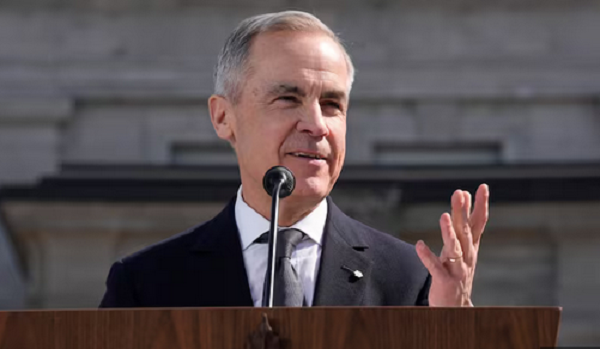
Prime Minister Mark Carney on Wednesday pushed back on the notion that Mr. Trump’s administration would be able to set conditions for trade talks.
“It’s not a case of the United States dictates the terms. We have a negotiation,” Mr. Carney told reporters in Ottawa.
He was answering questions about the dynamics of early talks as the three parties prepare to undertake a scheduled review of the USMCA, the continental trade pact that underpins large parts of the Canadian economy by allowing most goods from this country to enter the U.S. tariff free.
Canada has begun re-engaging with the U.S. on trade issues after a rupture in October, when Mr. Trump ended talks in anger over an advertisement by the Government of Ontario that criticized tariffs.

The USMCA’s formal review date is July 1, but both Canadian and U.S. officials have said they expect negotiations to extend beyond that date. The parties must decide whether to extend the agreement for another 16 years, or move to annual reviews for 10 years, after which the agreement will expire if they don’t agree to extend it. Any of the three parties can also withdraw from the agreement with six months’ notice.
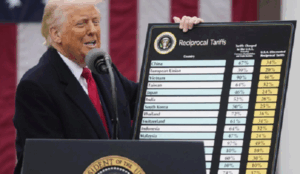
During these same talks, Ottawa is trying to resolve sector-specific tariffs that the Trump administration has placed on a range of goods, including steel, aluminum and autos.
One of the sources said the United States is content with the current state of affairs – as it collects revenue from the sectoral levies, known as Section 232 tariffs – and wants to see what else it can extract from Ottawa before negotiating.
For negotiations to begin in earnest, the second source said, U.S. negotiators have a laundry list of possible preconditions, including how Canada administers quotas on dairy.
The second source said the Carney government has resisted this approach from Washington, noting that Canada received nothing in return for previous concessions, such as 2025’s lifting of the digital sales tax – which targeted global tech giants – or trade actions, as in 2024, when Canada imposed tariffs on Chinese electric vehicles at the request of the Biden administration.
Radio-Canada was the first to report Wednesday on the upfront concessions being demanded by the Trump administration.
There have been some discussions between Canada and U.S. Trade Representative Jamieson Greer, the Trump administration’s top trade official, but the second source said not much is expected to happen in the near term because Mr. Trump’s sole fixation right now is the Iran war.
The good news, the source said, is that U.S. Commerce Secretary Howard Lutnick has largely been pushed out of the picture. Mr. Lutnick has taken an antagonistic attitude toward trade negotiations with Canada in recent days.
In an appearance before a U.S. congressional committee on Wednesday, Mr. Greer said he has been pushing Ottawa to address a range of issues ahead of the USMCA review.
“I have good relationships with my direct counterparts, and we speak, we talk about things. I have been pretty consistent over the past year that if we can get some changes in Canadian trade practices, it’s going to help me get over the political hump that we face here in the United States,” Mr. Greer said.
He pointed to the annual National Trade Estimate Report his office publishes, which spells out U.S. grievances against trade partners. For Canada, this list includes dairy quota allocation, provincial alcohol bans, online streaming rules, and government procurement restrictions, among other issues.
“I’m going to continue having conversations with these folks behind closed doors, but I hope we can get over the hump on some of these things to have significant talks.”
So far, discussions ahead of the USMCA review have largely been bilateral, rather than trilateral, and the U.S.-Mexico side of the talks is considerably more advanced.
This week, Mr. Greer travelled to Mexico City for talks with President Claudia Sheinbaum, and the two countries have begun technical discussions around both bilateral grievances and issues core to the trilateral USMCA, such as rules of origin.
The U.S. has put a list of 54 grievances to Mexico City, which extend beyond trade to issues such as immigration and organized crime. Mr. Greer has repeatedly praised Mexico’s efforts to address U.S. concerns.
Speaking at The Globe’s Intersect conference in Toronto on Wednesday morning, Dominic LeBlanc, Canada’s minister responsible for U.S. trade, said Ottawa is taking a different approach.
“We’re not going to make a series of concessions or agree to a series of things that aren’t in the interest of the Canadian economy, Canadian businesses, Canadian workers, just to get to a table and have a statement appear on a website in the United States to then receive a whole second list of things that they’re going to want,” Mr. LeBlanc said.
He noted that Canada already gave ground last year to U.S. demands that Ottawa scrap its digital services tax and remove retaliatory tariffs on American goods.
He also said that Ottawa would not put pressure on provincial governments to pre-emptively address U.S. grievances that fall within provincial jurisdiction, such as provincial bans on U.S. liquor, and procurement restrictions that exclude U.S. companies.
“We have said to them, ‘you know what – if you want the Premier of Ontario or the Premier of Quebec or the Premier of British Columbia to change those policies, you have to give them some relief or some path to a better outcome on softwood lumber in the case of British Columbia, on steel and automobiles in the case of Ontario, aluminum and softwood lumber in Quebec,’” Mr. LeBlanc said.
Ontario Premier Doug Ford echoed this view in his own remarks at The Globe’s Intersect conference. He said he would put U.S. alcohol back on Liquor Control Board of Ontario shelves “in a heartbeat,” but not until U.S. sectoral tariffs are removed or lowered.
“He expects us to sit back and roll over. You never roll over to a bully. You confront them head on,” Mr. Ford said.
This approach has not gone down well in Washington. Mr. Greer said on Wednesday that he is considering launching a separate “enforcement action” against Canada related to the provincial alcohol bans.
“I think we’re kind of at the end of our rope in just asking for them to do this,” Mr. Greer said.
Mr. LeBlanc said that Ottawa has certain red lines around French-language rules and dairy supply management that it’s not prepared to negotiate. Last year, Parliament passed a law saying it would not negotiate away further quota access for supply managed agriculture products in future trade deals.

The U.S. complaints about Canada’s dairy sector tend to be about how Ottawa allocates quotas, as well as how it classifies certain dairy products. Washington has argued that Canada isn’t living up to the market-access commitments it agreed to in the 2018 USMCA negotiations. But it has not asked Ottawa to abolish supply management or even significantly expand the quotas for U.S. farmers.
While there are red lines, Mr. LeBlanc said, there are “solutions to most of what the Americans raise, and we’re happy to sit down and go through that with them. But it’s got to be part of a larger, more comprehensive arrangement.”
The key goal in the trade talks for both Canada and Mexico is getting relief from the sectoral tariffs. Earlier this week, Mr. Greer told his Mexican counterparts that they should expect some level of these tariffs to remain even after the USMCA review is over, according to Reuters reports.
Mr. LeBlanc said he has heard similar things in private from his U.S. counterparts.
“They say that the sectoral tariffs, to some extent, will remain in place. I think we should be realistic – they have not taken anybody to zero, made a deal that takes those tariffs to zero,” Mr. LeBlanc said.
But he said there might be room to lower the tariffs or come to some sort of quota arrangement that would allow a certain quantity of metals or automobiles into the U.S. at a lower rate. Ottawa and Washington were discussing these sorts of arrangements in October.
“We’re absolutely ready to resume the discussion,” Mr. LeBlanc said.
This article was first reported by The Globe and Mail