





Stellantis Reaffirms Commitment to Canada Amid Brampton Plant Pause
Stellantis Canada president Trevor Longley insists the company is committed to manufacturing in Canada, despite an ongoing “pause” at its plant in Brampton, and the decision last week to unload its share of an EV battery plant in Windsor.
“We’ve been in Canada for a hundred years. Our goal is to be here for another hundred years,” Longley said in an interview outside the company’s display at the Canadian International Auto Show Thursday. “We didn’t close Brampton, we paused it.”
On the positive side, Longley pointed to billions of dollars the company has invested here, and confirmed that a third shift at the Stellantis plant in Windsor will be starting by next week.
“I get out of bed every morning thinking about solutions to build cars in Brampton,” said Longley, “and finding creative ways to think about what’s right for Brampton, what’s right for the product that would go there as a fit for Canadians.”
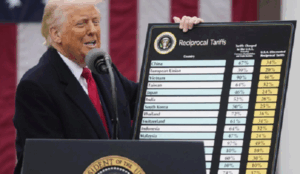
Still, Longley, who took over the top job last fall, admitted that his task has been made more challenging by tariffs and other trade threats from U.S. President Donald Trump.
Without knowing what will come out of a potential renegotiation of the Canada-U.S.-Mexico agreement on trade — or the precise ramifications of the federal government’s new automotive police — it’s tough to plan with any kind of certainty, Longley admitted.
“We need to understand these things. You can’t make gigantic business decisions without some level of clarity,” said Longley. “You don’t always have perfect clarity, but you need to have a general sense of, ‘hey, is this going to be workable?”
 At a press conference, the head of the association representing the Detroit Three automakers, including Stellantis, was even blunter about the importance of the upcoming CUSMA talks to Canada’s automotive industry.
“There is no automotive industry in Canada if we don’t have access to the U.S.,” said Brian Kingston, CEO of the Canadian Vehicle Manufacturers Association. “If we continue to have an auto industry, it’s because we get an agreement.”
The Canadian market simply isn’t big enough to justify manufacturing plants solely on domestic demand, and finding other export markets isn’t a strong prospect, Kingston said.
And at a time when the CUSMA talks loom so large over the industry, Kingston worries about the federal government’s decision to allow the import of 49,000 Chinese electric vehicles as part of its new automotive strategy announced last week.
“Canada has now introduced a bad irritant at a moment we’re about to start a CUSMA review with the Americans,” said Kingston. “It’s a trade irritant, and it’s a risk to our broader industry.”
The head of the association representing non-U.S. automakers in Canada agreed that the trade uncertainty is hurting automotive investment in this country, and said if CUSMA talks aren’t fruitful, the outlook would be gloomy.
“It’s going to be more difficult to attract investment in Canada when we have challenges to unfettered access to the U.S. market,” said David Adams, president of Global Automakers of Canada, whose members include Honda and Toyota, which both have assembly plants in Ontario.
Still, Adams struck an optimistic tone, noting that no government lasts forever.
“The reality is that manufacturers make long-term decisions that outlast any administration,” Adams said.
Stellantis announced Friday that it is selling its 49 per cent stake in the $5 billion Windsor NextStar plant to joint venture partner LG Energy Solutions in exchange for a “nominal” fee, which LG’s disclosure documents say is $100. Stellantis said it’s also getting “other undisclosed favourable benefits.”
The NextStar plant is scheduled to receive up to $15 billion in subsidies over the next decade, with roughly two thirds coming from the federal government and a third coming from Ontario.
Automotive industry sources estimated the two governments each contributed roughly $500 million toward building the plant, while the federal government paid two thirds of $500 million in battery production subsidies with the province covering a third.
The move came as part of a $35.5-billion global writedown on what Stellantis admitted were overly ambitious EV plans.
This article was first reported by The Star