





Nations Scramble to Manage War-Induced Fuel Shortages
For many countries that rely heavily on oil imports from the Middle East, the Iran war is creating a serious energy crisis.
From attacks on oil infrastructure to the effective closure of the Strait of Hormuz, oil exports from the Persian Gulf have slowed to a trickle since Israel and the U.S. began striking Iran in late February.
As fuel supplies dwindle and prices skyrocket, countries are taking drastic and novel measures to save money and ration supplies, including putting caps on gas stations fill-ups and telling government workers to ditch suits in favour of short sleeves.
Here are how some countries are coping:
Philippines
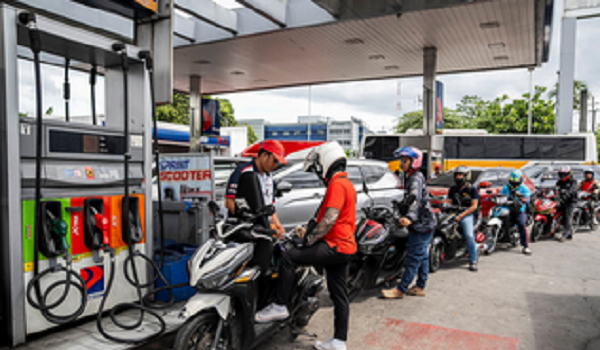
The Philippines declared a “state of national energy emergency” on March 24 due to the “imminent danger” posed to the country’s energy supplies. The country has already implemented energy conservation measures, including a four-day work week for some government offices, turning off non-essential office lights during breaks and after hours, and limiting government office air conditioning to 24 C or higher.
Sri Lanka
In Sri Lanka, schools, universities and government offices are getting an extra day off every Wednesday as part of the island nation’s efforts to manage potential fuel shortages. Trains and busses are also operating on reduced schedules, while weekly fuel purchases are being limited to five litres for motorcycles, 15 litres for cars and 60 litres for busses.

Senegal
Senegal has banned all non-essential foreign travel for government ministers and officials as rising oil prices strain the west African nation’s budget. Senegal’s prime minister has already cancelled planned trips to Niger, Spain and France.
Slovenia
To tackle potential gas station shortages, Slovenia has temporarily limited fuel purchases to 50 litres per day for private vehicles and 200 litres per day for companies and priority users like farmers. Slovenia is reportedly the first European Union country to implement fuel rationing due to the Iran war.
Pakistan
Amid surging fuel prices, government departments in Pakistan are facing a temporary 50 per cent cut in fuel allowances, while 60 per cent of official vehicles are being taken off the road, with exceptions for buses and ambulances. To reduce commuting, schools were also closed for two weeks in March, universities are being encouraged to switch to online classes, half of all office workers are being told to work from home, and government offices are operating only four days a week. To help get drivers off the road, public transportation in cities like Islamabad is also free for a month.
Bangladesh
Bangladesh is curbing energy consumption by closing banks and government offices an hour early at 4 p.m. Offices have also been told to cut power consumption such as excessive lighting, while decorative lighting has been banned at events. Universities also saw additional closures in March.
South Korea
South Korea is temporarily lifting limits on coal-fired power generation and boosting nuclear output to deal with the energy crisis. The South Korean government is also encouraging citizens to take shorter showers and only use washing machines and vacuums on the weekend as part of a nationwide energy-saving campaign.
Thailand
To conserve energy, government workers in Thailand have been told to use stairs instead of elevators, wear short-sleeved shirts instead of suits and work from home when possible. At government offices in Thailand, air conditioning is also being set to 26-27 C, while lights and electronics are to be switched off when not needed.
Egypt
Egypt is conserving energy by dimming streetlights and advertisements and by ordering malls, shops and restaurants to close by 9 p.m. for one month on weekdays. Many workers are also being encouraged to work from home on Sundays, which is the first day of the work week in the country.

Vietnam
Vietnam’s government is urging people to work from home when possible to help conserve energy. The country has also announced that it is banning the use of 20-watt to 60-watt incandescent light bulbs this year and accelerating a nationwide shift to ethanol-blended gasoline to curb fossil fuel use. Ethanol is a renewable fuel made from plant materials. State-owned Vietnam Airways has also cut nearly two dozen domestic flights per week to conserve aviation fuel.
Myanmar
Amid fuel shortages, Myanmar’s military government has implemented a rationing system for private vehicles. Under the singular scheme, vehicles with even-numbered licence plates are only allowed to drive on even dates while those with odd-numbered plates can only drive on odd dates. Electric vehicles are exempt. Many domestic flights have also been suspended across the country due to jet fuel shortages.
Nepal
Nepal is rationing cooking gas to stave off potential shortages. As of March 13, empty gas cylinders are only being refilled halfway to make the country’s liquefied petroleum gas stocks last longer.
Mauritius
To conserve fuel, the Indian Ocean island nation of Mauritius has announced curbs on non-essential energy use including decorative lighting, swimming pool heating and fountains.
With files from Reuters, AFP and The Associated Press
This article was first reported by Associated Press