






Carney Unveils Sovereign Wealth Fund to Democratize Resource Gains
Prime Minister Mark Carney says Canada’s first ever national sovereign wealth fund, which he announced Monday, will ensure all Canadians reap the rewards of government support for major new projects.
But critics said the Liberal government’s model falls short in comparison with large and successful international versions of such funds.
The fund, to be called the Canada Strong Fund, will begin with an initial budget of $25-billion, seeded over three years. The plan, Mr. Carney said at a news conference, is to grow its size over time through investment returns and “other assets” that Ottawa may fold into the fund.
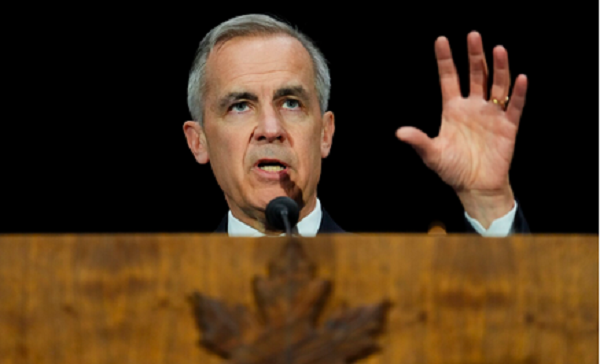
“This will be a Government of Canada fund, but more importantly, it will be a people’s fund. It will be your fund,” Mr. Carney said, speaking to reporters in front of steam locomotives at the Canada Science and Technology Museum in Ottawa. He compared the government’s building plans with the construction of the Canadian Pacific Railway in the late 1800s.
Mr. Carney suggested that the plan draws inspiration from Norway’s fund, which at US$1.7-trillion in assets is the largest in the world and focuses on international investments.
The Canadian fund is linked to what the government describes as nation-building efforts, including ports and natural-resources projects. Mr. Carney said it is aimed at domestic investments. But he pointed out that other countries with similar funds also began with a domestic focus and then broadened their scope.

The Prime Minister added that Canadians will be able to invest directly in the fund if they wish. It would be “something consistent with buying a government bond,” he said, but with an additional return when projects “realize their potential.”
While some economists and business leaders said such a fund is long overdue, others said it fails to replicate key aspects of existing sovereign wealth funds, which are generally free to invest around the world.
Sovereign wealth funds are state-owned investment accounts. They are typically independently managed.
John Ruffolo, the founder and managing partner of Maverix Private Equity, who has urged Canada to create a sovereign wealth fund, said in an interview that he is highly supportive of the idea but wants to see more detail to ensure it will be done right.
“There is no mention of investing in risk-based investments like venture, growth, innovation, that sort of stuff. I’d be interested to see those as opposed to just simply infrastructure projects,” he said.
Mr. Ruffolo said the governance structure will also be critical.
“I don’t think anyone is interested in a government slush fund, but they are interested in a properly independently minded wealth fund free from political influence,” he said.
Scotiabank economist Derek Holt pointed out that Norway’s fund faces restrictions on domestic investments, while the Prime Minister’s announcement is focused on Canadian projects.
He said the Canadian fund is “quite small” by international standards but could grow rapidly if it is well managed.
In a research note, he said countries with such funds are usually net savers, while Canada is running deficits.
Lucy Hargreaves, CEO of Build Canada, a civic organization that promotes the policy ideas of Canadian entrepreneurs, expressed disappointment with Monday’s announcement.
“The Canada Strong Fund is a sovereign wealth fund in name only,” she said. Her organization had issued a report earlier this month calling for a wealth fund modelled after those in place in Norway and Singapore.
“What was announced today is closer to a war bond, with Canadians buying equity in projects the government is already trying to get off the ground,” she said.
Conservative Leader Pierre Poilievre dismissed the announcement as another example of a heavy-handed approach by the Liberal government.
Mr. Poilievre has long urged Ottawa to support the economy by getting “out of the way” rather than creating more bureaucracy.
He said countries with wealth funds typically have surpluses.
“Carney has no surplus and therefore no wealth to put in such a fund,” he said, portraying the announcement as a “Liberal slush fund” that will enrich party insiders.
“How many corporate welfare agencies do the Trudeau-Carney Liberals need to create before they learn that it doesn’t work?” he said, pointing to the Canada Infrastructure Bank, the Canada Growth Fund and the Defence Investment Agency.
In his news conference, Mr. Carney described the fund as a national savings and investment account that is designed to grow wealth for future generations.
“Over time, the fund will grow through asset recycling and reinvestment, creating even greater opportunities for future generations,” Mr. Carney said.
The Prime Minister said the fund will be professionally managed and will operate at arm’s length from the government as an independent Crown corporation. The government will hold consultations over the coming months on the details of the fund.
Mr. Carney was asked how the new fund would interact with other federal entities with similar responsibilities, including the Canada Infrastructure Bank. He said the infrastructure bank primarily provides loans, while the new fund would hold equity stakes in projects.
The government said it will establish a dedicated Canada Strong Fund Transition Office to lead consultations on the fund. The fund will be led by a CEO and an independent board of directors.
Executives at several of Canada’s largest pension funds said they had not been consulted in advance on the plan for a sovereign wealth fund and were looking for more detail about its mandate and how it will be managed.
But the funds mostly greeted Monday’s announcement as an encouraging sign of the government’s commitment to expanding public and private investment in Canadian companies and infrastructure.
“Depending on its final design, such a vehicle could contribute to deeper pools of capital and create additional market opportunities over time,” said Michel Leduc, chief public affairs officer at the country’s largest pension fund manager, the Canada Pension Plan Investment Board.
“As always, the key to long-term success for any public investment institution is a clear commercial mandate, strong governance, and operational independence,” he added.
The Canadian Bankers Association said in a statement that it welcomes the announcement of the new fund. The organization said it will “expand the overall pool of capital available to support crucial investment in infrastructure and major projects.”
The CBA also said the fund will “be complementary to the private sector, while contributing to the reputation of Canada’s world-class financial system.”
Laurent Ferreira, president and CEO of National Bank of Canada, said Canada has a generational opportunity to rebuild its economic sovereignty “but we must move faster.”

“We strongly support nation‑building projects and initiatives that can unlock capital and accelerate investments,” he added. “The new Canada Strong Fund could be a catalyst.”
Finance Minister François-Philippe Champagne held a separate and related event in Montreal.
Mr. Champagne said further details related to the fund will be announced Tuesday when he releases the government’s spring economic statement.
Mr. Carney has travelled abroad extensively to attract more foreign capital to Canada, including from sovereign wealth funds in regions such as the Middle East.
He’s also inviting more than 100 of the world’s largest investors to a summit in Toronto in September.
With reports from Sean Silcoff in Ottawa, Andrew Willis and Stefanie Marotta in Toronto and Maura Forest in Montreal
This article was first reported by The Globe and Mail