






Federal Plan Targets Airport Capital in Move to Fuel New Sovereign Wealth Fund
Ottawa is looking at ways to monetize federal assets, including airports, to grow its new sovereign wealth fund alongside getting buy-in from retail investors.
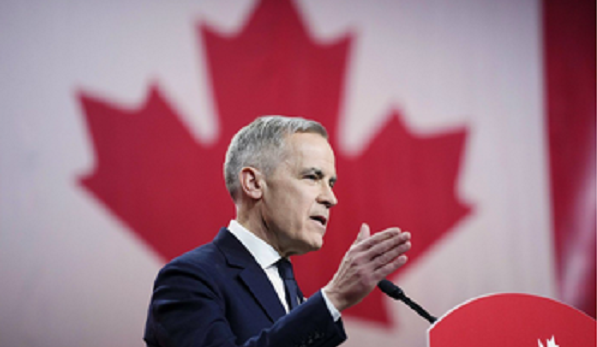
On Monday, Prime Minister Mark Carney announced a new $25-billion fund, which will focus on investing in companies and infrastructure projects that are part of the government’s major projects agenda.
The spring economic update on Tuesday offered few additional details about how the Canada Strong Fund will work in practice.
But it did say the government will look to grow the pool of capital beyond the initial $25-billion in seed funding by allowing Canadians to invest in the fund, and by tapping existing federal assets as a source of funds.
According to a government official, Ottawa is looking for ways to recycle capital that’s tied up in public assets, such as airports, and put that money into the Canada Strong Fund to be reinvested in projects of national interest. The Globe and Mail is not identifying the official as they were not authorized to speak publicly.
In the fall budget, the government said it was exploring ways to increase private investment in Canada’s publicly owned airports. This could be done in several ways, it said, including negotiating lease extensions with airport authorities, enabling development on airport lands and examining airport lease formulas. It also said it would “consider options for the privatization of airports.”

Tuesday’s economic update reiterated that Ottawa is looking at “alternative models of ownership” for airports, and said it would introduce legislation “to ensure it can obtain the information necessary for a comprehensive evaluation of airport reforms.”
The official said that airports are one of a range of federal assets that could be monetized to provide additional capital to the Canada Strong Fund.
“Asset optimization will help address two complementary priorities: unlocking the full value of existing federal assets and directing that capital toward investments with the highest potential return for Canada and Canadians,” the economic update said.
The new sovereign wealth fund is Ottawa’s latest effort to use public dollars to pull in private-sector capital. The fund will take equity stakes in Canadian companies and projects, with an initial focus on priorities referred by the Major Projects Office.
Finance Minister François-Philippe Champagne said the fund could also invest in other projects that have already received federal support.
“You could have a project which would have received the Indigenous loan guarantee, for example, from the Indigenous Loan Guarantee Corp. where the federal government is already a partner to build these projects, so the fund could well decide to take an equity interest, to co-invest,” Mr. Champagne said at a news conference on Tuesday.
The chief executives of some of Canada’s largest pension funds have been pressing Ottawa for years to put airports up for sale.
Last fall, some of them renewed their pitch and said that selling infrastructure assets could allow federal or provincial governments to raise money that could then be reinvested in nation-building priorities.
Airports, toll roads and utilities such as hydroelectric infrastructure are highly attractive to large investors because they have stable cash flows and contracts in place that generally offer predictable returns to owners.
“Especially with the deficits governments are running today, why wouldn’t they sell some of those assets to balance sheets like ours where we can hold those assets, and finance them?” British Columbia Investment Management Corp. CEO Gordon Fyfe said at an Economic Club of Canada event in October.
The infrastructure would still be owned by Canadian investors such as BCI, said Mr. Fyfe, whose fund manages $295-billion. “And I promise you we would compete like hell with each other, so the governments would get a very good price.”

Some Canadian pension funds already own airports abroad. The $300-billion Public Sector Pension Investment Board owns and operates seven airports in places such as Germany, Greece and Scotland through its AviAlliance subsidiary.
The Canada Strong Fund will be a new Crown corporation that will operate at arm’s-length from the government, with its own CEO and board of directors, Ottawa said.
To avoid overlap with existing organizations – such as the Canada Infrastructure Bank, Export Development Canada, the Business Development Bank of Canada and the Canada Indigenous Loan Guarantee Corp. – the government on Tuesday announced that it would undertake “comprehensive mandate reviews” of each organization.
A key aspect of the fund is that Canadian retail investors will be able to invest in it. The details of this investment product are still being developed. On Monday, Mr. Carney described it as “something consistent with buying a government bond,” but with an additional return when projects “realize their potential.”
The economic update spelled out the guiding principles for this new retail asset. It must be accessible to people across the country, easy to buy, hold and transact, and the initial capital will be protected, similar to a bond or guaranteed investment certificate.
This article was first reported by The Globe and Mail