





The Cost of Independence: Economist Analysis on an Alberta Exit
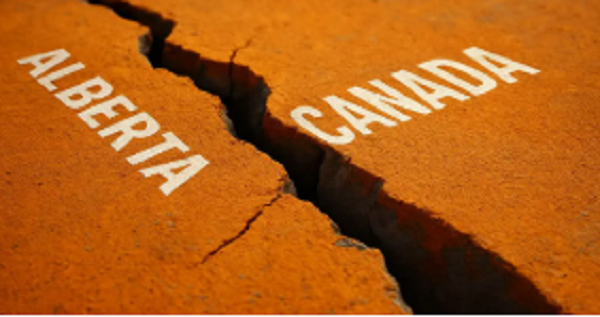
At the core of Alberta’s resurging separatist movement lies an economic argument: that the province, with its abundant natural resources, would be better off as a sovereign state that didn’t have to pay into Canada’s tax system.
Alberta taxpayers contributed $19 billion more to the federal government than they got in return in 2024 — the latest year for which data is available — according to Statistics Canada.
Meanwhile, Ontarians had a $14-billion deficit with Ottawa, meaning they received more than they paid in taxes.
These statistics help explain why some 28 per cent of Albertans polled by Ipsos said that they would vote for their province to begin the process of separating from Canada.
“You are justifiably frustrated and angry with Ottawa,” Premier Danielle Smith said as she announced last month that she would be adding a question to an upcoming referendum on whether Albertans want a vote on separatism.

“You are proud and loyal Albertans that have watched our province be taken advantage of repeatedly over past decades — and you want it to stop.”
In a bid to test the economic argument for separatism, the Star surveyed four economists and asked them to paint a realistic picture of how Alberta would fare without the rest of Canada.
Lessons from Brexit, when Britons decided to leave the European Union, along with estimates for higher trade and setup costs, point to a poorer independent Alberta with a lower standard of living — though experts say it’s unlikely that the local economy would collapse.
“The U.K. economy is six to eight per cent smaller today than it would have been had it remained within the European Union,” said Trevor Tombe, professor of economics at the University of Calgary.
“That, for Alberta, would represent a hit of between $30- to $40 billion per year in forgone income,” he added.
Tombe said he believes the damage to Alberta’s GDP would be even larger. That’s because the U.K. was already an established sovereign country with its own currency, central bank and infrastructure before leaving the EU.
But Alberta would have to start from scratch.
“No doubt in my mind the real cost would be bigger,” said Tombe, “perhaps substantially bigger.”
While Alberta wouldn’t have to share revenue with Ottawa anymore, it would face higher costs to trade with Canadian provinces, experts say.
That doesn’t just mean the potential introduction of tariffs, according to Kent Fellows, professor of economics at the University of Calgary.
“Even if we got a really good trade deal — and it’s not certain that Alberta would get a really good trade deal — but even if we did, there are still other things that lead to increased trade costs between Alberta as a sovereign country and the rest of Canada,” said Fellows, citing customs inspections and regulatory differences.
If Alberta wanted to build a crude oil pipeline going through British Columbia, it would still have to deal with Canadian federal policies, he added.

“Alberta is much better served participating in that process as a partner in confederation than as a separate country.”
It would be very difficult for Alberta to diversify its economy, he added, meaning it would have to continue to rely on imports from Canada, including financial and professional services.
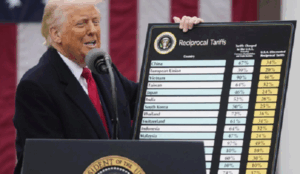
As we’ve witnessed with U.S. President Donald Trump’s tariff war, higher barriers to trade would also put many jobs in Canada and Alberta at risk.
Nationally, 750,000 jobs depend on interprovincial trade to and from Alberta, Tombe estimates. Three hundred thousand of those jobs are in Alberta while 450,000 jobs are outside the province.
“With higher trade costs and lower trade volumes, there would indeed be less employment in those trade-exposed sectors,” said Tombe. “Those individuals, of course, wouldn’t be permanently unemployed. They’d shift into something else, but that’s a costly hit to many.”
Albertans would also have to pay up to establish the institutions that make up statehood, including a postal service, a national police force and a foreign affairs department.
This week, Danielle Smith estimated that Alberta would incur $400 billion in startup costs, with each resident paying roughly $80,000, the Calgary Herald reported.
Take the military as an example. If an independent Alberta wanted to be part of the North Atlantic Treaty Organization (NATO), it would have to spend $24 billion alone (about five per cent of the province’s 2024 GDP) on defence requirements by 2035.
As well, Alberta would need to institute a central bank should it choose to replace the Canadian dollar with another currency, meaning it would need its own monetary policy and overnight interest rate.
Moshe Lander, professor at Concordia University and a former senior economist for the government of Alberta, said interest rates would generally be higher in Alberta, partly because it would no longer have the federal government backing up its debt.
“Anybody lending the Alberta government money is going to say, ‘You’re riskier than you were when you were in Canada, so I’m going to charge you a higher interest rate,’ ” he added.
Broadly speaking, the riskier a country is perceived, the higher interest rates will be for companies and consumers in that country.
“So that would be more punishing for households with debt,” said Lander.

Political uncertainty — even just the threat of separation — could spook companies and prevent them from investing in Alberta, which would inhibit the province’s economic growth.
Economists said this happened after Quebec elected its first separatist government in 1976, leading to the sovereignty referendum of 1980.
“Big business basically fled Quebec,” said Chetan Dave, economics professor at the University of Alberta.
At the time, media reported that between November 1976 and February 1979, 368 Quebec businesses moved their head offices out of the province. By 1981, some 125,000 people had left Quebec.
“The nascent finance industry and the nascent tech industry that we are trying to develop in Calgary and elsewhere, they’re just gonna leave,” said Dave.
Fellows, of the University of Calgary, said he believes Alberta’s business exodus would not be as large as Quebec’s.
“Our economy is structured a little bit (differently),” he said. “The oilsands are here, so if you’re an oil and gas producer, you’re probably stuck here.”
However, he did say that he believes other companies like WestJet, which is headquartered in Calgary, would likely relocate should Alberta move forward with the separation referendum.
“Canada has very strong rules prohibiting foreign ownership in airlines,” said Fellows. “I think we’d lose (that) head office overnight.”
Even though the economists disagreed with the separatists’ economic assumptions, they were not dismissive of the emotions behind the separatist movement.
“The west of the country feels alienated relative to Ontario and Quebec for several reasons,” said Dave, citing the provinces of British Columbia, Saskatchewan and Alberta.
“They see themselves as giving more to the country than the country gives to (them).”
Still, the economists emphasized that they believe independence from Canada would not make Alberta wealthier.
Trade would become less efficient, there would be high setup expenses, and separation might cause people and businesses to leave en masse — all of which would hurt the economy.

As of 2024, the size of Alberta’s economy was $473,937 billion, according to Statistics Canada, quite a bit smaller than Quebec’s economy, at $616,771 billion, and Ontario’s, at $1.2 trillion.
It could take years for Albertans to see a decline in their quality of life, according to Lander.
“If the Alberta economy were to separate from Canada, would it crater immediately? No, probably not,” he said.
“But it would be one of those things that, on a year-to-year basis, falls a little bit behind, a little more behind, and, accumulated over time, it would really be noticeable.”
This article was first reported by The Star