





Airline Profit Margins: Why Ticket Surcharges Are Holding Steady Amid Falling Oil Prices
Some major airlines have started slashing fuel surcharges as peace talks in Iran appear poised to ease strained oil supplies. But most carriers aren’t jumping to cut costs, as summer travel demand remains strong despite higher prices.
WestJet Airlines told The Globe and Mail on Wednesday it is reducing the fuel surcharge tacked on to its companion vouchers – a perk from its Mastercard loyalty program – from $60 to $40 to reflect “a recent movement in fuel costs.”
A day earlier, Toronto-based Porter Airlines announced it is halving the $40 surcharge the carrier started applying to rewards flight redemptions back in March, when U.S.-Israeli attacks on Iran sent fuel prices surging by more than 50 per cent.

Hong Kong-based Cathay Pacific Airways Ltd., which serves thousands of Canadian passengers flying to major business and tourism hubs across Asia, announced a reduction to its flight fuel surcharges, amounting to 14.5 per cent in savings on a number of major international routes.
On Wednesday, Brent crude – a key benchmark for oil prices – fell to its lowest level since before the start of the Iran war.
Still, many airlines appear to be riding out robust summer demand while trying to recoup hits to their margins suffered in recent months.
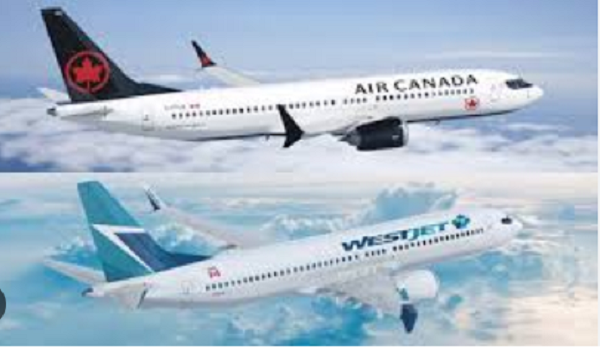
Air Canada AC-T spokesperson Peter Fitzpatrick told The Globe that the $50 fuel fee per passenger added to ground packages for Air Canada Vacations, the carrier’s tour operating arm, remains in effect.
 “There is still much uncertainty with regards to the situation in the Middle East,” Mr. Fitzpatrick said. He added that the carrier has been managing fuel costs for tickets through its regular fare structure.
Some airlines chose not to introduce fuel surcharges as a separate line item for customers in the first place, embedding added costs instead into overall prices. And fares have been steadily rising while travel demand has rebounded.
Canadian residents returned from 3.8 million trips abroad in April, the latest available figures from Statistics Canada showed. That marked a 2.1-per-cent year-over-year spike and the first year-over-year monthly boost since February, 2025.

“If you look at international airfares those have gone up somewhere between 25 and 35 per cent outside the fuel factor” in some markets, said McGill University aviation management lecturer John Gradek. Even if some fuel charges have gone down, he added, “base fares have gone up.”
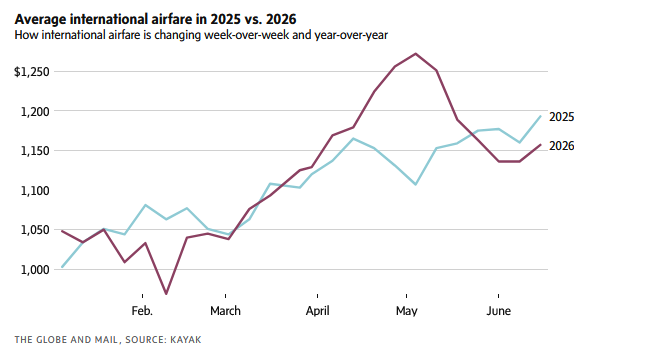
By mid-May, average international airfare had risen about 15 per cent overall, according to travel search engine Kayak. But as peace talks with Iran made progress, airfares began to drop by the start of June, declining 3 per cent year-over-year before starting to edge up again in recent weeks.
An analysis from Reuters this month showed that while airlines stood to save billions on jet fuel from lower oil prices, passengers are unlikely to see relief any time soon.
In mid-June, jet fuel spot prices stood at US$2.85 a gallon, down dramatically from April’s high of US$4.88 – a dip that, if sustained, would cut the U.S. airline industry’s annual fuel bill by more than US$40-billion.
But fare increases still lagged the recent run-up in fuel costs. Deutsche Bank said U.S. carriers would recover only about 60 cents of every additional dollar spent on fuel, giving them a reason to leverage the strong travel demand in recent months to rebuild their earnings.
For some airlines facing financial struggles, fuel price hikes are pushing them over the edge. Transat AT Inc. TRZ-T, which owns Air Transat, announced this month it would seek government aid after soaring fuel costs contributed to the airline amassing a $79-million loss in the second quarter. In early June, the federal government announced it was extending relief to airlines struggling with fuel costs, offering loans of as much as $150-million a company.
Some competitors have decried the move. WestJet issued a statement on its website calling on the government to “abandon the cycle of corporate charity.”
Willie Walsh, director-general of the International Air Transport Association, said earlier this month that financial distress that airlines face as a result of fuel costs is poised to accelerate industry consolidation, with low-cost carriers most vulnerable.

For consumers, the chaos will have lasting effects into 2027, Mr. Gradek said. “Whatever happened since Feb. 28 – that price is nowhere near being reduced now,” he said, referring to jet-fuel prices doubling after the war began and Iran started restricting vessel traffic through the Strait of Hormuz.
Those looking to fly later in the year can look forward to postsummer airfare sales in markets aside from sun destinations.
While prices may ease into fall, “the flow of aviation fuel hasn’t started yet – the crisis for aviation fuel is not over,” Mr. Gradek said.
With reports from Reuters
This article was first reported by The Globe and Mail