






Ottawa Prepares Tougher Measures if U.S. Trade Pact Fails
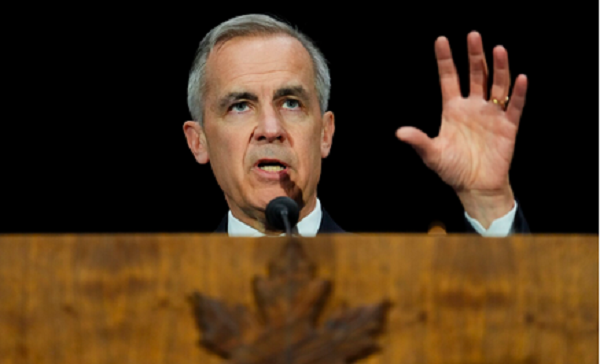
Prime Minister Mark Carney is warning that Canada will get tougher with the United States if there is no agreement to avoid President Donald Trump’s latest threatened tariffs, which are scheduled to take effect this month.
Canada’s goal, Mr. Carney says, is to get all of Mr. Trump’s sectoral tariffs, including those on autos, dealt with.
“The tone is pretty tough. We are going to do everything that would be necessary if there isn’t a deal on Aug. 19,” the Prime Minister, speaking in French, said Wednesday at an unrelated announcement in Toronto, adding later: “The time to get tougher will be if there is a moment where there isn’t a deal with the Americans.”

Mr. Carney said that “with tariff threats, we have options,” but did not specify what retaliatory measures he is considering.
Mr. Trump, meanwhile, decried Canada’s “nasty leadership” in a speech Wednesday at a Las Vegas casino, naming several countries that he claimed have taken advantage of the U.S. on trade, including Canada.
“Canada’s nasty, they are, they’re nasty,” he said. “I love the people, but they’re nasty. Nasty leadership.”
The Prime Minister’s Office declined to comment on Mr. Trump’s outburst.
Amid the escalating tension, Intergovernmental Affairs Minister Dominic LeBlanc and Janice Charette, Canada’s chief negotiator, are in Washington for the second time in as many weeks in a bid to drive talks forward.
Mr. LeBlanc’s office said they met with Jay Timmons, the CEO of the National Association of Manufacturers, a U.S. industry group, on Tuesday, as well as Republican senators Kevin Cramer of North Dakota and Bill Hagerty of Tennessee on Wednesday.
Mr. Carney said he had also personally had conversations with the Americans, adding that there were “real negotiations, constructive negotiations, on several issues.”
Last month Mr. Trump announced that he would use Section 338 of the Smoot-Hawley Tariff Act of 1930 to impose 50-per-cent tariffs on US$20-billion worth of Canadian exports, including alcohol, dairy and electronics. These levies, which will take effect Aug. 19, have lit a fire under the previously stalled negotiations.
The Globe and Mail reported earlier this week that negotiators have revived a proposal from last year under which Canada would accept a system of quotas on steel and aluminum exports to the U.S. in exchange for Mr. Trump lowering his 50-per-cent tariffs on the metals, imposed under Section 232 of the Trade Expansion Act of 1962. Talks involving autos have been less detailed.
But Mr. Carney said the goal is still to get a deal that covers all these tariffs.
“Canada has been very clear: We want all 232s addressed, all strategic sectors,” he said in English. “Steel, aluminum, autos, forest products.”

Autos are “very much at the core of what we’re talking about,” he added later.
One industry source with knowledge of the negotiations said the U.S. has so far only made broad demands on autos. Because those tariffs are such a pain point for Canada, the source said, the Trump administration may be holding off on negotiating them in order to squeeze as much as they can out of Ottawa first.
Another industry source said the U.S. wants to negotiate other issues before turning to the Section 232 tariffs once talks move on to larger structural issues in the North American economy.
The Globe is not identifying the two sources because they were not authorized to reveal details of the closed-door talks.
U.S. Trade Representative Jamieson Greer has said he wants interim agreements with Canada and Mexico resolving a long list of bilateral trade irritants before the end of the year. Negotiations over structural changes to the U.S.-Mexico-Canada Agreement, including automobile content rules, will likely stretch into next year, he said.
Such a negotiation sequence, however, would be tough for Canada to swallow, as it would entail making a deal on a host of trade issues – and giving up leverage in talks – without any guarantee that Mr. Trump’s 25-per-cent auto tariffs will be lifted or reduced.
Among other bilateral issues, the U.S. is demanding greater access to Canada’s supply-managed dairy market and wants an end to Canadian retaliatory measures for previous levies such as provincial bans on U.S. alcohol and auto countertariffs.
Auto negotiations are particularly tricky. While Mr. Trump has insisted the U.S. should not buy finished vehicles from Canada and Mexico, the three countries’ production is so heavily integrated that the industry has been warning that the U.S. is hurting itself by imposing tariffs on its trading partners’ production.
The tariffs and countertariffs have already altered auto trade patterns within North America. Canadian car imports from the U.S. have dropped, while imports from Mexico and other countries have risen notably. Canada, in turn, is shipping fewer cars to the U.S.
“The fundamental message has got to be: ‘Listen, if you believe China is your competition, Mexico and Canada are part of the American solution,’” said Rob Wildeboer, executive chairman and co-founder of auto parts maker Martinrea International Inc., in an interview, adding that Ottawa also has to make clear that tariffs raise the price of American vehicles.
“When you raise costs, people buy less. When they buy less, they produce less. When they produce less, there are less jobs,” he said.

After Mr. Trump’s 50-per-cent tariff announcement last month, Mr. Carney said that “everything is on the table” as he considers how and whether to retaliate in the event the new levies take effect. Last week, however, he reversed course, ruling out restricting oil and gas exports to the U.S. as a countermeasure.
On Wednesday, the Prime Minister, who is typically careful not to unnecessarily provoke the mercurial U.S. President, at one point mocked him.
When Mr. Carney’s teleprompter broke down, he referenced an episode last year in which Mr. Trump accused the United Nations of “sabotage” over similar technical difficulties.
“Unlike a certain world leader,” Mr. Carney quipped, “I do not view this as a conspiracy.”
This article was first reported by The Globe and Mail